Empty the cupboard completely
Under-sink cupboards often contain several unrelated layers: washing-up supplies at the front, forgotten refill bottles behind them and a tangle of cloths around the pipes. Remove everything before choosing storage. Wipe the base and look for dampness, staining or a persistent smell. If there is evidence of a leak, resolve that before covering the surface with containers. A tidy cupboard should make future problems easier to notice. Discard empty packaging appropriately and identify products you no longer use, following local disposal guidance where required. Do not combine remnants to save space; cleaning products should remain in their original labelled containers with their closures intact.
Measure the obstacles
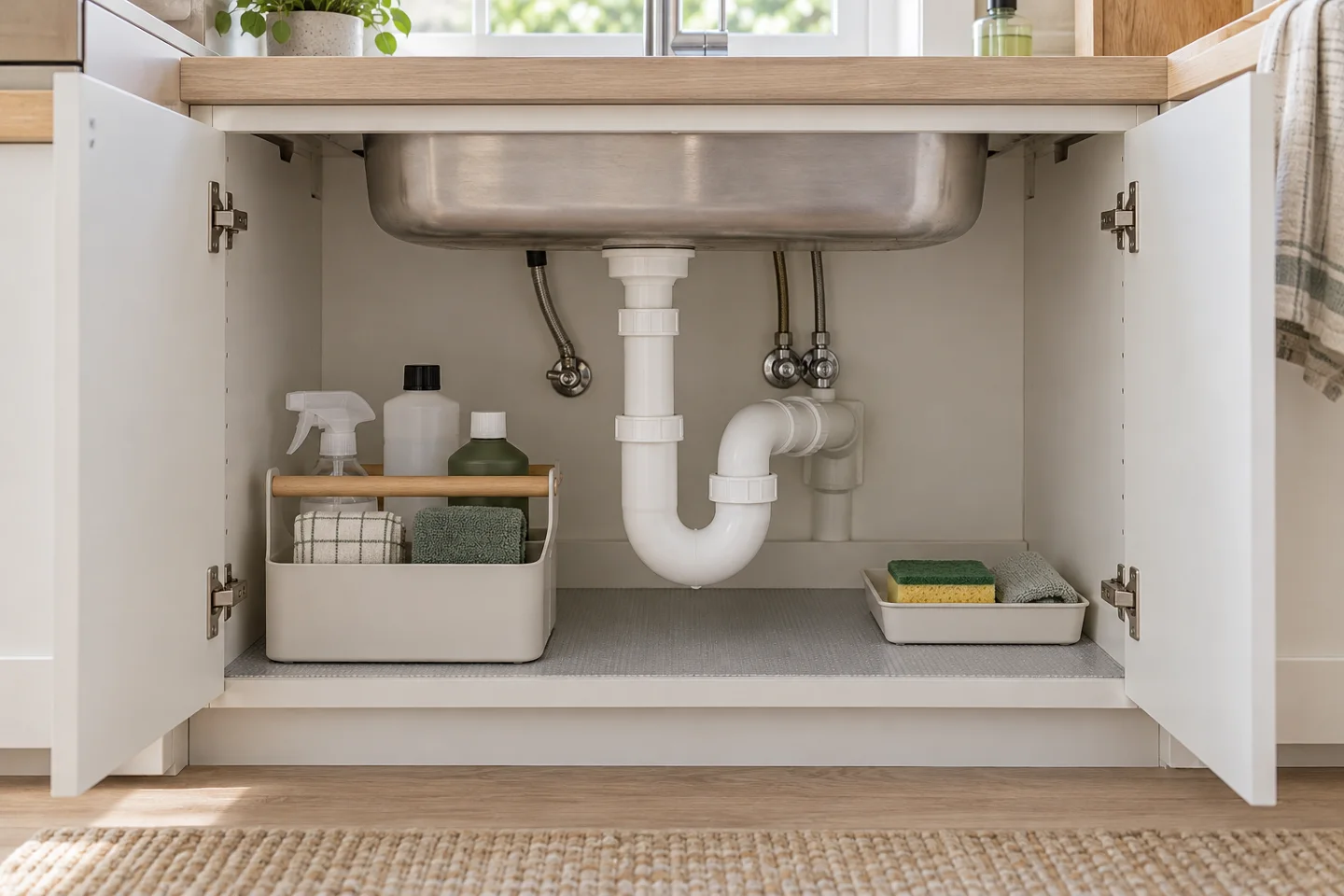
The usable space is smaller than the cabinet dimensions suggest. Note the trap, hoses, valves, hinges and the way the door opens. Leave plumbing and any shut-off valve accessible rather than surrounding them with a structure that must be dismantled. Measure the narrowest opening a basket must pass through, not just the shelf width. A pair of small removable containers often works better than a single fitted organiser that collides with the pipework. If considering a pull-out unit, check its travel carefully and avoid drilling where plumbing or other services may be affected. Storage should fit around the services without pressing or pulling on them.
Separate daily use from reserves
Keep the items used for ordinary washing up near the front: replacement sponges, dishwasher tablets where appropriate and the cleaner used most often. Reserve bottles can occupy a separate rear container if they remain visible and reachable. This separation helps prevent opening a second bottle while the first is hidden. Use shallow, wipeable trays to contain small drips, but choose ones that can be lifted without strain. A tray is not a substitute for inspecting the cabinet floor. Avoid packing containers so tightly that bottles lean or their labels disappear. Upright, readable products make both selection and stock checks easier, particularly in a shared kitchen.
Give damp tools air
Wet cloths and brushes need a place to dry before they are enclosed. A sealed box beneath the sink is a poor destination for a dripping sponge, even if it looks orderly from outside. Keep the drying arrangement near the sink where it can drain without damaging surfaces, then store clean dry spares below. Separate cloths by task if that helps the household use them correctly. A small open container for clean spares is usually easier to maintain than a deep basket full of mixed fabrics. Do not hang weight from pipes or hoses, and avoid fittings that block the cupboard door or catch on bottle tops.
Match access to the household
Cleaning supplies may require secured storage where children or vulnerable people could reach them. Choose an appropriate arrangement for the household and follow product warnings; a high position alone does not resolve every access issue. Keep food and pet treats in a different cupboard so there is no confusion. Once the cupboard is organised, open it from a normal standing position and retrieve the most-used item. If that involves moving three other things, simplify the front row. Check the base when replacing supplies and keep the number of reserves proportionate to the available space. Clear access matters more here than squeezing every spare centimetre into use.
Use removable trays around the plumbing, keep products labelled and leave the cupboard base easy to inspect.
A Swishover guide · Practical ideas to adapt to your own home.
Spotted something we should improve?