See the shelf as a small shop
A pantry is useful when you can tell what it contains without unpacking it. Take one shelf at a time and group food into familiar cooking categories: breakfast, grains, tins, baking ingredients and snacks. The categories should match your meals rather than a photograph of somebody else's cupboard. Check packaging and dates as you sort, following the storage instructions on each product. Put food that needs using sooner where it will be noticed. If a category has spread across three shelves, bring it together before buying containers. This simple inventory often reveals that the problem is duplicate shopping rather than a shortage of storage space.
Keep the back row readable
Deep shelves encourage a front row that conceals everything behind it. Use a low riser for tins if the shelf height allows, or place similar packets in a removable bin that can be pulled forward. The aim is to reveal labels without creating precarious stacks. Keep heavy jars on a stable, reachable shelf and avoid storing them overhead simply because they fit. A narrow cupboard may work better with a single row and spare stock elsewhere. Where there must be two rows, keep the rear one predictable: unopened versions of the same products in front, rather than an unrelated assortment you will have to rediscover every week.
Decant only where it helps
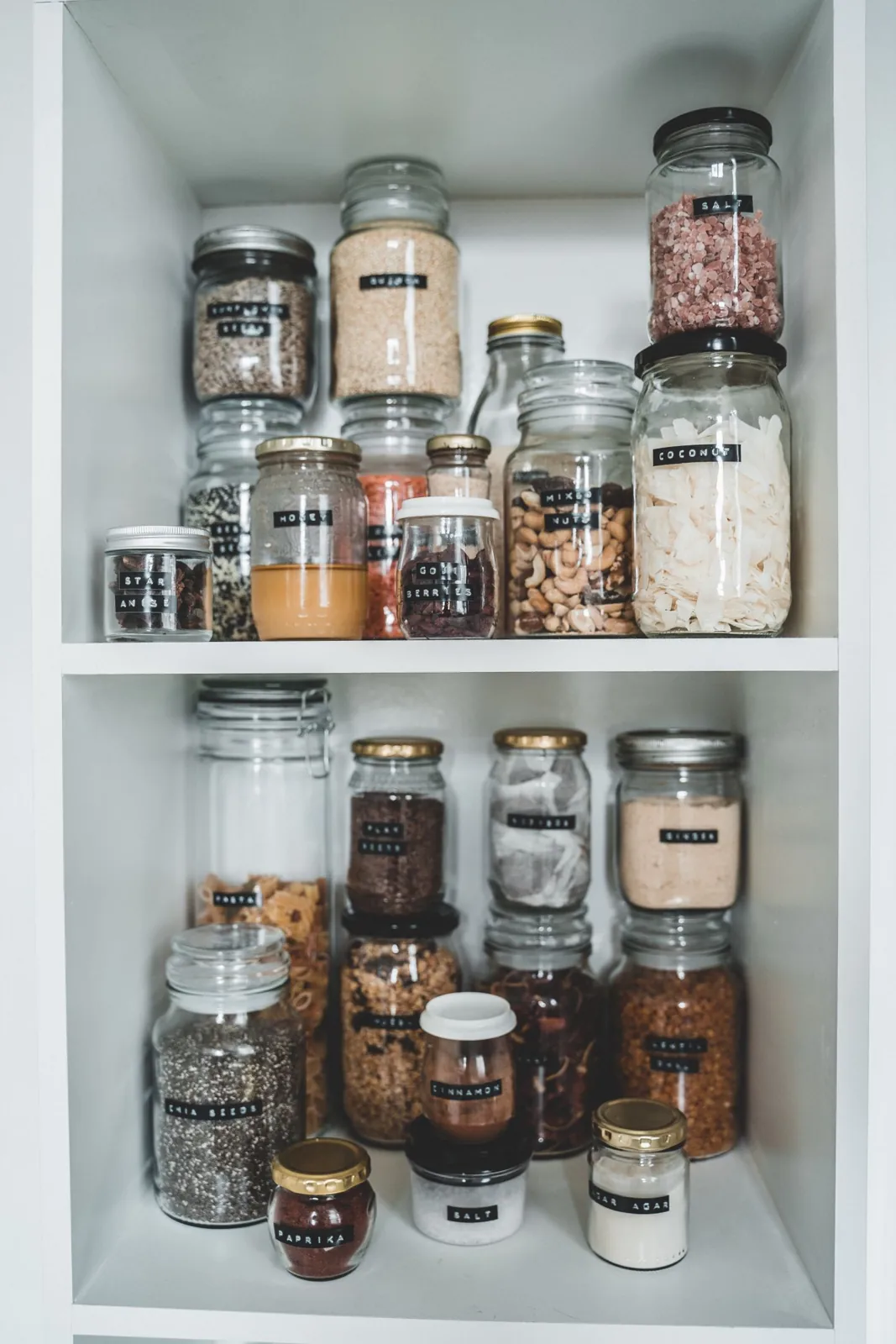
Matching jars are optional. They are useful when a well-sealed container makes flour or oats easier to handle, but decanting every packet introduces washing, refilling and labelling work. Check that containers are suitable for food and for the intended contents. Retain important information such as the product name, allergens, cooking directions and relevant dates; a small clipped label can be more useful than an elegant word on the front. Do not continually top up old contents with new without cleaning and checking the container. Choose a size that takes the usual pack, otherwise the leftover bag will need a second storage place and defeat the simplification.
Give open packets a boundary
Small sachets and partly used bags can make a shelf hard to read even when larger items are organised. Collect related packets in a shallow box, with taller ones at the back and their labels facing forward. Close bags securely using a suitable clip or container. Keep a separate, visible place for ingredients intended for an upcoming meal if they would otherwise disappear among general stock. Avoid a permanent miscellaneous bin; it tends to become the pantry's least inspected area. If an ingredient belongs to no existing category, give it a deliberate position near the foods it will be cooked with rather than hiding it behind a convenient cereal box.
Shop from the gaps
Before making a shopping list, scan each group and note the actual gaps. Set a modest reserve level for staples you use often, based on the space available and how frequently you shop. A shelf does not need to be completely full to be useful. Leave room to move a packet aside and check behind it. When new shopping arrives, place it behind older suitable stock so the earlier purchases remain easy to reach. Review the system after a few meals: if pasta sauces are always separated from pasta in an inconvenient way, adjust the layout. Readability matters more than keeping every category in a perfectly symmetrical line.
Keep labels and dates accessible, make rear stock predictable and decant only when it improves daily use.
A Swishover guide · Practical ideas to adapt to your own home.
Spotted something we should improve?