Begin with the utensils you reach for
Empty the drawer onto a towel and group tools by use: stirring, serving, measuring, peeling and opening. Remove items that belong elsewhere, along with broken pieces and duplicates you never choose. Keep duplicates that genuinely support the way you cook, such as two wooden spoons used in the same meal. The aim is not a fixed number of utensils but a collection you understand. Notice which pieces have awkward shapes. A ladle, whisk and potato masher may each need more space than a flat spatula, and forcing them into identical narrow compartments often causes the drawer to jam rather than become organised.
Measure inside the drawer
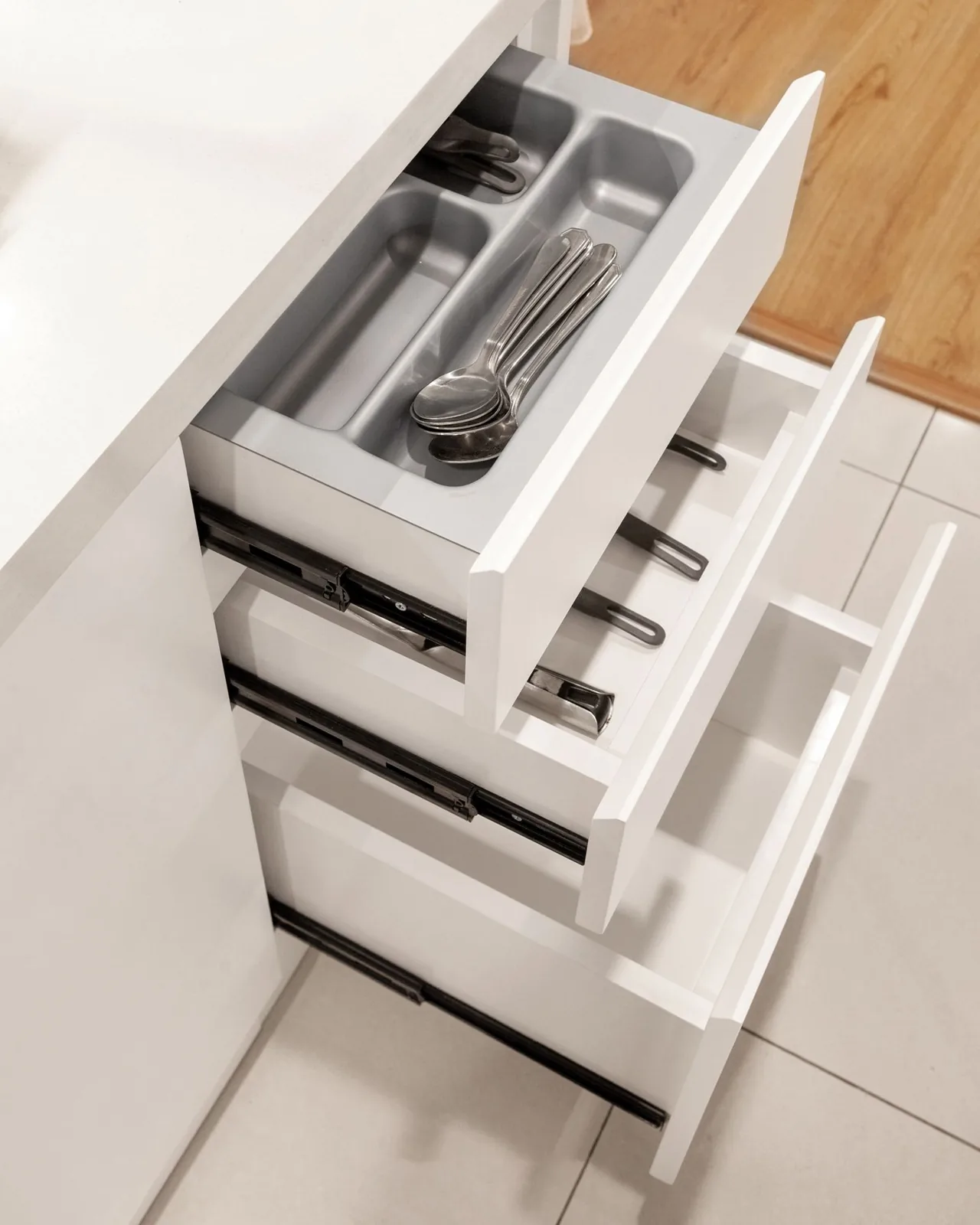
Measure the usable width, depth and height, including any screws or runners that intrude. Check the clearance under the cabinet above while the drawer moves. An organiser can fit the base yet still be too tall once a whisk or long handle sits inside it. Use paper or cardboard to trial compartment sizes before buying inserts. Long tools usually work well aligned in one direction, with handles accessible at the front, but a short drawer may need a crosswise section. Avoid a layout that wedges sharp or pointed ends against the opening. The arrangement must allow a tool to be lifted by its handle without rummaging.
Group without over-dividing
Broad categories are easier to maintain than a unique slot for every utensil. Put measuring spoons and cups together, keep peelers with other small preparation tools and give serving pieces a defined section. A few adjustable dividers may be enough. Too many tiny compartments waste usable space and make it difficult to accommodate a replacement tool of a slightly different size. Conversely, a single deep box encourages overlapping layers. Aim for shallow groups in which the contents remain visible. Knives need suitable protected storage, separate from a loose utensil jumble, with blades covered or held safely in a purpose-designed insert that fits the drawer.
Position the drawer for the job
If you have several drawers, allocate the most accessible one to frequently used tools. Everyday cutlery near the dining area and cooking utensils near the preparation zone may reduce crossing paths in a shared kitchen. Specialist baking tools can live together farther away if they are used less often. Think about the complete movement: open the drawer, take the tool, close it and begin the task. A drawer that opens into the main cooking position may need fewer contents and a simpler arrangement so it can be used quickly. Avoid storing anything that regularly needs two hands beneath a surface where another person is often working.
Leave space for clean returns
Test the system after the dishwasher has been emptied, when every tool is present. An arrangement that looks generous with half the utensils drying on the rack is misleading. Leave enough space for a quick return without precise stacking. Use an insert that can be lifted and cleaned, and remove crumbs before they accumulate beneath it. If an item repeatedly lands in the wrong section, consider whether its assigned category is unclear or its slot is too tight. Change the divider rather than creating a complicated rule. A good utensil drawer helps a guest find a spoon and lets the regular cook tidy it without stopping to think.
Use a few clear groups, protect sharp blades and test the drawer when all the utensils are clean.
A Swishover guide · Practical ideas to adapt to your own home.
Spotted something we should improve?