Find the working stretch
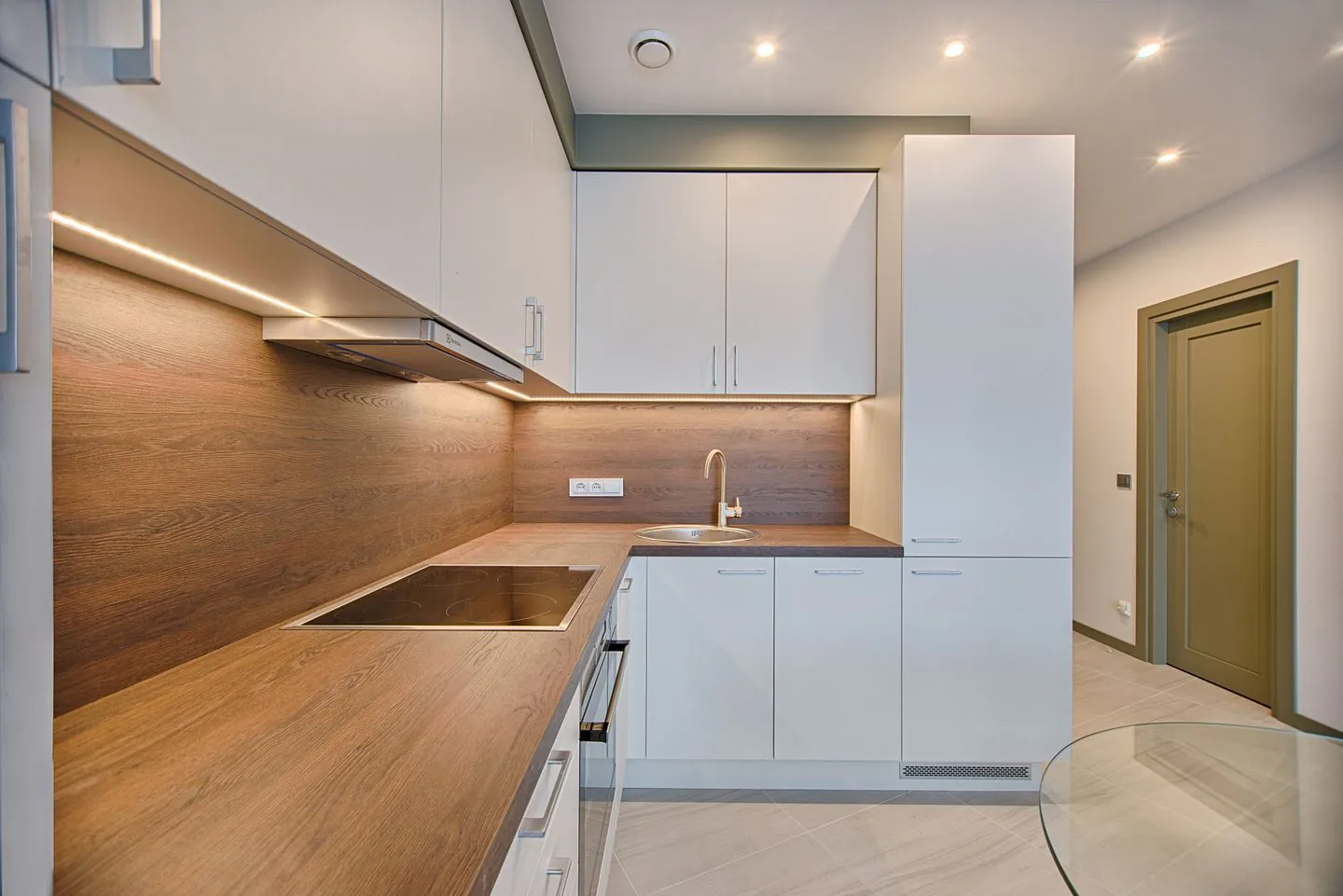
The most valuable part of a kitchen counter is often the uninterrupted area where ingredients are washed, chopped and assembled. Identify that space before deciding which appliances stay out. Try preparing a normal meal and note where the chopping board naturally lands, where bowls gather and which objects repeatedly need moving. A counter can look tidy yet offer no useful working width if small things are spread evenly across it. Concentrate permanent items into sensible areas and protect a continuous preparation surface. Keep the route between sink, hob and fridge practical, without treating any one kitchen layout rule as a substitute for your own movement.
Audit appliances by actual use
A kettle used several times a day usually earns an accessible position. A mixer used monthly may be better stored in a cupboard if it can be moved comfortably and safely. Consider weight as well as frequency: putting a heavy machine on a difficult high shelf simply exchanges one problem for another. Measure cupboard openings and leave the ventilation clearances specified by each appliance manufacturer. Never hide a working appliance inside a tight decorative enclosure unless it is designed for that use. When several appliances compete for the same counter, keep the most useful ones connected and store the others with their accessories so retrieval is straightforward.
Put utensils near their task
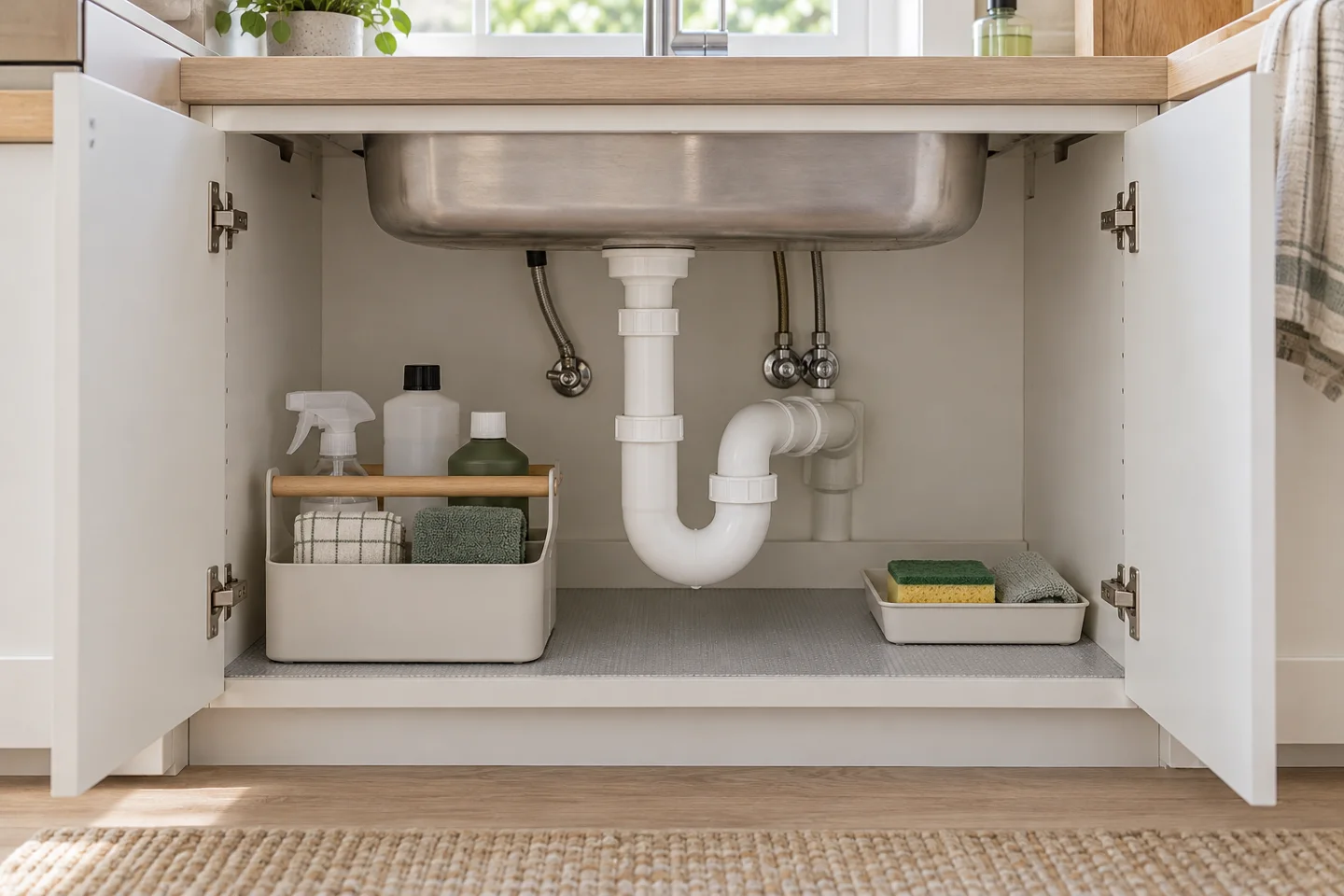
A container beside the hob can hold a small selection of cooking tools, but a crowded pot of spatulas makes the right one harder to find. Keep only the tools used regularly, with duplicates and specialist pieces in a drawer. Position the pot away from heat and splashes as appropriate for its material. Oil, spices and other ingredients should be stored according to their labels rather than left beside the cooker for visual convenience. A nearby cupboard may be a better home. The same principle applies at the sink: dishwashing essentials need a defined place, while reserve bottles can live out of sight.
Use trays selectively
A tray can make a tea corner or small group of condiments easier to lift when cleaning. It is less useful if it becomes a platform for unrelated objects or occupies the only preparation area. Choose one that contains the group without leaving a large unused border. Check whether handles, raised edges or feet make everyday access awkward. For a coffee setup, leave enough space to remove the water tank and empty grounds without moving the entire arrangement. Keep cords routed away from water, heat and cutting areas. The tray should simplify the task it serves, rather than turn a straightforward appliance into a display that needs constant rearranging.
Reset around the next meal
Clear the preparation stretch after washing up, returning equipment to its assigned place rather than shifting it to another corner. Paper, keys and shopping bags often arrive in the kitchen because a counter is convenient; give them another landing spot if they repeatedly interrupt cooking. Leave only what will genuinely help with the next meal. A bowl of fruit may be useful, but several decorative bowls can occupy the room needed for a saucepan or colander. Review the counter when routines change, such as school holidays or colder weather. The aim is not an empty photograph, but a kitchen that begins each meal ready to work.
Protect one continuous preparation area and make permanent counter items earn their position.
A Swishover guide · Practical ideas to adapt to your own home.
Spotted something we should improve?