Sort by the beds you have
Bring bed linen together and separate it by mattress size before considering colour or pattern. A neatly folded double sheet is not helpful if it repeatedly finds its way into a king-size pile. Check labels where sizes are unclear and mark the storage location rather than writing on the fabric unnecessarily. Then identify complete sets and useful extras. Spare pillowcases may deserve their own small group, while a duvet cover without suitable sheets should be stored deliberately rather than mistaken for a ready set. Keep the number of changes proportionate to the beds, washing routine and cupboard space. More linen is not automatically more convenient if every pile becomes difficult to handle.
Choose a bundle that is easy to lift
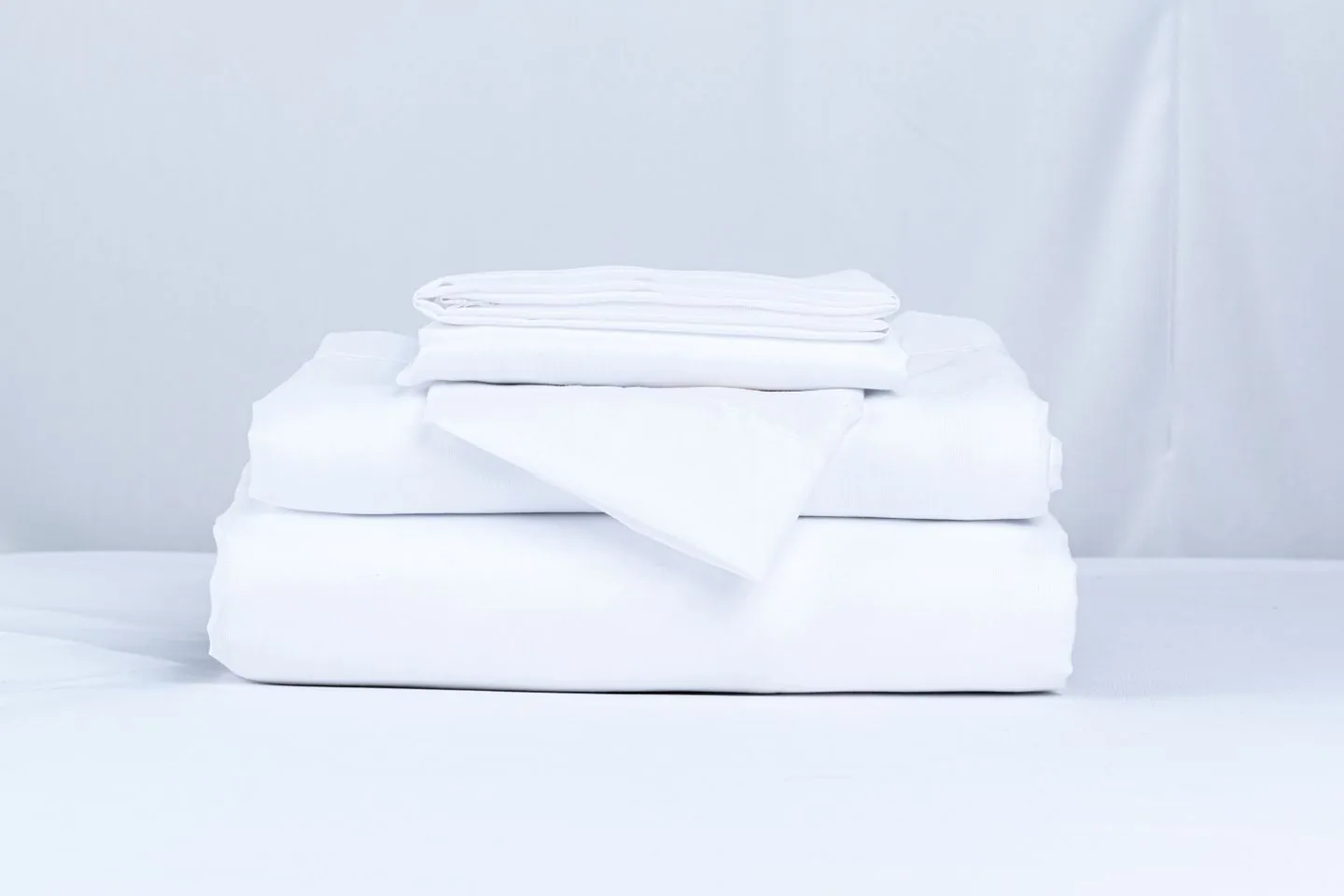
A complete set can be folded into one of its pillowcases, loosely tied with a fabric band or kept in a shallow labelled container. Test the method with a full set, including the fitted sheet. A pillowcase bundle should close comfortably without stretching its seams or becoming so dense that it is difficult to hold. If the household mixes sheets and covers freely, separate short stacks by size may work better than fixed bundles. There is no need to make the cupboard look like a shop display. The important test is whether you can take what is needed for one bed without dismantling the neighbouring linen.
Fold for the shelf depth
Measure the shelf and fold linen to suit it, leaving enough room at the front to grip the bundle. Very deep shelves often create a hidden second row, so reserve the rear for clearly labelled occasional pieces or use a removable container. Keep everyday sets in the easiest reach zone. Avoid high towers of slippery fabric that lean when one sheet is removed. A low stack with spare space above is easier to maintain. Where shelves can be adjusted, reduce unnecessary vertical gaps rather than filling them with ever taller piles. Store heavier blankets at a comfortable lifting height and check the shelf can support the load.
Put away only fully dry linen
Linen should be clean and completely dry before it is enclosed. Pay attention to thick seams and folded corners, which can retain dampness after the rest feels dry. Follow the fabric care label and allow items to cool after drying before checking them. The cupboard itself needs to be dry and suitable for textiles; avoid using a damp or poorly ventilated space merely because it is available. Strong fragrances are not required for freshness and may not suit everyone who uses the bedding. If stored linen smells musty, investigate the moisture or storage conditions rather than covering the smell with scented products.
Make a bed change straightforward
Put the most frequently used sets towards the front and return freshly washed linen behind the next suitable set. This helps rotate the collection without requiring a complicated tracking system. Keep guest bedding together if guests use a different bed size, and add a discreet size label so another household member can find it. When changing a bed, take the whole bundle to the room before opening it; loose pillowcases are less likely to be left behind. Review worn elastic, damaged fastenings and missing pieces during laundry rather than discovering them at bedtime. A small, dependable collection is easier to use than a cupboard full of uncertain combinations.
Organise by bed size, keep sets liftable and put linen away only when it is fully dry.
A Swishover guide · Practical ideas to adapt to your own home.
Spotted something we should improve?