Name the contents before the container
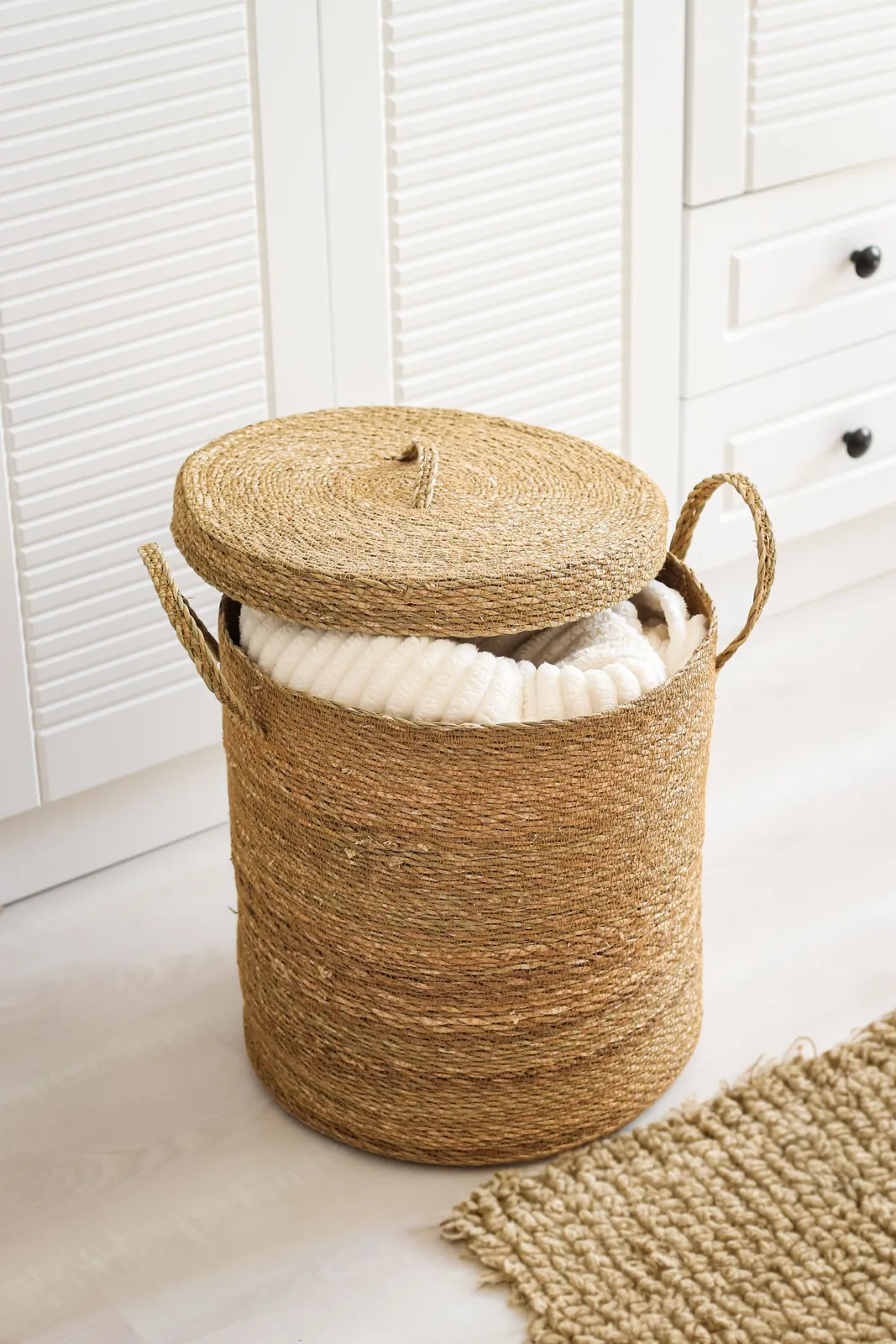
A basket is helpful when it gathers a recognisable group: throws by the sofa, current magazines or clean guest towels. It is less helpful when it merely hides a collection of unrelated decisions. Before buying one, place the intended contents together and ask where each item belongs. Return anything with an existing home. Give the remaining group a simple name that another person would understand.
If the only available label is miscellaneous, pause before enclosing it. The items may need two smaller categories or a decision about whether they are still useful. An attractive container cannot make those decisions, and a lid can make them easier to postpone indefinitely.
Choose shape by the daily action
Measure the contents and the shelf or floor position. A wide opening suits bulky textiles; a narrow tall basket may make small objects hard to find. Thick woven sides and outward-tapering shapes reduce usable capacity, so check internal dimensions rather than judging by the overall silhouette. Handles help when a basket is carried, but they can catch on a shelf above or prevent it sliding into a cupboard.
Consider the action of returning an item. If it must be folded precisely, pushed through a small opening or placed beneath several other things, the basket may be wrong for the routine. A shallow tray or open shelf could be more useful than a deeper container, even if it conceals less.
Match the material to the contents
Look for a smooth interior where delicate fabrics might snag, and choose a liner only if it can be cleaned and remains suitable for the contents. A basket in a damp bathroom faces different conditions from one holding magazines in a dry living room. Follow the maker's care guidance and avoid putting wet towels or shoes into materials that cannot dry or be cleaned appropriately.
Heavy contents need a container and handles designed for the load. Books, toys and cleaning bottles can become surprisingly heavy when grouped together. Check that the basket can be lifted without strain and that any shelf supporting it is suitable. Decorative handles are not always intended for carrying a full load.
Keep one layer of understanding
A basket should reveal its category as soon as it is opened or pulled forward. Use a discreet label where several similar containers sit together. Within a large basket, a small pouch can keep related tiny objects from falling to the bottom, but avoid a maze of containers inside containers. Too many layers turn a simple return into a sorting task.
Do not let temporary objects change the basket's job. A throw basket that begins collecting post and chargers soon becomes difficult to use for blankets. Put those arrivals in their proper places, or reconsider the basket's location if it repeatedly attracts the same unrelated group. The pattern may reveal a missing home nearby.
Empty it occasionally, not just straighten it
Lift out the contents when cleaning and check whether the group still makes sense. Remove damaged, unused or misplaced items and clean the basket as its material permits. If it is consistently overflowing, review the active collection before choosing a larger version. Keep enough room that returning something does not require pressing down the existing contents. A basket works well when it provides a clear boundary for useful objects, while remaining easy to inspect. Its success is measured by how quickly you can find and return things, not by how much disorder disappears from view.
Give every basket one clear job and choose its shape, material and size around the way its contents are used.
A Swishover guide · Practical ideas to adapt to your own home.
Spotted something we should improve?