Build the shelf around your breakfast
List the breakfasts made on ordinary weekdays before moving anything. Porridge, toast, cereal and coffee use different combinations of bowls, ingredients and utensils. A useful shelf might hold oats, cereal bowls and a small container of spoons, while bread and spreads live nearby according to their storage needs. Do not include food that belongs in the fridge simply to make the arrangement look complete. The shelf should shorten the routine, not override food-storage instructions. If household members eat very different breakfasts, give each familiar group a clear position rather than forcing everything into one decorative tray that has to be unpacked every morning.
Choose a reachable position
Use a shelf near the preparation area and within comfortable reach of its regular users. Children may benefit from an appropriate accessible section, while hot drinks and equipment require suitable adult-managed arrangements. Check shelf load limits and keep heavy bowls or jars where they can be lifted safely. The shelf should not require reaching across a hot hob or steaming kettle.
Test the arrangement with the cupboard door open and the counter in use. A convenient location on paper may obstruct another person's route to the sink. Breakfast often happens with several people moving at once, so preserve enough space to set down a bowl without blocking the whole worktop.
Keep ingredients readable
Face packet labels forward and use a low container for small sachets that otherwise fall behind larger boxes. A single row is easiest to scan. Where depth requires two rows, keep reserve stock behind the same type of product rather than concealing unrelated ingredients. Put items that need using sooner in the visible position, following their date and storage guidance.
Decant only when a suitable food-safe container improves pouring or keeps the ingredient properly enclosed. Retain important information such as allergens, cooking directions and dates. A jar that cannot hold the usual packet creates a second half-empty bag elsewhere, so measure capacity against what you normally buy rather than choosing solely by appearance.
Fit bowls and cups without crowding
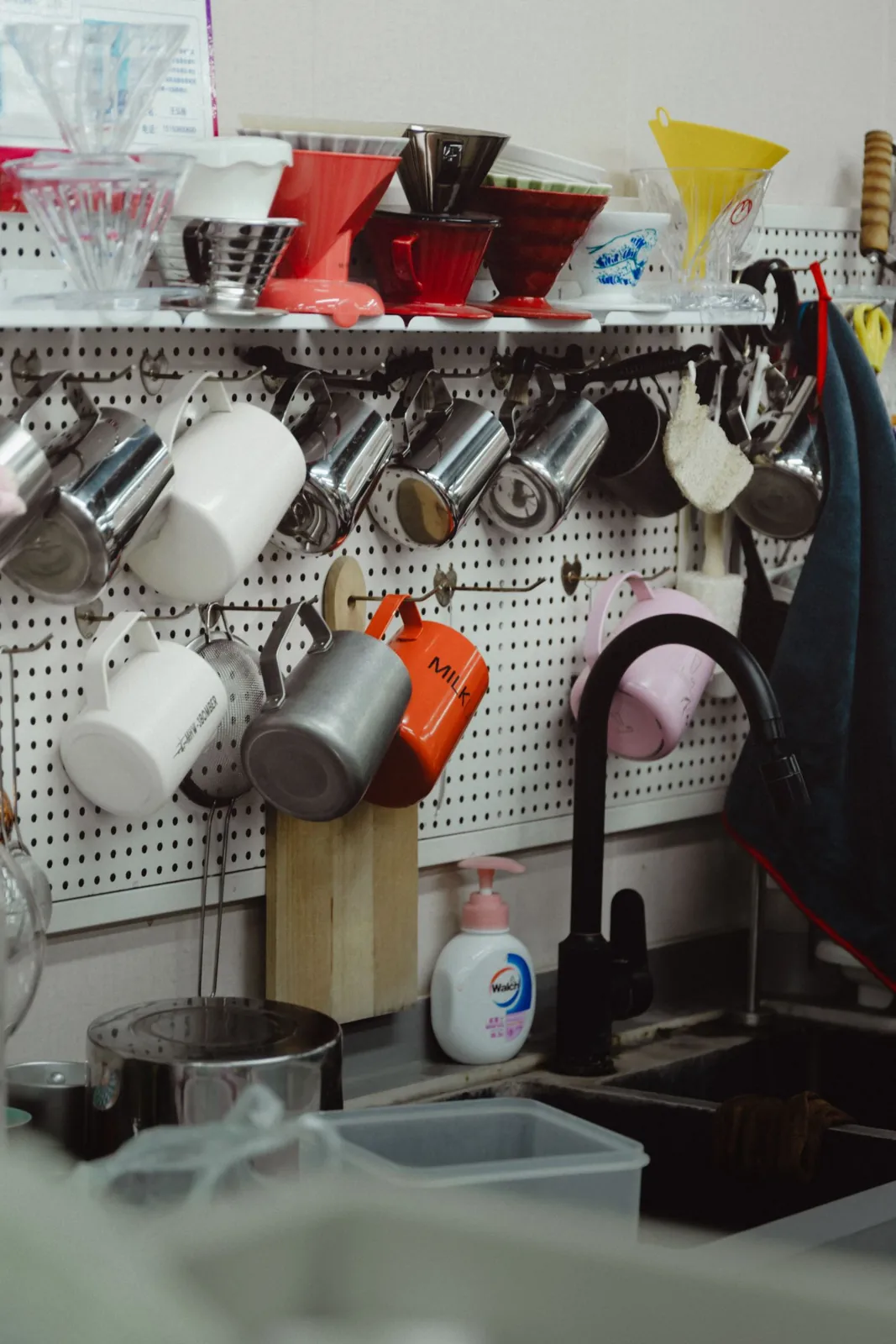
Keep everyday crockery in modest stable stacks, with enough clearance to lift it without scraping the shelf above. Mug handles need room to be grasped. If the shelf is too full, move occasional cups or oversized serving bowls elsewhere instead of stacking daily pieces precariously. A small riser may help only if it remains stable and improves access to both levels.
Utensils can sit in a shallow container if that is easier than using a nearby drawer. Avoid duplicating the entire cutlery collection simply to complete the shelf. Keep only the pieces regularly needed there, and leave room for everything to return when the dishwasher is emptied.
Reset for the next morning
After breakfast, close packets and return dry clean items to their groups. Wipe crumbs and spills before they collect beneath containers. Check the shelf before shopping so reserve cereal or oats do not multiply unseen. If a product repeatedly lands on the counter instead of returning to its place, the shelf may be too high, too full or arranged around an unrealistic sequence. Adjust that one position. A breakfast shelf does not need to contain every possible option; it needs to make the usual meal straightforward while keeping enough clear counter space to prepare it.
Group the breakfasts you actually make, keep food labels visible and leave safe lifting space around everyday crockery.
A Swishover guide · Practical ideas to adapt to your own home.
Spotted something we should improve?