Choose the things needed from bed
A bedside table works at close range, often in low light and when you are tired. Begin with what is genuinely needed without getting up: a lamp, glasses, a book, perhaps water or a clock. The exact group depends on the person using that side of the bed. Remove old receipts, several finished books and spare toiletries that have arrived without a clear purpose. The aim is not an empty surface, but one where the right object can be found by a simple reach. If two people share the room, their tables do not need identical contents or matching arrangements to function well.
Place the lamp before the smaller objects
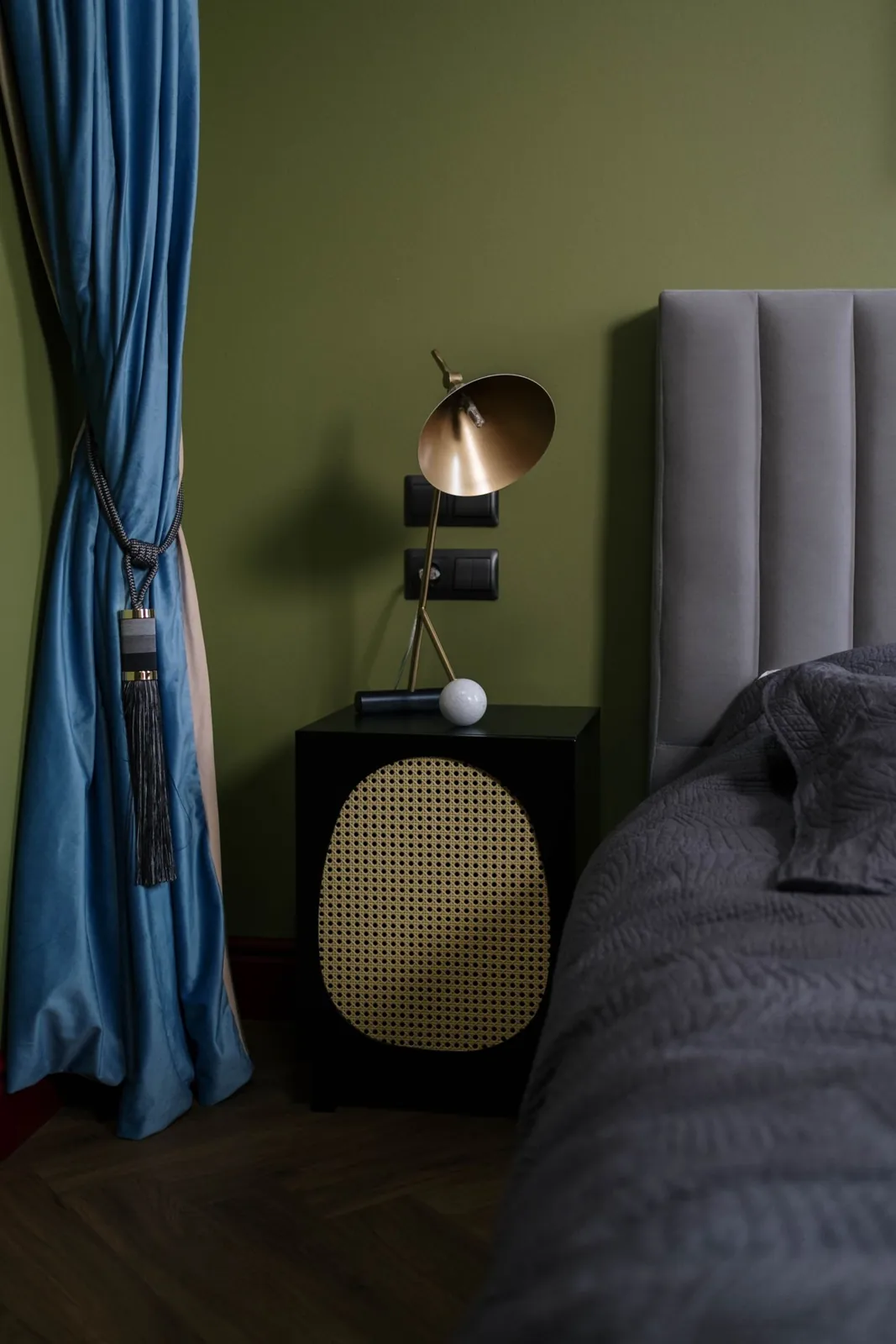
Position the lamp where its switch is reachable and its base sits securely, with the cord routed clear of feet and drawers. Follow the lamp's clearance requirements and keep fabric or paper away from heat-producing parts. Test the light while lying and sitting in the positions you actually use. A lamp that occupies most of a tiny table may need a different position or a more suitable design.
Once lighting works, place the remaining items around the natural reach. Water should sit on a stable surface away from electrical equipment, with protection appropriate to the furniture finish. Avoid squeezing a glass onto the last narrow edge beside the lamp base.
Use a small landing dish
Glasses, a ring or earplugs can be easier to find in one shallow dish than scattered across the table. Choose a container that fits those few items without inviting a larger collection. A soft lining may suit delicate objects, while a washable dish may be easier for others. Keep medicines according to their labels and the household's access needs rather than assuming that an open bedside bowl is suitable.
The container should be recognisable in low light and comfortable to reach. Do not fill it with coins, spare cables and hair accessories unless those things are actually needed there. A catch-all becomes less useful each time its purpose expands.
Let the drawer hold the quieter items
If there is a drawer, reserve it for a small group of night-time supplies or personal objects. Shallow dividers can stop tiny items disappearing beneath books, but avoid turning the drawer into an overflow store for the bedroom. Keep one current book on top and move the waiting stack to a shelf nearby. That leaves space to set down a cup or phone without building another layer.
Make charging unobtrusive and suitable
Follow the device manufacturer's charging guidance and keep equipment ventilated on a suitable surface. Do not charge devices under bedding or inside a crowded closed drawer unless specifically designed for that arrangement. A cable clip can keep a lead from falling behind the table without pulling on its connector. Leave enough slack for normal use and keep cords out of the walking route.
Review what the morning leaves behind
After several nights, notice which items remain untouched and which are repeatedly placed on the floor. Remove the former and create a better position for the latter. Wipe the surface and return cups or glasses to the kitchen regularly. A bedside table does not need a complicated daily ritual, but it benefits from a clear limit: the objects that support this evening and the next morning. When the essentials fit comfortably, the bedroom gains a quieter corner without asking anyone to give up the things they actually use.
Give the lamp, current book and small night-time essentials clear positions, with enough surface left to reach comfortably.
A Swishover guide · Practical ideas to adapt to your own home.
Spotted something we should improve?