Find the white you already have
White cabinets can lean creamy, grey or slightly blue. Work with that undertone instead of assuming every pale accessory will sit comfortably beside it. Hold a timber sample, tea towel or paint card against a cabinet in daylight, then look again under the kitchen lights. A combination that feels gentle at noon can look quite different after dark.
If the room feels cold, identify whether the cause is colour, light or a lack of texture. Replacing handles will not solve harsh illumination, and a rug will not necessarily make cool-toned surfaces relate to one another.
Bring in timber where it is useful
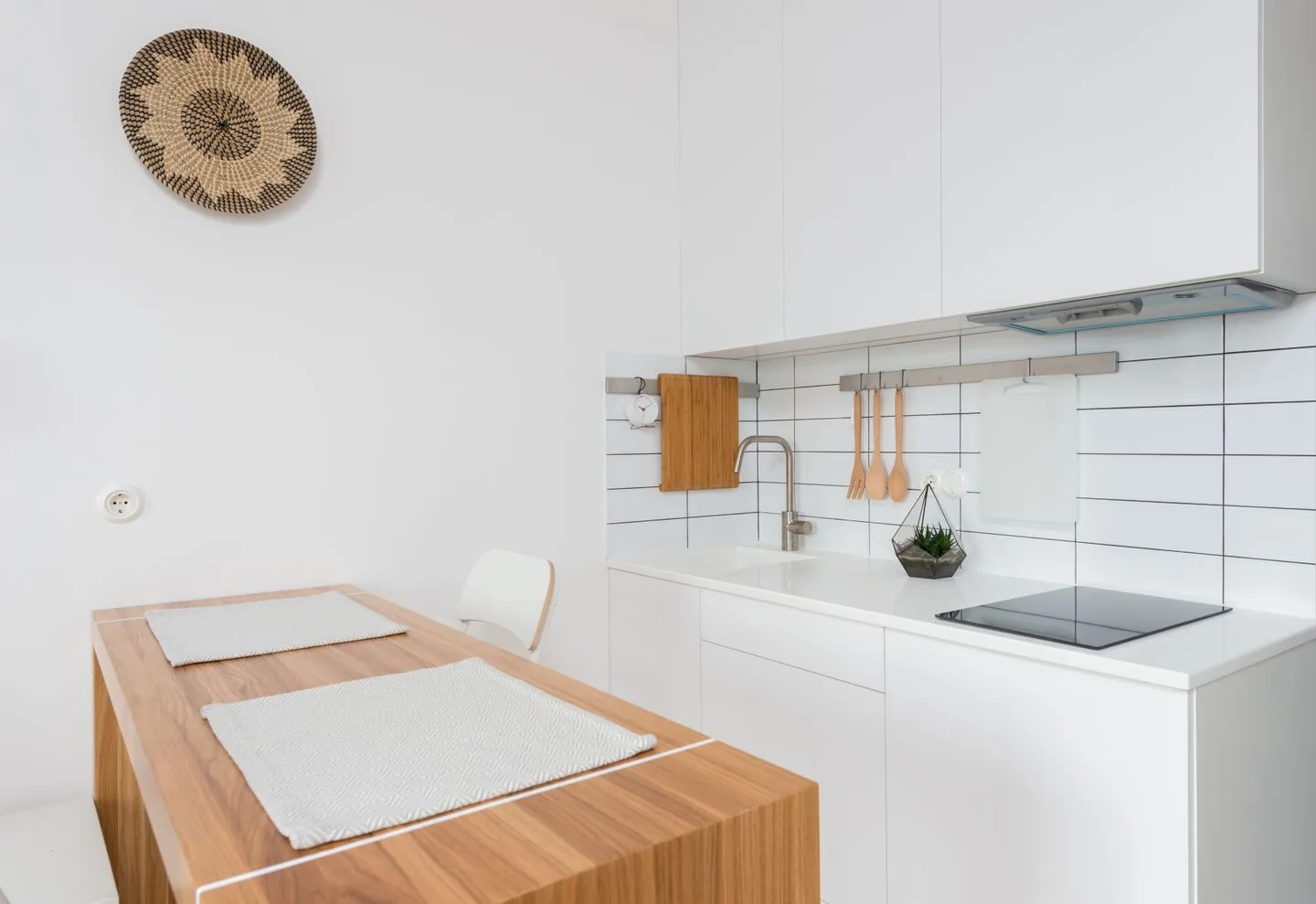
A wooden chopping board, a bowl or stools can soften the appearance of a kitchen without changing the cabinets. Choose items that have a job and suit the space. A large collection of boards propped along the worktop may look warm but leave less room for preparing food.
Mixing timber tones can work when the difference is intentional. Try one main tone with a smaller contrasting note rather than several almost-matching finishes. Care for each item according to its maker's guidance, especially where wood is exposed to regular moisture or food preparation.
Soften the light, not the task
The kitchen still needs clear light for chopping, cleaning and reading labels. Warmth should not come at the expense of seeing the worktop properly. If the space has several lighting sources, test which combination gives useful illumination without making the entire room feel glaring.
For compatible fittings, lamp choice can affect the atmosphere, but follow the fitting's requirements. Electrical alterations should be handled appropriately by a qualified professional. A small lamp may suit a dining end or dry counter away from kitchen hazards, but only where there is a safe, practical place for it and its cable.
Add fabric in manageable places
Tea towels, a blind or seat cushions introduce softness with relatively little commitment. Choose fabrics that can cope with the room's use and be cleaned as needed. Keep loose fabric away from cooking heat, and avoid adding cushions that constantly slip from stools or make the seats uncomfortable.
A small amount of pattern can be enough. If a blind already has a strong design, quieter towels may help it feel considered. If the room is almost entirely plain, a striped or textured fabric can provide a gentle change without introducing a whole new colour scheme.
Make the visible objects count
Everyday crockery, a fruit bowl or a regularly used utensil pot can contribute more naturally than a group of purely decorative accessories. Keep the number modest and place them where they support the routine. An object that must be moved every time you prepare food may belong somewhere else.
Look at packaging too. A cluster of bright bottles can dominate an otherwise restrained room. Store products safely and conveniently, retaining necessary labels and instructions, rather than decanting everything for appearance alone. The aim is a calmer view that still works as a kitchen.
Leave some white space
Warmth is easier to notice when it has room around it. Once timber, fabric and light have been considered, resist filling every remaining gap. A clear stretch of worktop makes the kitchen feel usable and lets the materials you have chosen register.
Live with the changes through meals and cleaning before adding more. If the room feels welcoming while remaining easy to wipe down and move through, it has enough. A white kitchen can be warm without becoming rustic, crowded or dependent on a constant display of carefully arranged objects.
Build warmth with texture and daily-use objects rather than covering every clear surface.
A Swishover guide · Practical ideas to adapt to your own home.
Spotted something we should improve?