Find out why the room sits empty
An unused dining room may be too far from the kitchen, uncomfortable to sit in or filled with objects waiting for another home. The first step is to identify the reason. Adding a new centrepiece will not make a cold, poorly lit room inviting, and a larger table will not help if its surface already acts as permanent storage.
Consider what the household needs more often than a formal dinner. A place for puzzles, homework or a weekly shared meal might give the room a practical rhythm. Choose activities that fit its location and noise level. A room beside a busy living area may be suitable for family projects but less useful for confidential work calls.
Keep the table available
Multi-purpose use works best when projects can be moved without being dismantled completely. A puzzle board, a tray of sewing materials or a portable work box can help, provided each has a storage destination nearby. The important part is the destination. Without it, dinner preparations simply transfer piles onto chairs.
Leave a realistic amount of clear surface. If a decorative arrangement must be removed for every meal, it may be too large or too elaborate. A small object that moves in one step is usually easier to live with than a long display spread across the table. Protect the surface appropriately for the activities it hosts, following the table's care guidance.
Make the chairs comfortable for real use
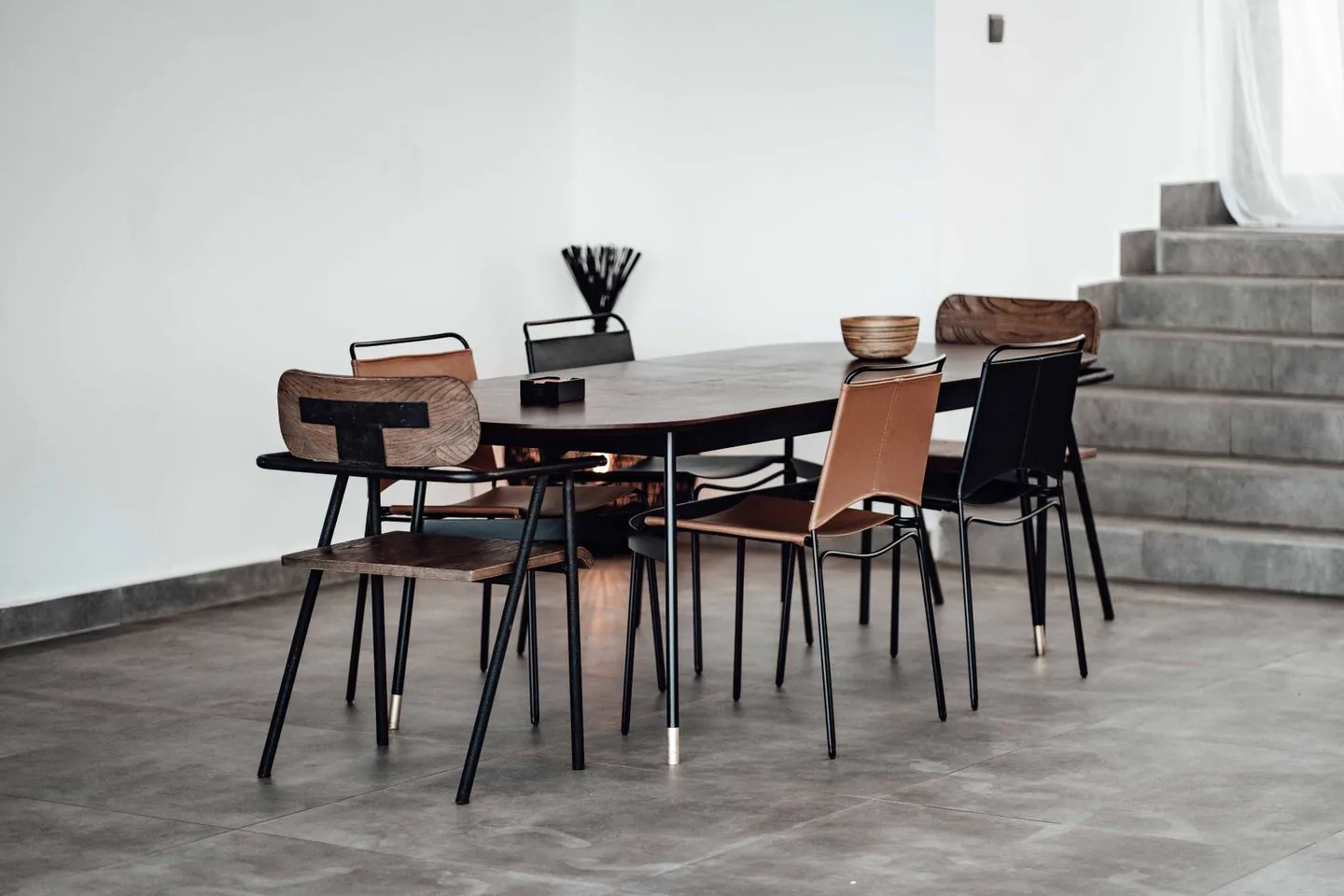
Dining chairs are often judged standing beside the table, but their comfort decides whether people linger. Sit for long enough to notice the back angle, seat edge and relationship to the tabletop. Check that chair arms fit beneath it if you want them to tuck away, and that nobody's knees meet an awkward support.
Mismatched chairs can work if their seat heights and proportions suit the table. A cushion may improve comfort, but it should be secure and not raise the sitter too far. Do not keep uncomfortable chairs purely because they complete a matching set. Replacing or relocating one troublesome seat may make the whole room more inviting.
Use storage to support the actual routine
Store the things used in the room: table linen, games, serving dishes or project supplies. Avoid turning a sideboard into a holding area for unrelated overflow. Divide its contents by activity so clearing the table does not require searching for spare space each time.
Display can be selective. One wall of art or a few favourite objects may give the room more personality than filling every shelf. If the room feels formal in an unwelcoming way, remove some symmetry rather than buying more casual accessories. A well-used bookshelf or a comfortable spare chair can introduce variety while still serving a purpose.
Check the room in the evening
Many dining rooms are used most after dark. Test the lighting with people seated, because a light that looks attractive from the doorway may shine into their eyes or leave faces in shadow. Existing fittings may allow different lamps within their specifications; electrical changes should be handled by a qualified professional.
Try using the room for one ordinary activity several times over a week. Notice what makes you leave early or carry things elsewhere. Fix those small difficulties first. A dining room earns its space through repeatable comfort and convenience, not by being permanently prepared for a special occasion that rarely arrives.
Support the room's regular jobs while keeping the table easy to reclaim for eating.
A Swishover guide · Practical ideas to adapt to your own home.
Spotted something we should improve?