Follow the sequence of a normal morning
A bathroom feels crowded when several small actions compete for the same space. You open a cupboard, turn towards a towel and find a laundry basket where your feet need to go. Walk through washing, showering and getting dressed in order. Note the points where you step around objects or move something before you can continue.
Start with portable items. A freestanding organiser, spare bin or decorative stool can make a larger difference than its size suggests. Remove them temporarily and see whether the room becomes easier to use. If it does, decide which function genuinely needs to return and where it can happen without interrupting the route.
Keep access to essential fittings and ventilation clear. Storage should not make cleaning around the toilet or reaching a shut-off point unnecessarily difficult. A tidy-looking arrangement is not useful if routine maintenance becomes a complicated exercise.
Store for the people using the room
Sort toiletries by frequency and ownership. The products used every day deserve the easiest reach; unopened replacements and occasional supplies may live in a dry cupboard elsewhere. Keeping every household toiletry in one small bathroom often creates pressure that no organiser can solve.
Avoid choosing storage only by its capacity. Deep baskets can hide smaller items, so people buy replacements or leave the current bottle on the basin. A shallow drawer or a few clearly divided sections may hold less while making more of the contents usable. Check that containers can be removed and cleaned without emptying the whole cupboard.
Think about who can reach each shelf. A high cabinet may suit spare supplies but not everyday items for a shorter user. Where children share the room, store hazardous products securely and keep practical access separate from the desire for an attractive display.
Let towels dry without taking over
Towels need space and airflow, not just somewhere to hang. Several thick towels packed onto one hook can remain damp and occupy a surprising amount of visual space. Use the available rail or hooks sensibly, and keep spare clean towels outside the bathroom if humidity or storage is a problem.
Place the towel used after washing where it can be reached without dripping across the floor. Check the path from the shower or bath as well. A towel rail that looks perfectly centred but requires an awkward stretch is poorly positioned for the person using it.
Laundry deserves a realistic plan. If there is no room for a basket without blocking movement, use a nearby location and carry clothes there after changing. A smaller hamper only helps if it is emptied often enough; an overflowing one recreates the same obstruction.
Simplify the view around the basin
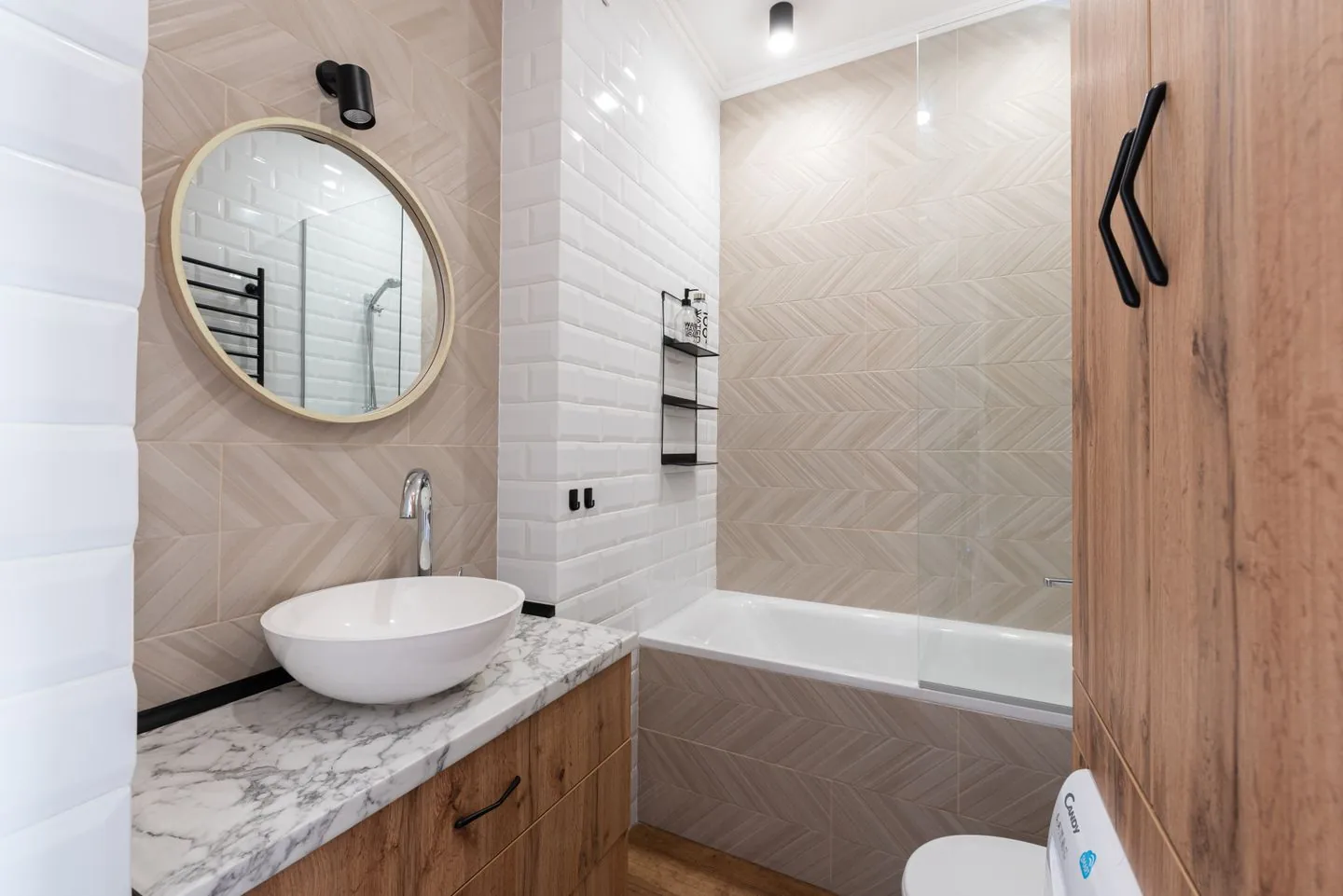
The basin area is often the first thing seen on entering. Keep its rim and nearby surface clear enough for use and cleaning. A soap dispenser and toothbrush holder may be sufficient, with other items returned to accessible storage. Do not add a tray unless it actually improves the arrangement rather than reducing the remaining usable surface.
A mirror and appropriate lighting can make the space more comfortable, but neither replaces a workable layout. Choose products suitable for bathroom conditions and seek qualified help for electrical work. Finally, test the room after a shower, when towels are in use and the floor may be wet. That ordinary moment is a better measure of space than a freshly staged photograph.
Reduce obstacles around daily movements and store only what the room needs close at hand.
A Swishover guide · Practical ideas to adapt to your own home.
Spotted something we should improve?