Notice who sits where
The number of seats is not the same as the number of comfortable places to talk. A chair stranded across the room or a sofa facing away from everyone else may technically accommodate someone while leaving them outside the conversation. Think about an ordinary visit and where people naturally choose to sit.
Start with the household's usual gathering size, then consider occasional extras. There is little value in keeping a large chair in a tight route for the few times it is needed. A suitable occasional chair brought into the group can be more useful than permanent seating that makes daily life awkward.
Turn seats towards people
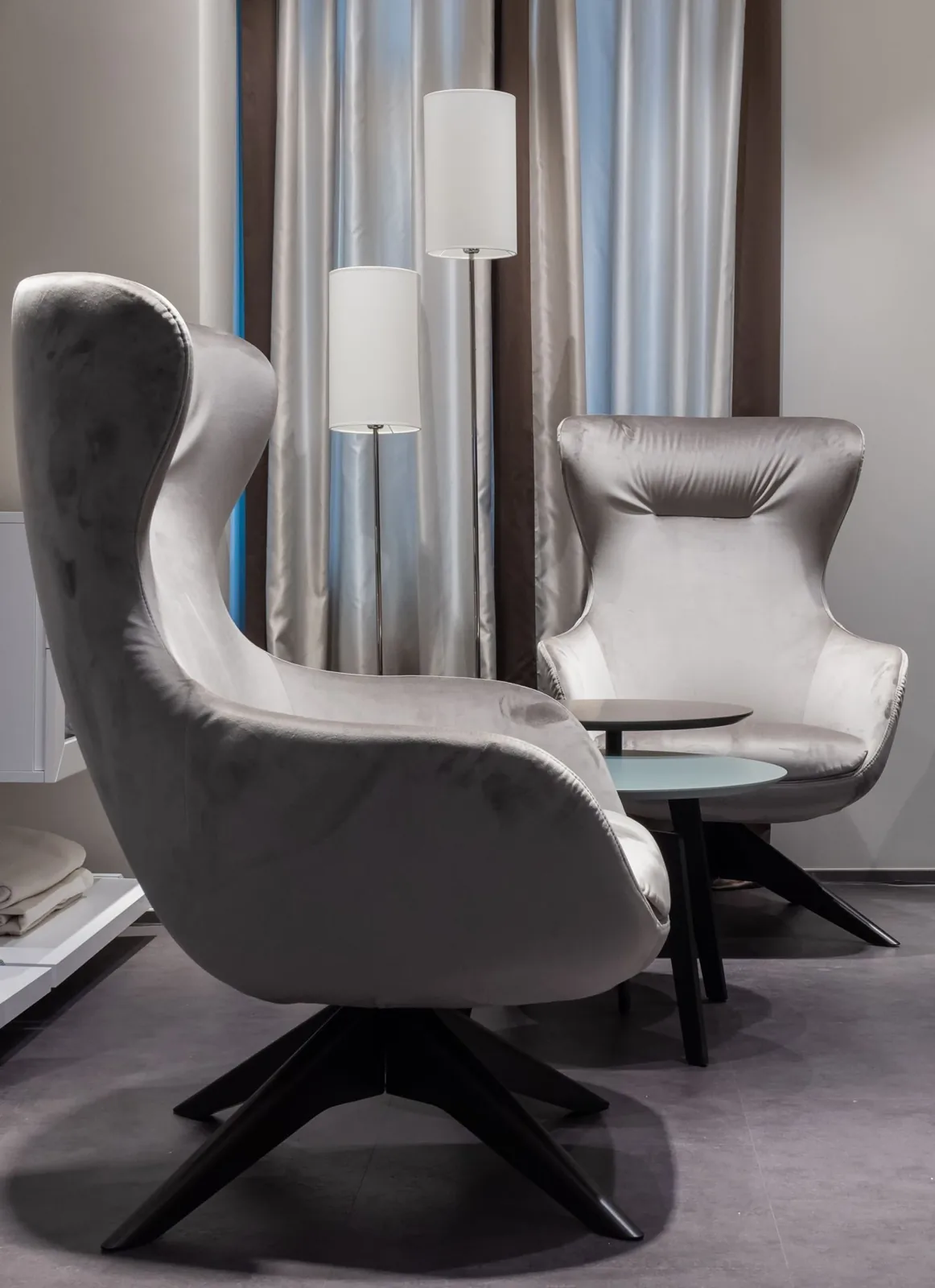
Two sofas facing each other can support conversation, but they are not the only option. A sofa with a pair of chairs set at gentle angles can make a more flexible group. In a small room, even turning an existing armchair slightly inward can change how included its occupant feels.
Avoid forcing every seat into a rigid circle. People need somewhere comfortable to rest their gaze, and a little variation makes the arrangement less formal. The useful test is whether you can speak to the person beside or opposite you without leaning forward repeatedly or holding your neck at an uncomfortable angle.
Bring the distances into proportion
Furniture pushed against every wall can leave a large empty centre that separates people. If the room allows it, move the group a little closer together. Use a rug or the coffee table as a reference, but judge the distance from the seats themselves. A rug cannot make an overextended arrangement feel intimate on its own.
Equally, do not close the group so tightly that someone has to shuffle sideways to reach a seat. Keep a natural opening into the arrangement and a clear path past it. Conversation is more relaxed when arriving, leaving and carrying refreshments do not require everyone else to move.
Share useful surfaces
A central table can serve several seats, but check the outer chairs too. A guest should not need to stretch across someone else to put down a glass. Small side tables often help, especially beside chairs with narrow arms. Choose stable surfaces rather than relying on a soft pouffe as an improvised drinks table.
Keep the centre low enough that flowers or objects do not interrupt sightlines. A large arrangement can look striking from the doorway but become a barrier between seated people. Move decorative pieces elsewhere during a gathering if they compete with the practical purpose of the table.
Give the television a place, not every place
Where the room also serves television watching, look for a compromise that does not turn every chair into a fixed forward-facing row. A swivelling chair designed for that use or a lightweight occasional chair may allow a simple adjustment. Check that the viewing position remains comfortable without moving half the room.
Lighting matters during conversation as well. A combination of lamps can feel comfortable, but faces should not disappear into dark corners while one person sits beneath a harsh spotlight. Test the room in the evening with people in the seats. The arrangement is successful when the furniture fades into the background and everyone can settle into the exchange.
Let the relationships between seats guide the room before the television does.
A Swishover guide · Practical ideas to adapt to your own home.
Spotted something we should improve?