Take stock of the largest pieces
Start with the bed, wardrobe and chest of drawers. Their size and position affect the room more than smaller accessories. Note what works and what does not: perhaps the chest is useful but visually heavy, or the bed suits the room while its matching cabinets block movement. A complete set is not a reason to keep an awkward arrangement.
Look at the furniture together in daylight. Describe the finishes simply: warm timber, cool painted surface, dark metal or pale fabric. This helps identify relationships without needing every item to be the same age or style. Two quite different pieces may already share a warmth or softness that can guide the room.
Balance weight rather than identical shapes
A solid chest can sit comfortably beside lighter furniture if the room has enough visual balance. That balance might come from a broad headboard, a curtain or an artwork elsewhere, rather than another heavy cabinet. Avoid adding bulky pieces solely to match the apparent weight of the first one.
Bedside furniture is a useful place to allow difference. Each side can suit the person using it while sharing a related height, material or lamp style. Check reach from the mattress and space for ordinary objects. Functional differences often look more convincing than forced symmetry that leaves one side impractical.
Use textiles to make connections
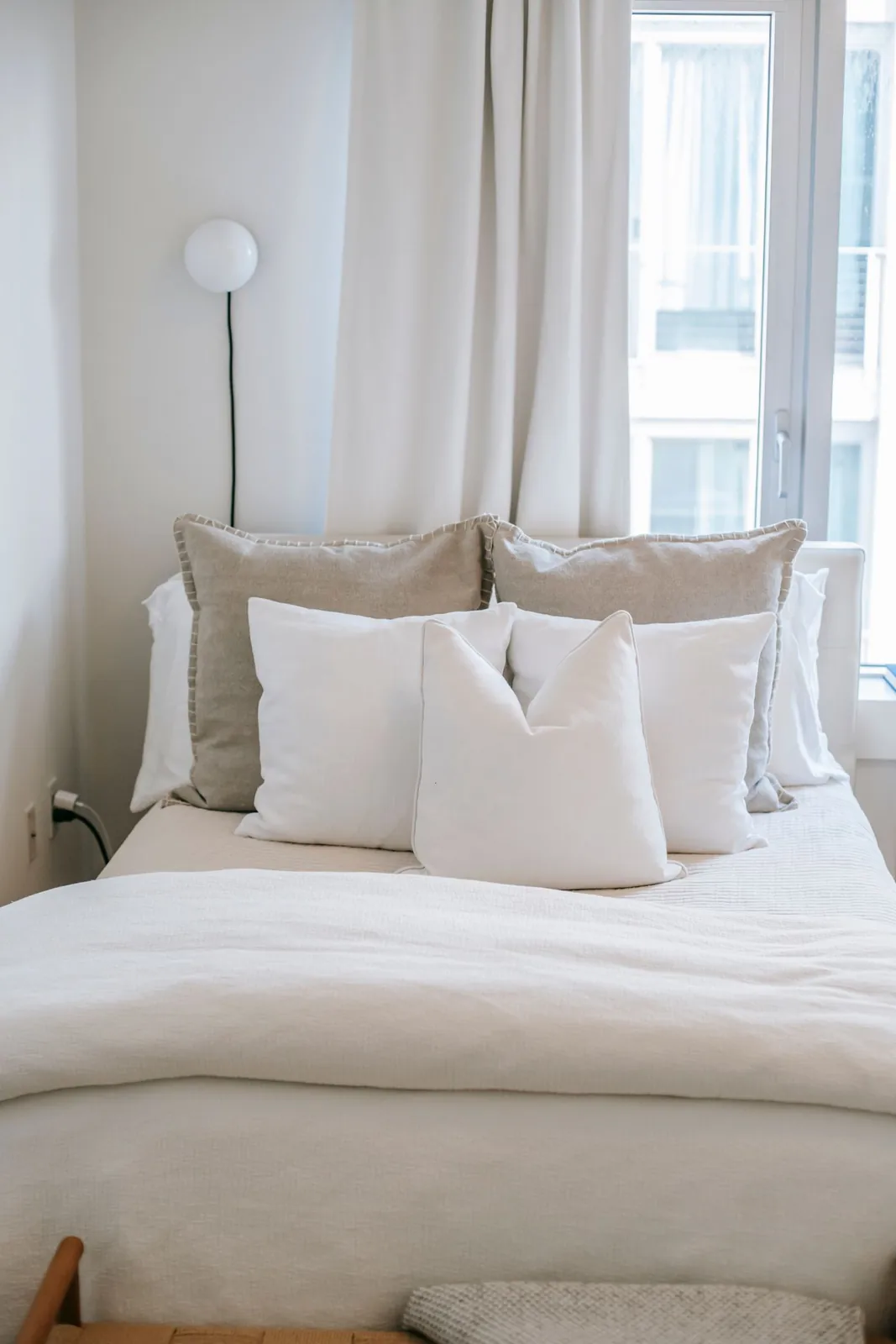
Bedding and curtains occupy enough visual space to connect different furniture finishes. Choose colours that sit comfortably with the largest pieces, then introduce pattern only where you want emphasis. A patterned duvet can contain several relevant tones without requiring every cushion to repeat them.
Texture also helps. A smooth painted chest, woven throw and timber bed can feel related through a restrained palette while remaining distinct. Do not cover useful surfaces with fabric simply to hide a mismatch. If a piece genuinely jars, consider whether repositioning or removing it is more effective than adding layers around it.
Keep the arrangement restful in use
A collected room can become busy when each piece brings its own display of small objects. Edit the visible surfaces according to use. A bedside table needs room for night-time essentials; a chest can hold a modest group rather than becoming a shelf for everything without a home.
Lighting should support the same calm. Make sure each person has useful light and that lamps do not crowd the furniture beneath them. Different lamp designs can work together when their scale and light quality suit the room. The aim is a comfortable evening atmosphere, not a strict catalogue pairing.
Let change happen slowly
Once the main furniture is positioned, live with the room before searching for missing coordinating pieces. You may find that a different curtain or one relocated artwork provides the connection you wanted. Buying several accessories at once can introduce a new set of mismatches while leaving the original layout problem untouched.
Judge the bedroom from its ordinary viewpoints: entering, dressing and lying in bed. It should feel comfortable through those moments, with clear routes and reachable storage. A room assembled over time can be restful precisely because its pieces have useful reasons to be there, linked by a few considered choices rather than a requirement that everything match.
Find a few relationships between existing pieces and let useful differences remain.
A Swishover guide · Practical ideas to adapt to your own home.
Spotted something we should improve?