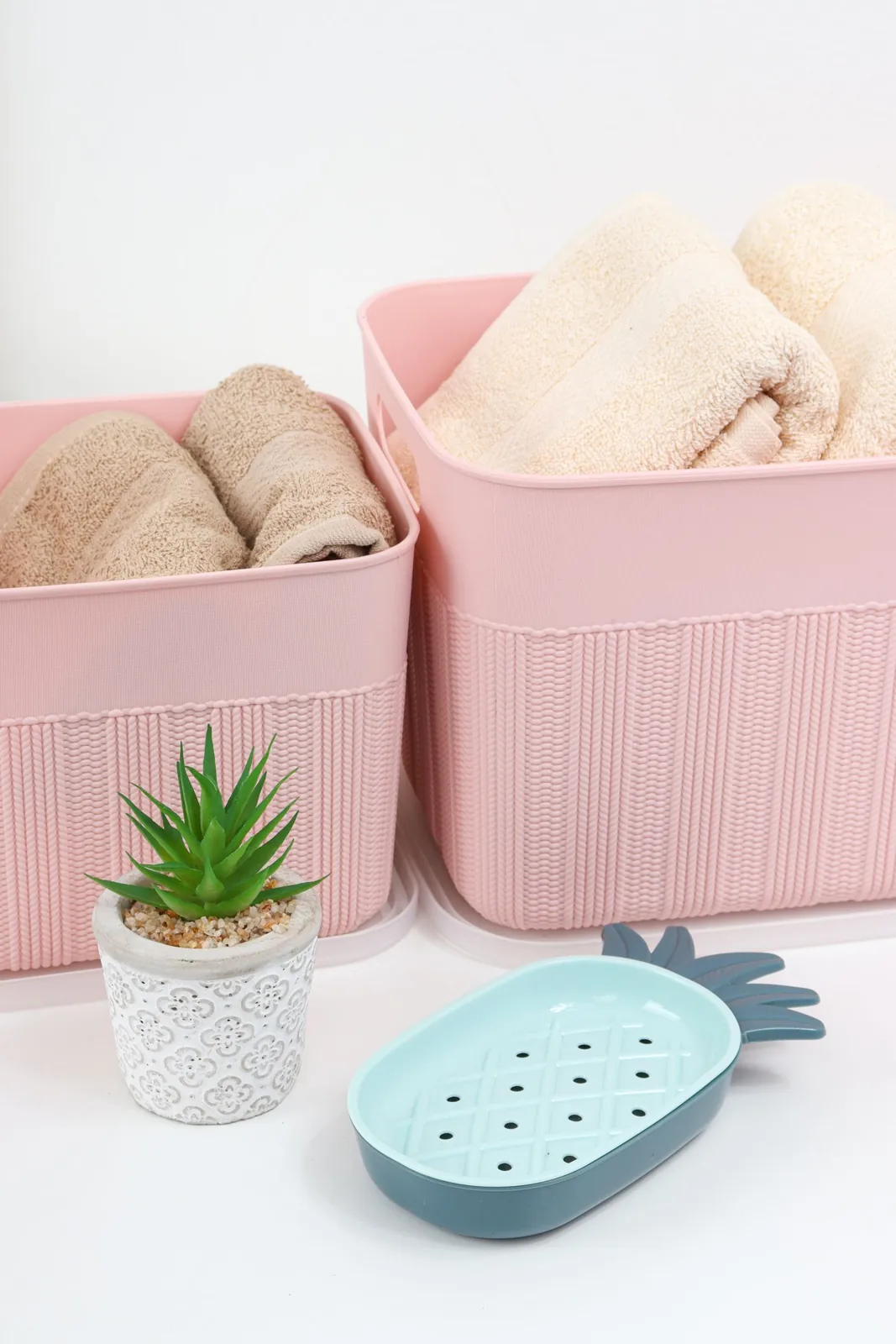
Plan for the guests you usually host
A guest cupboard does not need to resemble hotel supplies. Think about the people who stay, how often they visit and what they commonly need. A set of bedding, suitable towels and a spare blanket may cover most visits. Occasional special requirements can be discussed before arrival rather than stocked permanently on the assumption that every possibility must be anticipated.
Check the available space and its conditions. Bedding and towels need clean, dry storage. A damp or poorly ventilated cupboard is not improved by attractive baskets, so address the storage environment appropriately before filling it with textiles.
Keep complete sets together
Store the items needed for one bed in a way that makes the set easy to identify. A labelled shelf or suitable storage bag can save opening several folded piles. Include the correct sizes; a neatly stored sheet is not useful if it fits a different mattress.
Make sure everything is fully dry before it is put away. Avoid packing so tightly that removing one item pulls the rest onto the floor. A little spare room makes preparing the bed quicker and helps the cupboard remain orderly after laundry has been returned by someone other than its original organiser.
Choose spare toiletries sparingly
A few unopened basics may be helpful, but large collections of miniature products can become outdated and difficult to manage. Keep only items that are appropriate, clearly labelled and within their relevant use guidance. Guests may prefer their own products, particularly where allergies or personal needs are involved.
Do not decant unfamiliar products into unlabelled containers for a coordinated appearance. Necessary instructions and identification should remain available. If a visitor needs something you do not normally keep, asking or arranging it specifically is more useful than maintaining a cupboard full of guesses.
Make comfort items easy to find
A spare blanket, an additional suitable pillow or a clean towel can be useful if guests know where they are. Tell them what is available and which section they may use. Keep the arrangement straightforward enough that they do not have to search through private household storage at night.
Consider a few non-consumable conveniences where appropriate: a reachable reading light in the room, a safe charging option compatible with the visitor's device or somewhere for luggage. These may matter more than extra products in the cupboard. Check equipment condition and follow its instructions rather than treating any spare cable as suitable.
Leave space for the visitor
If the cupboard is in the guest room, keep a genuinely empty section for belongings. Filling every shelf with supplies can leave visitors living out of an open bag on the floor. A small clear area with hangers or a usable shelf is often more welcoming than an extensive collection of guest-only accessories.
Remove anything confidential, fragile or unrelated before the stay. Guests should not have to decide which personal items can be moved to make room. Clear boundaries make the room easier to use and reduce the feeling that they are temporarily occupying somebody else's storage overflow.
Reset after each stay
Launder used textiles appropriately, check supplies and return complete sets only when ready. Note anything that was missing or repeatedly unused. The next preparation can then be based on experience of the actual household routine rather than an imagined ideal guest cupboard.
Keep the collection modest as visits change. If a particular item has remained untouched through many stays, it may not need a permanent place. A useful guest cupboard reduces last-minute work while leaving enough room to see and reach what is there, making hospitality easier without turning it into an inventory project.
Store clean, useful basics and leave room for your visitors' own belongings.
A Swishover guide · Practical ideas to adapt to your own home.
Spotted something we should improve?