Notice what the season changes in practice
The room may receive stronger glare, become darker earlier or need space for wetter coats and warmer throws. Start with those real changes. A seasonal refresh is more useful when it improves comfort than when it follows a fixed list of colours associated with the calendar.
Think about the activities that change too. Summer evenings might move outdoors, while winter brings more reading or indoor games. The room can respond through small shifts in accessible storage and lighting. There is no need to replace its identity several times a year to acknowledge a different pattern of use.
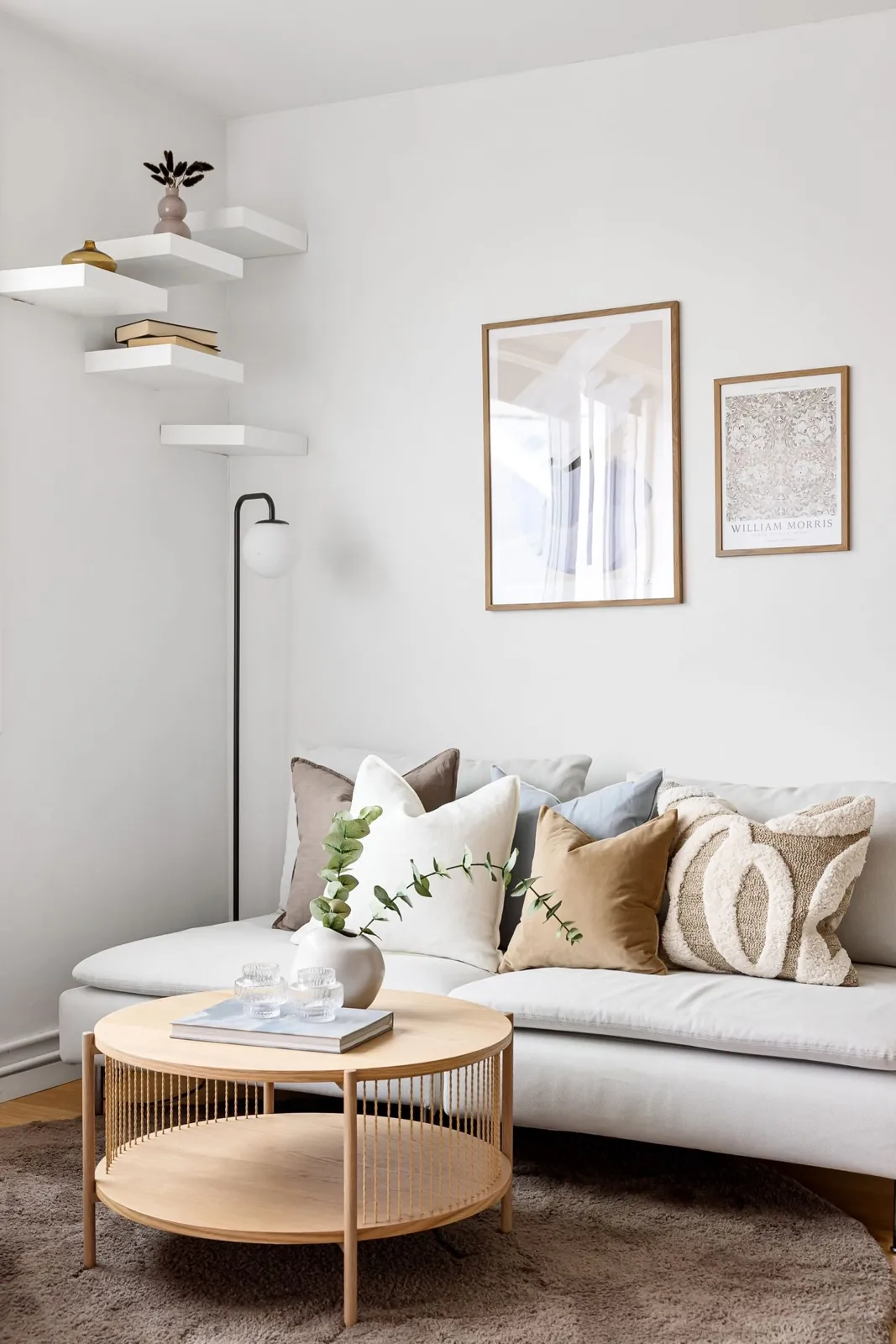
Change one substantial textile
A throw, cushion cover or suitable light bed covering can alter the feel of a room without replacing several objects. Choose according to comfort and care requirements, not just appearance. Store the item it replaces clean and dry, with a clear destination rather than adding it to an already crowded chair.
Keep the number of seasonal items limited by available storage. If every change requires several new containers, the routine may be creating more work than pleasure. A small selection that genuinely gets used is easier to maintain than a separate decorative collection for every season.
Move light towards the evening activity
As daylight hours shift, the seat used for reading or the table used for projects may need more appropriate artificial light. Try repositioning an existing lamp where safe and practical. Check glare, reach and cable routing, and use lamps and fittings within their specified requirements.
During brighter periods, adjust suitable blinds or curtains to manage sunlight and privacy. Avoid placing delicate fabrics or artwork in prolonged direct sun without considering their care guidance. Seasonal adjustment is often about using what is already there more effectively rather than adding another object to the room.
Edit the surfaces
Remove objects that no longer support the current routine. A tray of outdoor essentials may move to storage, while a small place for current books becomes useful near the sofa. Keep the amount of display comfortable for the surface's everyday job. A table should still hold a drink or a meal without a complicated clearing process.
If you enjoy a seasonal natural detail, choose one appropriate to the household. Check plant or flower suitability around pets and children, and use stable, watertight containers. A modest arrangement can acknowledge the season without requiring every shelf to carry a themed object.
Reposition only what helps
A chair may work better slightly nearer a lamp during darker months or angled away from strong sun at another time. Keep changes small enough that they do not disrupt clear routes, heating or ventilation. Moving furniture for novelty alone can introduce inconvenience that the familiar arrangement had already solved.
Test the new position through ordinary use. Can you still reach storage, open the curtains and pass comfortably? If not, return the furniture and make the seasonal change through a smaller element. The room's everyday function should remain stable even as its softer details shift.
Make the change easy to reverse
Keep the displaced items together with a simple label if needed. Avoid creating a system that depends on remembering several hidden storage locations. A useful seasonal refresh should be straightforward both to begin and to undo when the room's needs change again.
Stop when the room feels ready for the coming weeks. You may have changed only a throw and the lamp position, and that can be enough. A low-effort approach leaves more time to enjoy the room while preserving the familiar arrangement that already makes the home comfortable.
Respond to the room's changing use and light before buying seasonal decorations.
A Swishover guide · Practical ideas to adapt to your own home.
Spotted something we should improve?