Choose a small finish line
Ten minutes is enough to make a living room easier to use, but it is not a promise to sort every cupboard. Decide what ready means today: somewhere comfortable to sit, a clear route through the room and a surface for a drink. These visible, useful outcomes keep the reset focused when you notice other jobs waiting nearby.
Set a timer if it helps you avoid drifting into an unrelated task. Keep a basket or bag for things that belong elsewhere, along with whatever you need for ordinary rubbish and recycling. Do not begin by emptying a drawer. The aim is to restore the room from its current state, not create a larger sorting project that cannot be finished now.
Collect what clearly does not belong
Take cups and plates towards the kitchen, put discarded packaging into the appropriate waste stream and gather belongings that have migrated from other rooms. Avoid making several separate trips for individual objects. Collect them in a manageable amount, then return them to their actual places when you leave the room.
Be careful with paperwork. A receipt, letter or small note may need action, so use a clear temporary place for unsorted papers rather than deciding their fate in a rush. That place should be reviewed later; it is not a permanent hiding spot. The reset removes visual spread without pretending unfinished decisions have been completed.
Restore the seats
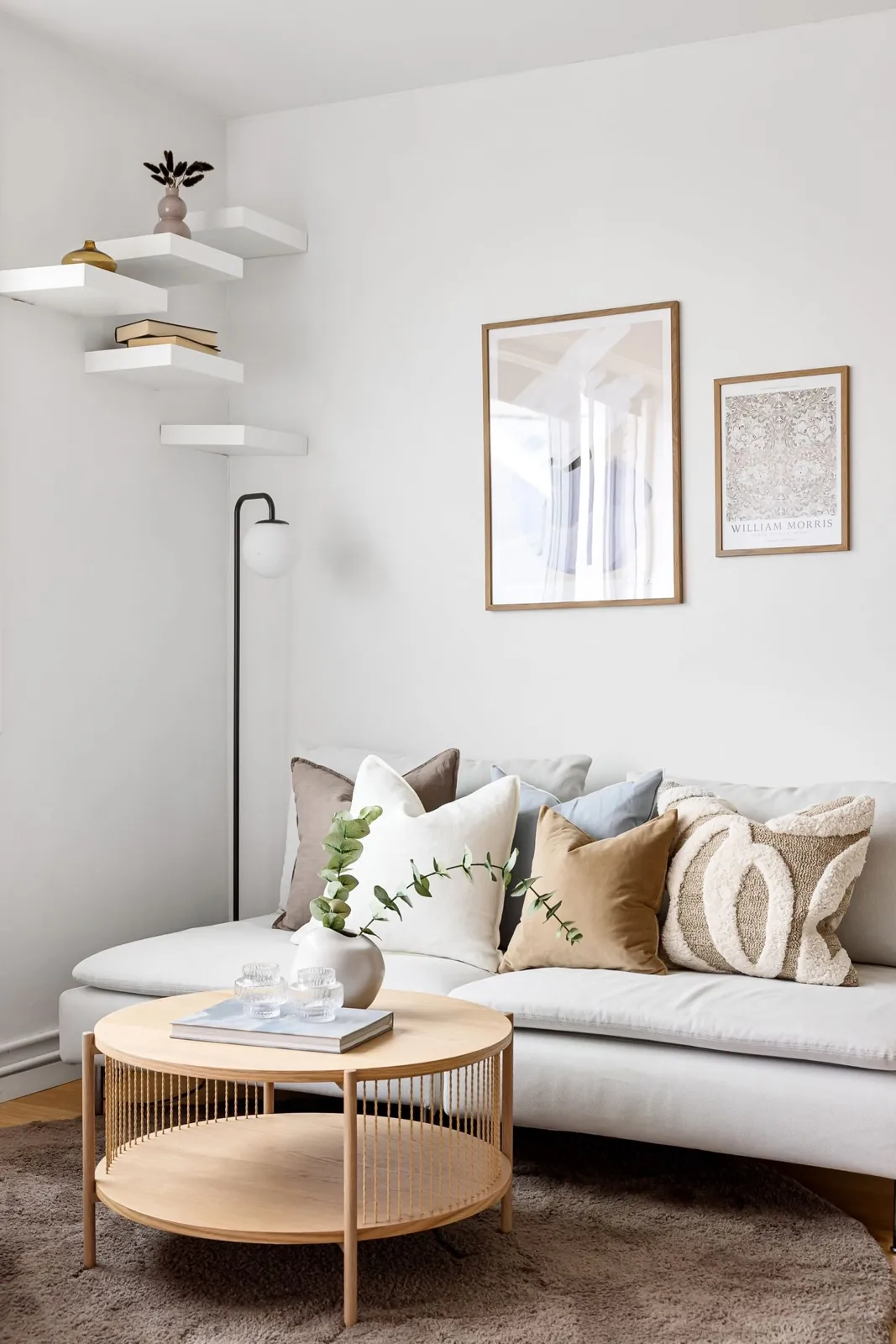
Move work bags, toys or laundry from the sofa into their proper storage or the collection basket. Straighten cushions only enough to make the seating comfortable. Fold a throw if it is clean and still needed, or put it with the laundry if not. There is no benefit in carefully styling a blanket that needs washing.
Check the floor beside chairs and under the edge of the coffee table. Small items often gather where people reach or put down a hand. Clear obvious trip hazards and keep frequently used objects accessible. If someone is still using a project or game, agree a temporary boundary instead of dismantling their activity without warning.
Clear the useful surfaces
Leave the coffee table or side table with room for its main job. Put remote controls together, return books to a sensible place and lift anything that blocks the surface unnecessarily. Wipe accessible marks using a method suitable for the material if time allows. Do not mix cleaning products or start a treatment that needs more time than you have.
Notice the missing storage decisions
You may notice that certain items have no obvious home. Make a brief note of those rather than forcing them into a random cupboard. Repeated clutter usually reveals a missing storage decision: a place for charging cables, a basket for a current knitting project or a tray for shared controls. That is a separate small improvement worth making later.
Finish by completing the loop
Use the final part of the reset to empty the collection basket into the correct rooms. Leaving it beside the door merely moves the untidiness. Return cleaning supplies to their safe storage and put the room's light where you need it for the next activity. Stop when the main functions are restored. A repeatable, modest reset is more useful than a rushed attempt to make the entire room immaculate.
Use the available minutes to clear seats, routes and useful surfaces; leave deeper tasks for another time.
A Swishover guide · Practical ideas to adapt to your own home.
Spotted something we should improve?