Accept that the table has several jobs
In many homes, the dining table is the largest useful surface. It naturally attracts work, crafts, parcels and school equipment. Trying to prohibit all those activities may be unrealistic. Instead, decide when the table needs to return to dining and what has to happen for that change to be easy. A shared expectation works better than repeatedly clearing someone else's belongings in frustration.
Notice which objects stay longest. A laptop can be closed quickly, but loose craft materials or papers awaiting a decision need a more deliberate pause. The storage solution should suit those actual items. A shallow project box, document tray or nearby drawer may help more than a large basket where everything becomes mixed together.
Create a nearby pause place
Choose a place where unfinished work can rest without being lost or damaged. Keep each person's materials reasonably separate if the table is shared. The pause place needs enough capacity for the current activity, but not so much that it becomes permanent storage for months of unrelated belongings. Review it when it begins to overflow.
Make moving things a short action. If packing away requires carrying several small objects to different rooms, the table will often remain occupied until the last minute. A suitable tray or folder can keep the activity together. Avoid using the floor or another seat as the default destination, because that simply transfers the problem to the next person who needs the space.
Keep table decoration easy to lift
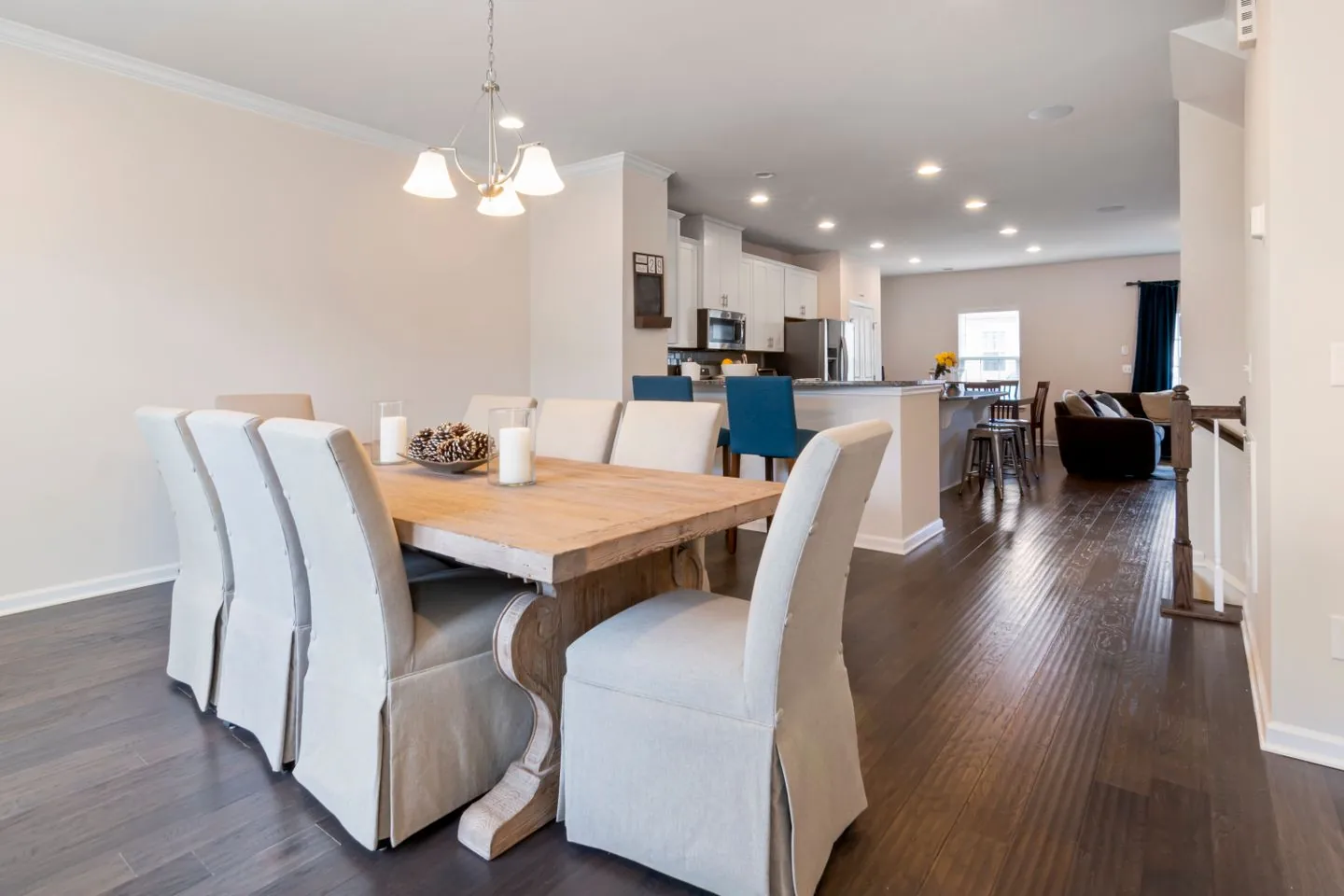
A low bowl or modest vase can make the table feel welcoming between meals. Choose something that can move in one action when serving dishes need the space. Several delicate objects spread along the centre may look appealing when the table is empty but make everyday use unnecessarily complicated.
Use mats and surface protection appropriate to the table and the food being served. A decorative runner is not automatically heat resistant or waterproof. Store the regularly used items close enough that setting the table feels straightforward. You do not need to keep every place permanently laid, especially if the surface serves other purposes during the day.
Agree the reset moment
Choose a natural point before dinner when work pauses and the table is cleared. The timing will vary by household, but it should leave enough time to handle materials carefully. Give a little notice when someone is concentrating on a task. A calm transition is easier than a sudden demand to remove an elaborate project as food arrives.
Children can help with a manageable part of the routine, such as returning pencils to a container or placing suitable items at the table. Keep expectations appropriate to age and ability. The aim is shared responsibility rather than a perfect arrangement. Adults' paperwork needs a home too; the routine should not apply only to toys and schoolwork.
Leave it ready for the next meal
After eating, clear food and dishes appropriately and clean the surface according to its finish. Return the central object if you enjoy it, but leave enough open space for the next use. If a project comes back out, it should still have its pause place available. A table stays ready through an easy cycle of use and reset, not by being kept permanently untouched.
Give temporary table activities a proper place to pause before the meal begins.
A Swishover guide · Practical ideas to adapt to your own home.
Spotted something we should improve?