Begin after daylight fades
An evening room is difficult to judge at lunchtime. Wait until daylight has faded, switch off the main ceiling light and notice where the room becomes inconvenient. Perhaps the sofa is comfortable but the page of a book is gloomy, or the far corner disappears while the television dominates everything. Those observations tell you more than simply counting how many lamps the room contains.
Keep the existing lamps in place for this first look. Switch them on individually, then together. A lamp that feels weak on its own may provide exactly the gentle background light needed beside a stronger reading light. Moving a useful lamp is often enough to change the balance without introducing another object or cable.
Give each lamp a reason to be there
A reading light needs to illuminate the task without shining directly into your eyes. Try its position while holding your usual book or craft project. Check whether your shoulder casts a shadow and whether the shade stays comfortable when you lean back. Adjustable fittings are useful only if their range of movement actually reaches the place you work.
Light the room around the task
A second lamp can soften another part of the room rather than competing with the first. On a sideboard, it might reveal the wall and nearby furniture, making the whole room easier to read visually. A small light on a low table can provide intimacy, but its shade should still screen the bright bulb from neighbouring seats.
Mix the shapes, connect the feeling
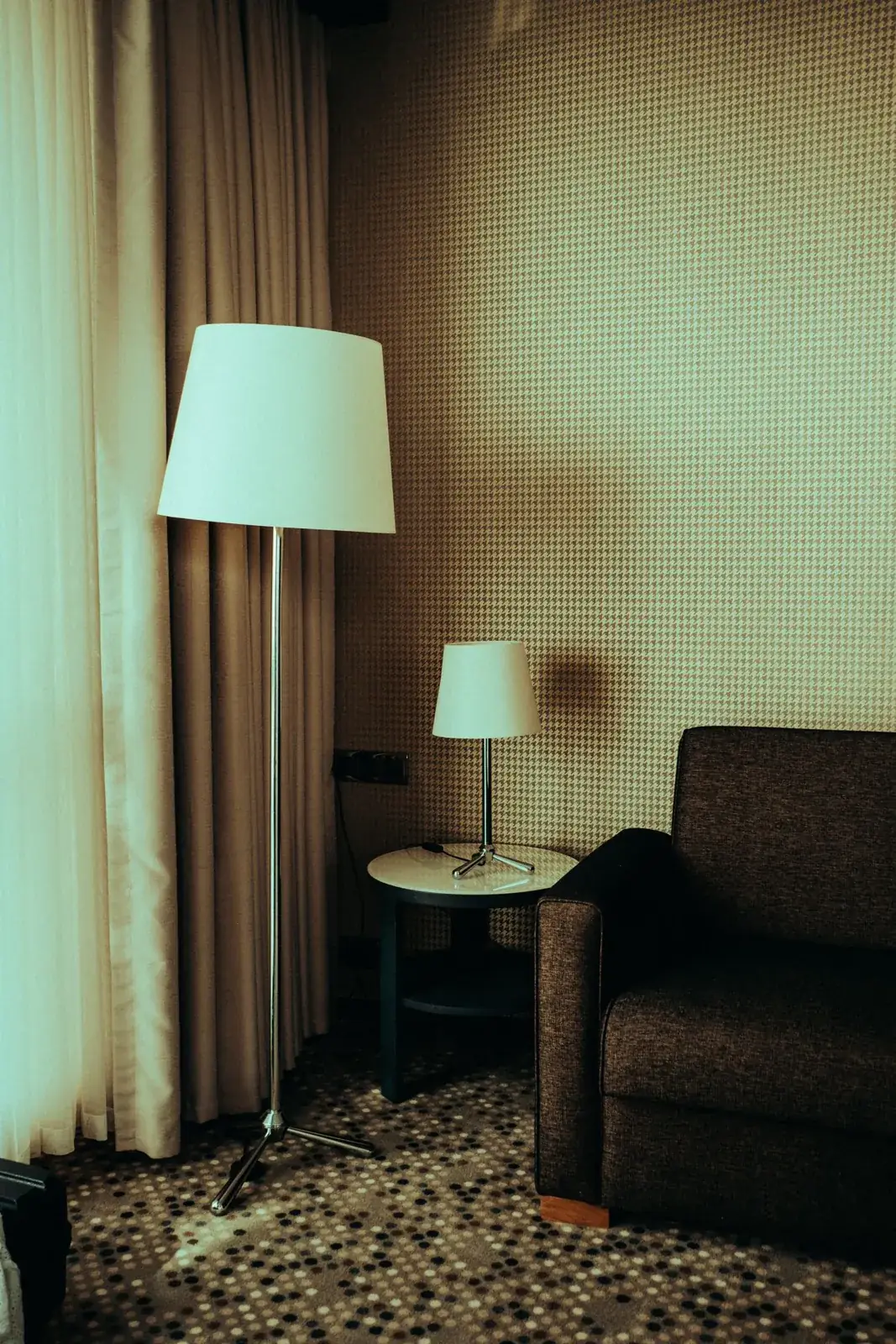
Lamps do not need matching bases. A slim metal floor lamp can sit happily with a broad ceramic table lamp when their colours and proportions make sense together. Look for a modest connection, such as warm finishes or similarly quiet shades, rather than purchasing a set simply because the pieces were photographed together.
The colour of the light matters too. Check bulb specifications and the fitting's permitted type and rating. Very different light colours can make one side of the room feel unrelated to the other. If changing bulbs, compare a small number in the actual room before buying replacements for every fitting. Shade material and wall colour also affect what you see.
Look for glare and awkward routes
Walk between the entrance and your favourite seat with the lamps on. A bare bulb visible through an open shade can be uncomfortable even if it looks attractive from directly in front. Reflections in a television or glazed picture may become distracting at night. Small changes in position can sometimes solve these problems more effectively than reducing all the light.
Keep cables away from walking routes and avoid stretching one across an open floor to achieve a symmetrical arrangement. Do not overload sockets or improvise electrical alterations. Where a useful position lacks a suitable supply, reconsider the placement or ask a qualified electrician about a permanent solution rather than treating extension leads as decorative details.
Make the evening setup easy
The best combination is one you will actually turn on. Put switches within comfortable reach, and decide which lights you normally need together. You might want the reading lamp and sideboard lamp for a quiet evening, but a little more background light when friends visit. A flexible room offers those choices without requiring every lamp to be used at once.
Place lamps around activities, then judge their combined effect from your usual evening seat.
A Swishover guide · Practical ideas to adapt to your own home.
Spotted something we should improve?