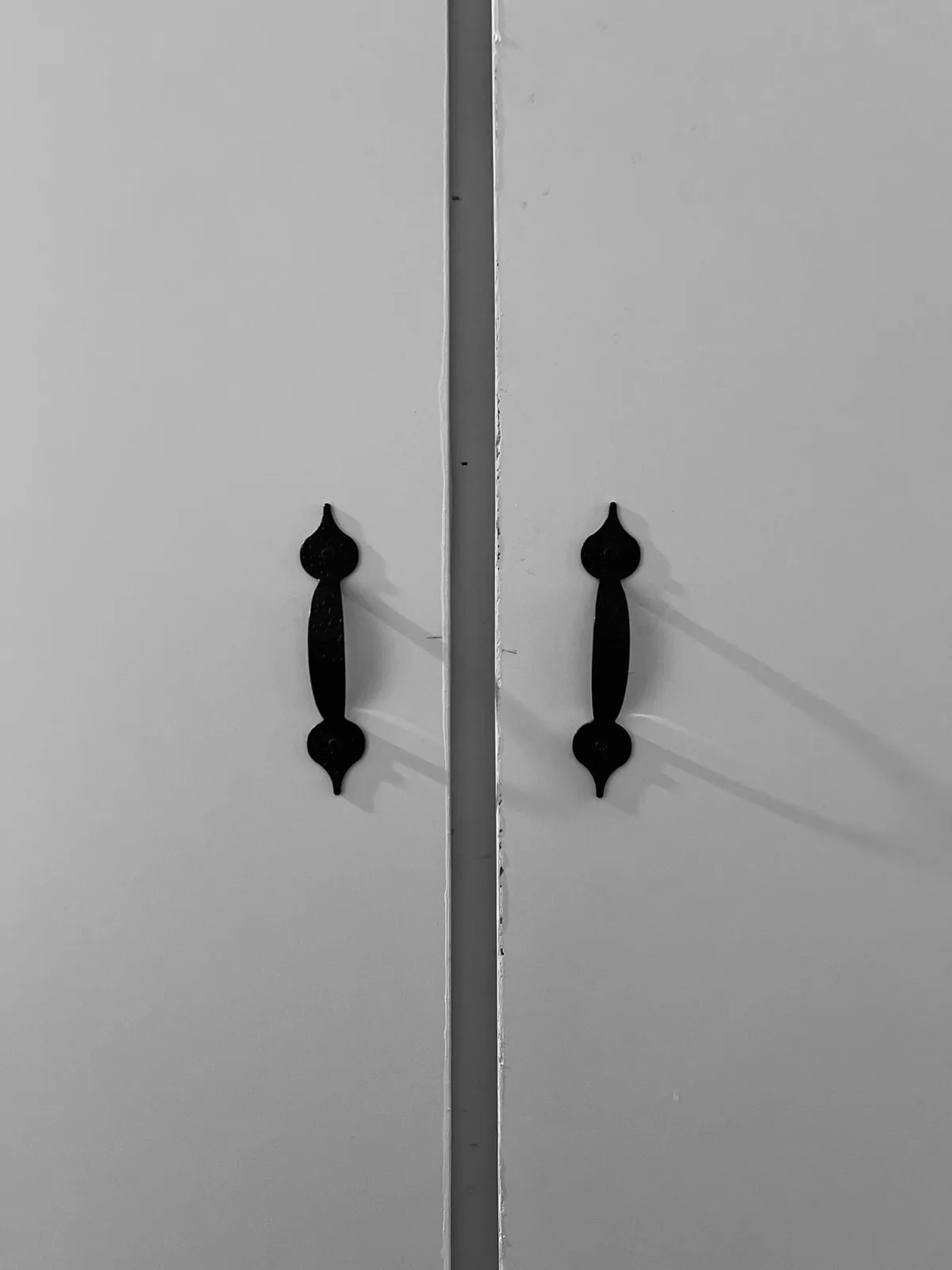
Inspect one handle before shopping
A handle seems like a small purchase until the new one leaves an old fixing hole visible. Start by looking closely at an existing handle and the cabinet surface around it. Check for worn finish, dents or an outline left by the old base. A replacement with a smaller footprint may expose those marks, even if its screw holes line up perfectly.
Photograph the handle from the front and inside the door. Note whether it uses one fixing or two, and whether drawers and cupboards share the same design. Kitchens often contain more variations than expected. A long drawer may have different spacing, while a corner cupboard might need a shape that avoids contact with the neighbouring front.
Measure the fixing centres
For a handle with two screws, measure between the centres of the existing holes, not the overall length of the handle. Record the measurement carefully and compare it with the manufacturer's drawing. Also note the thickness of the door or drawer front, because the supplied screws must suit that construction and the new handle.
Keep a reversible change reversible
If the kitchen is rented, obtain permission before changing fittings and keep the originals with their fixings labelled. A genuinely reversible update uses the existing holes and leaves the doors sound. Drilling fresh holes creates a different kind of alteration and may require finishing work that is much more involved than changing a few accessories.
Choose with your hands as well as your eyes
A narrow bar can look elegant but feel awkward if there is little space for your fingers. Test a sample where possible, especially if someone in the household finds small knobs difficult to grip. Think about opening a heavy pan drawer with damp hands or reaching a cupboard above the worktop. The handle should make those ordinary movements comfortable.
Notice projecting ends, sharp edges and shapes that could catch clothing as you pass. A finish that looks lovely in a close-up photograph may show fingerprints or feel slippery in regular use. Manufacturer care instructions can help distinguish an easy everyday choice from one that needs more careful handling than you want in a busy kitchen.
Relate the finish to the room
There is no need for every metal in the kitchen to match exactly. Look at the handles beside the tap, lighting and appliances, but judge the overall balance rather than individual samples in isolation. A dark handle might give pale doors more definition; a quieter finish can let timber grain or colourful tiles remain the main feature.
Order one suitable example before committing to the whole room. Hold it against several fronts in daylight and with the evening lights on. Check it on the least convenient door as well as the most photogenic one. Handles that work beautifully on a broad drawer can feel oversized beside a narrow cupboard at the end of a run.
Finish the change carefully
Use the correct tools and the fitting instructions, protecting the cabinet surface as you work. Avoid forcing an unsuitable screw or overtightening against a delicate door front. If a fixing spins or the existing material is damaged, investigate that problem rather than assuming a larger screw is the answer. After installation, open every door and drawer fully, check for collisions and keep a record of the chosen model for any future replacement.
Check hole spacing, screw fit and hand clearance before ordering a full set.
A Swishover guide · Practical ideas to adapt to your own home.
Spotted something we should improve?