Establish the limits first
A mantel is part of a fireplace, so begin with the way that fireplace is used. Follow the appliance or fireplace guidance on clearances and suitable materials, keeping combustible decorations away from heat. A purely decorative fireplace has different practical demands, but objects still need a stable surface and must not be easy to knock down from the edge.
Measure the useful depth rather than assuming every favourite vase will fit. Check for a sloping or uneven top, and look at how far an object projects beyond it. Tall, narrow pieces deserve particular care. The most attractive arrangement is not worth keeping if it depends on an unstable balance or makes normal use of the room more awkward.
Choose the piece that sets the scale
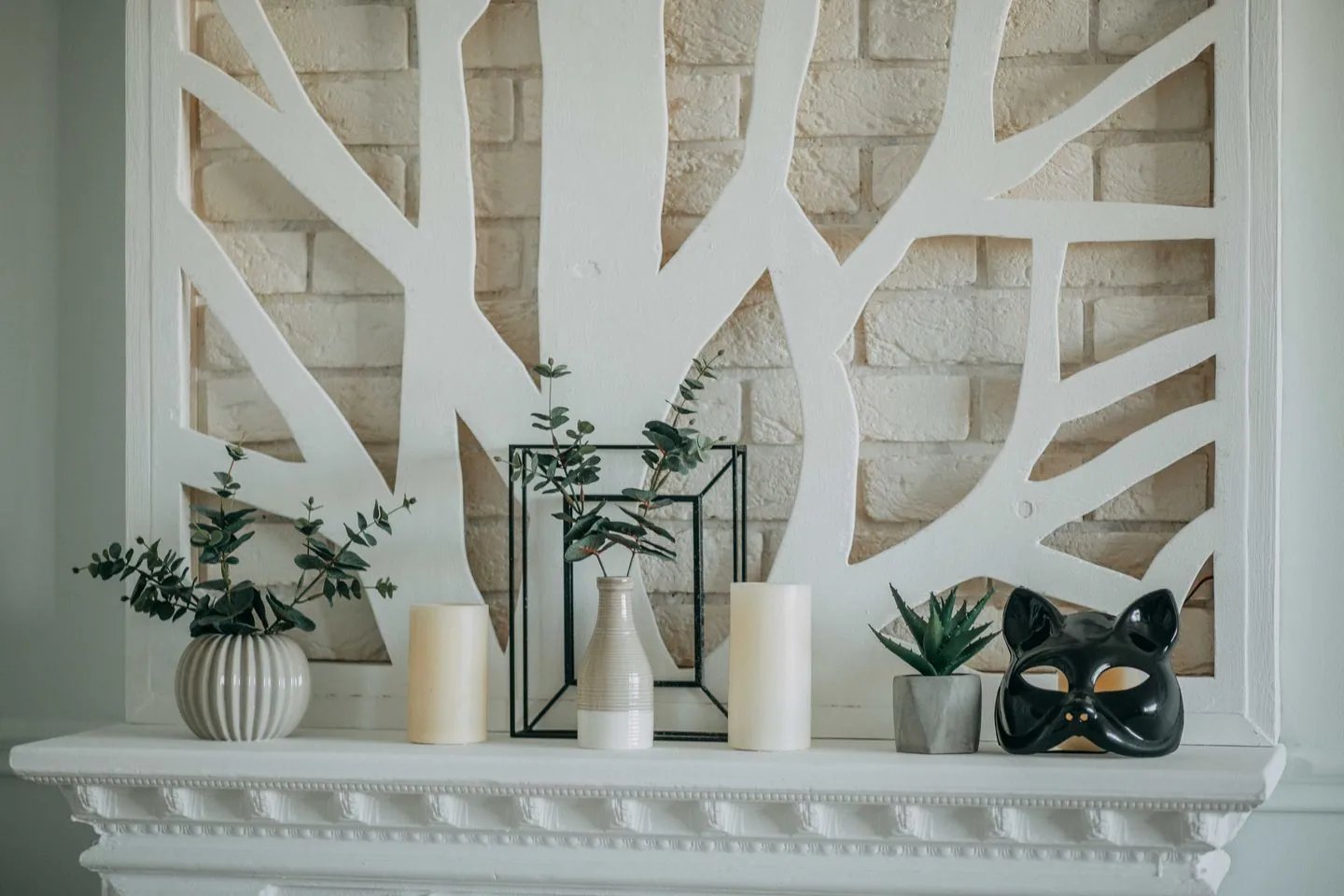
One substantial picture, mirror or object can give the composition a starting point. Without it, a row of small ornaments may seem to float above the fireplace with no clear relationship to its size. Try the main piece slightly away from the centre if you want a less formal result, then assess it from the places where people normally sit.
Artwork should be mounted appropriately rather than casually propped where it might slip. Consider the material and heat exposure too. If you cannot safely place a large piece above the mantel, let the wall remain quiet and use a lower arrangement on the shelf. An uncluttered wall can make the fireplace itself feel more deliberate.
Balance weight instead of matching shapes
A broad, low bowl at one side can visually balance a taller, slender vase at the other. Their outlines differ, but both have enough presence to belong. Work with the actual colours and materials: a dark object can feel visually heavier than a pale one of similar size. Move pieces gradually rather than trying to calculate a perfectly balanced arrangement.
Leave a pause between groups
Leave a meaningful gap between groups. That open space prevents an asymmetrical display from looking like a line of objects pushed together. Avoid filling a gap simply because it exists. If one end feels too empty, first try moving the main piece or removing something from the crowded end before adding another accessory.
Give small objects a clear place
Small items are easiest to read when they have a connection. Two pieces of pottery with related finishes can form a little group, while unrelated souvenirs scattered across the full length can feel restless. You do not have to display every treasured object at once. Keep a few elsewhere and change the mantel when you genuinely want a different view.
Look at the display from an angle as well as straight on. A mantel often sits beside a walking route, where the sides of objects and the backs of frames are visible. Make sure nothing depends on being seen from a single photographic viewpoint. Useful styling survives ordinary movement around the room.
Keep the shelf easy to maintain
Dusting offers a good test of whether the arrangement is too complicated. If cleaning requires remembering the precise position of a dozen small pieces, simplify it. Take a quick photograph if it helps you compare versions, but trust how the room feels in person. A slightly irregular arrangement can feel settled when it leaves the fireplace clear, respects its use and gives each chosen piece room to be noticed.
An uneven arrangement needs a clear relationship between its pieces, not equal objects at either end.
A Swishover guide · Practical ideas to adapt to your own home.
Spotted something we should improve?