Compare the chair with your table
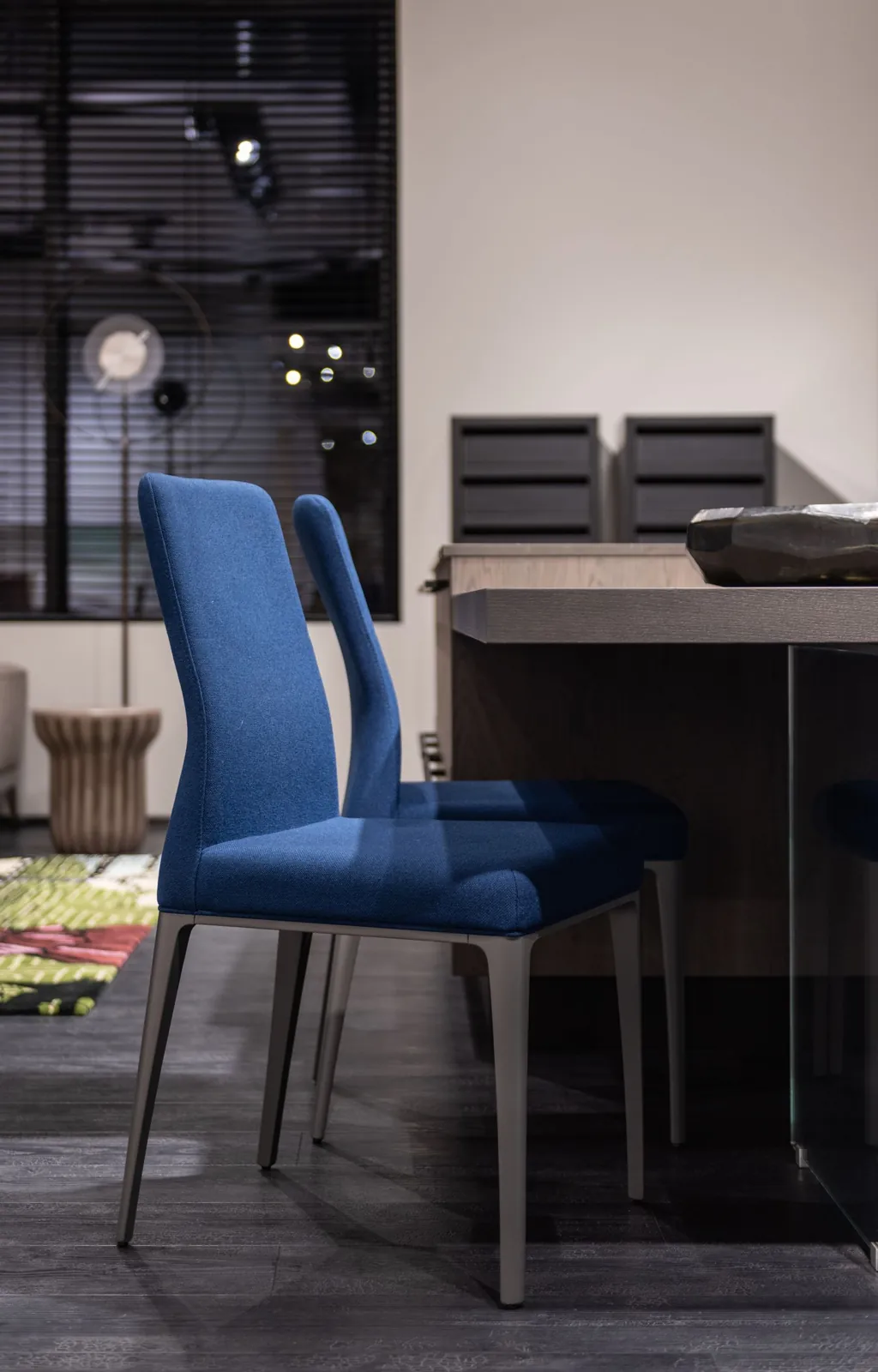
Record the table's height and the clear space beneath its apron or supports. Compare that with the chair's seat and arm dimensions. A chair may look suitable beside the tabletop yet fail to slide underneath or leave comfortable space for legs. Ask for detailed measurements if the product page only gives the overall height and width.
Check the width available between table legs as well. Two chairs that fit along the edge on paper may feel cramped when their arms or backrests are considered. At the ends of a table, supports can be particularly intrusive. A useful seating count depends on the actual table-and-chair combination rather than a general label such as seats six.
Sit for more than a moment
If possible, test the chair in the posture used for a meal. Check whether your feet rest comfortably and whether the seat edge presses behind your knees. Lean back and notice where the backrest supports you. An unusual shape can be appealing, but the comfort should remain convincing after the initial impression has passed.
Different household members may experience the same chair differently. Consider the people who use it most often, including anyone who finds low seats or armless designs difficult to rise from. A mixed set can be a sensible practical choice where needs vary, provided the chairs fit the table and work together visually in a way you enjoy.
Move the chair as you would at home
Pull it out, sit down, get up and push it back. Weight matters if it must be moved frequently, while a very light chair still needs appropriate stability. Check how the feet interact with your floor and whether suitable protective pads are available or recommended. Scraping and difficult movement can become more noticeable than the design itself.
Measure the space behind occupied chairs in the room. People need to leave the table and pass nearby without a complicated sequence of movements. Arms, wide backs and splayed legs can increase the working footprint. A compact seat does not always mean a compact chair, so compare all the dimensions before buying several.
Consider upholstery and cleaning
Upholstery can add comfort and soften the room, but it comes with care requirements. Read the cleaning guidance and consider normal spills, children, pets or craft activities at the table. Removable covers are useful only if removal and washing are permitted and practical. A fabric sample can help you judge texture as well as colour.
Hard seats are not automatically uncomfortable, and adding a cushion is not always the best solution. A loose pad may slide or reduce usable seat depth. If using one, check that it fits securely and is appropriate for the chair. Choose the underlying chair for comfort rather than expecting accessories to correct a poor fit.
Check the whole purchase
Confirm assembly requirements, care information, warranty and returns, particularly when ordering a full set. If possible, inspect one chair before committing to several. Look at joints and finish, but avoid assuming appearance alone proves durability. The strongest choice is a chair you can sit in comfortably, move easily and maintain realistically, with enough room at the table for the meal and the conversation to feel relaxed.
Seat comfort, legroom and easy movement should lead the choice of everyday dining chairs.
A Swishover guide · Practical ideas to adapt to your own home.
Spotted something we should improve?