Map the morning routine
The tightest part of a bedroom often reveals itself when a wardrobe door, an open drawer and a person getting dressed all occupy the same place. Sketch the room with those doors open. Include the bedroom door, any radiator and the space needed to reach curtains. This practical drawing is more useful than an arrangement based entirely on the bed's appearance.
Notice which actions overlap. If two people get ready together, a dressing spot beside the wardrobe may need more attention than a second bedside cabinet. If the room is mainly used by one person, access can be arranged differently without pretending the layout must be symmetrical.
Let the bed settle first
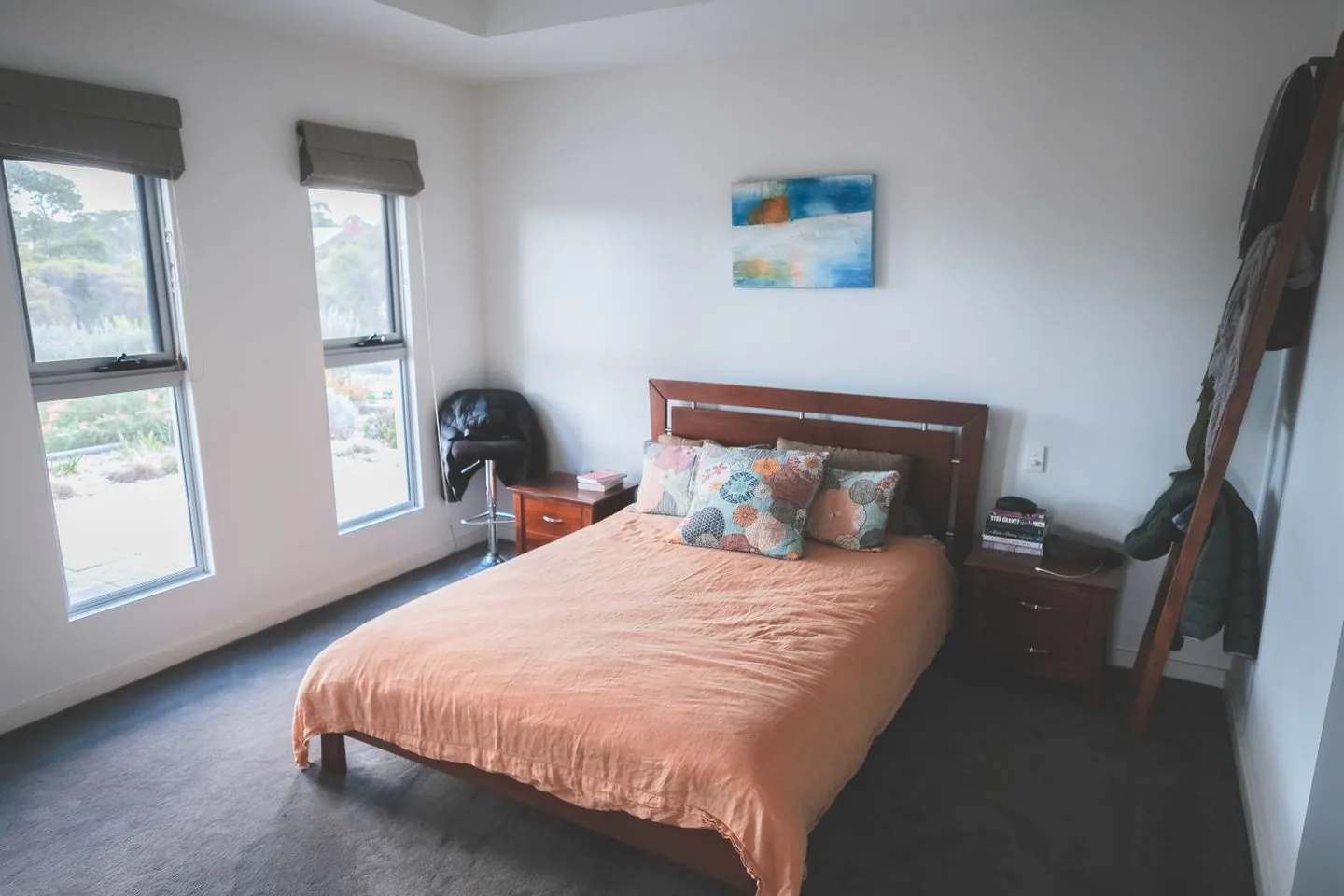
Try the bed in the position that leaves the simplest movement between the entrance and clothing storage. In some rooms this is opposite the door; in others it is along a side wall. Avoid blocking a radiator or forcing someone to climb over furniture to reach a window. Check the actual frame dimensions, because upholstered sides and a projecting footboard use more room than the mattress.
Before moving heavy furniture, mark possible positions on a plan or with removable floor markers suited to the surface. Include the bedding overhang. A layout that looks generous with a bare mattress can feel tighter once a duvet and bedside objects are added.
Make bedside space earn its place
A bedside surface needs to hold the things used at night, not replicate a furniture catalogue. A narrow shelf, small stool or compact drawer unit may be enough for a book, water and a light. Think about the lamp base too: a large shade on a tiny table can leave nowhere to put anything else.
Keep charging cables out of walking routes and avoid balancing drinks on an unstable surface. If one person needs medicines, glasses or accessibility equipment nearby, prioritise reliable reach over visual matching. A pair of different bedside pieces can look deliberate when their heights and finishes relate.
Store by frequency rather than appearance
Reserve the easiest drawers and shelves for the clothes worn most often. Occasional bedding and out-of-season items can move higher or into suitable under-bed storage. Measure the clearance beneath the bed before buying containers, including the space needed to pull them out. Soft bags that jam against the frame will quickly become neglected.
Leave a small destination for worn-but-wearable clothing. A few hooks or a dedicated section of a rail works better than allowing an entire chair to disappear under outfits. The aim is a defined limit, not another open surface that gradually becomes a second wardrobe.
Reduce the work your eye has to do
Once the layout works, simplify the busiest view, usually the one seen from the doorway or pillow. Close a cupboard, group small objects on a tray or relocate packaging rather than stripping away every personal detail. One favourite print can feel more restful when it is not surrounded by several unrelated storage systems.
Check the room at bedtime as well as in daylight. A lamp that gives comfortable light, curtains that move freely and a clear route to the door contribute more to calm than perfectly matched cushions. Keep the arrangement that supports those ordinary moments, even if it is not the most symmetrical option.
Place the bed for comfortable use, then solve the storage movements around it.
A Swishover guide · Practical ideas to adapt to your own home.
Spotted something we should improve?