Decide what belongs beside the sofa
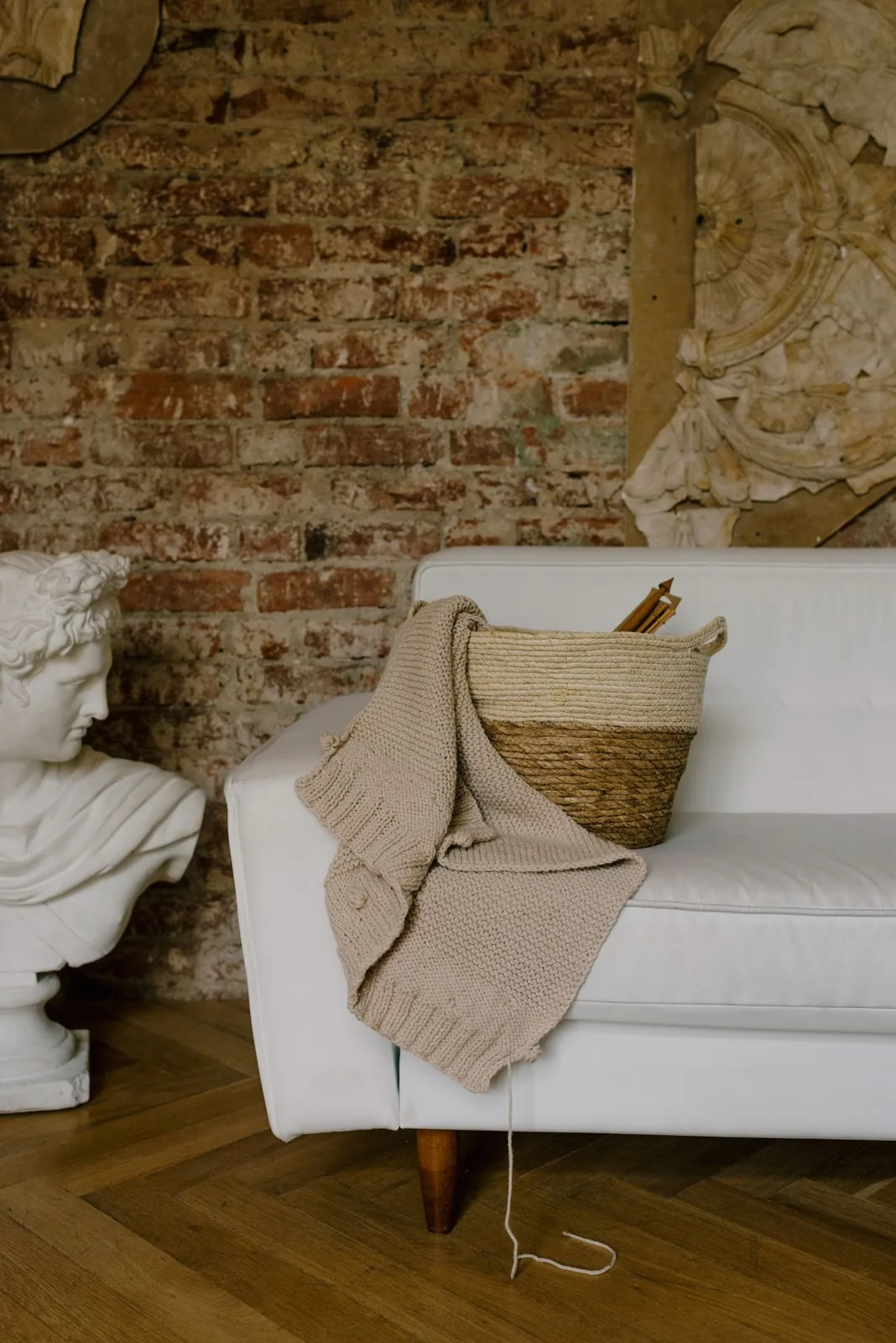
Look at the items that repeatedly gather around your usual seat. A current book, a throw and knitting may need a nearby home. Post, shoes and kitchen objects probably need somewhere else. A basket can support a habit, but it cannot solve the absence of homes for unrelated possessions throughout the house.
Choose one main category or a small compatible group. Soft textiles can sit together, while reading materials may need a different shape and more upright support. Mixing chargers, snacks, magazines and blankets in one deep container makes the bottom difficult to reach and often returns the useful items to the sofa.
Match the shape to the contents
A wide, shallow basket makes folded throws easy to see and retrieve. A taller design may suit rolled textiles but can be awkward for small objects. Measure the space where it will stand, including the area needed to lift it and walk past. Handles can project beyond the basket's stated width.
Check the material against what it will hold. A rough interior may snag delicate fabric, while a soft-sided basket may collapse when partly empty. A suitable lining can help in some cases, but it adds another item to clean. Choose a design that works with the contents rather than relying on several fixes afterwards.
Put it within reach without narrowing the route
The best position is usually beside or near the seat where the contents are used. Avoid placing it in the gap everyone steps through to reach the sofa. Test the position with the footrest extended, if there is one, and with a person carrying a drink past the chair.
Keep it away from heat sources and follow relevant clearances. Do not use a decorative basket to conceal powered equipment unless the products are specifically suitable for that arrangement. Soft contents, chargers and adapters are not automatically compatible just because the cables disappear from view.
Leave room to return things easily
A basket packed to its rim is difficult to use. Leave enough room that a throw can be put back without folding it into an exact shape. The same applies to a current craft project: if returning it requires rearranging every other item, it is likely to remain on the cushion.
Do not compensate for overflow by adding another basket immediately. First check whether the contents still belong there. Finished magazines, spare blankets and abandoned projects can move to more suitable homes. A small limit helps the basket remain connected to present use rather than becoming a record of everything once done on the sofa.
Build in a quick check
Empty the basket occasionally and clean it according to its material. This is a useful moment to remove crumbs, find missing items and check whether fabric is catching on damaged areas. Choose a frequency that suits actual use rather than creating an elaborate maintenance schedule for one household object.
Notice whether the basket makes the room easier to use. If everyone still drops items elsewhere, its position, shape or category may be wrong. Adjust those details before assuming more discipline is needed. A good sofa-side basket quietly supports an existing routine, with its contents visible enough to find and limited enough to put away without effort.
Choose its contents first and keep the basket easy to empty and move.
A Swishover guide · Practical ideas to adapt to your own home.
Spotted something we should improve?