Start with the sofa's shape
Look at the sofa without its extra cushions first. Note the seat depth, back height, arm shape and upholstery colour. A compact upright sofa may need only a small soft cushion at each end, while a deep seat may benefit from more substantial support. Keep any cushions supplied as structural parts of the sofa in their intended positions. The decorative mix should work around comfort rather than disguising a seat that no longer has room for a person. Sit down and check how much space remains before deciding how many extras to add. A photograph can tolerate a cushion-filled seat more easily than everyday use can.
Choose one connection
Pick a colour or material already present in the room as the starting point. This could be a quiet tone in a rug, the warmth of timber or a small detail in artwork. The cushions do not need to match it exactly; related shades can feel more natural than several objects bought in an identical colour. Keep the sofa fabric in the decision, particularly if it already has a strong pattern or texture.
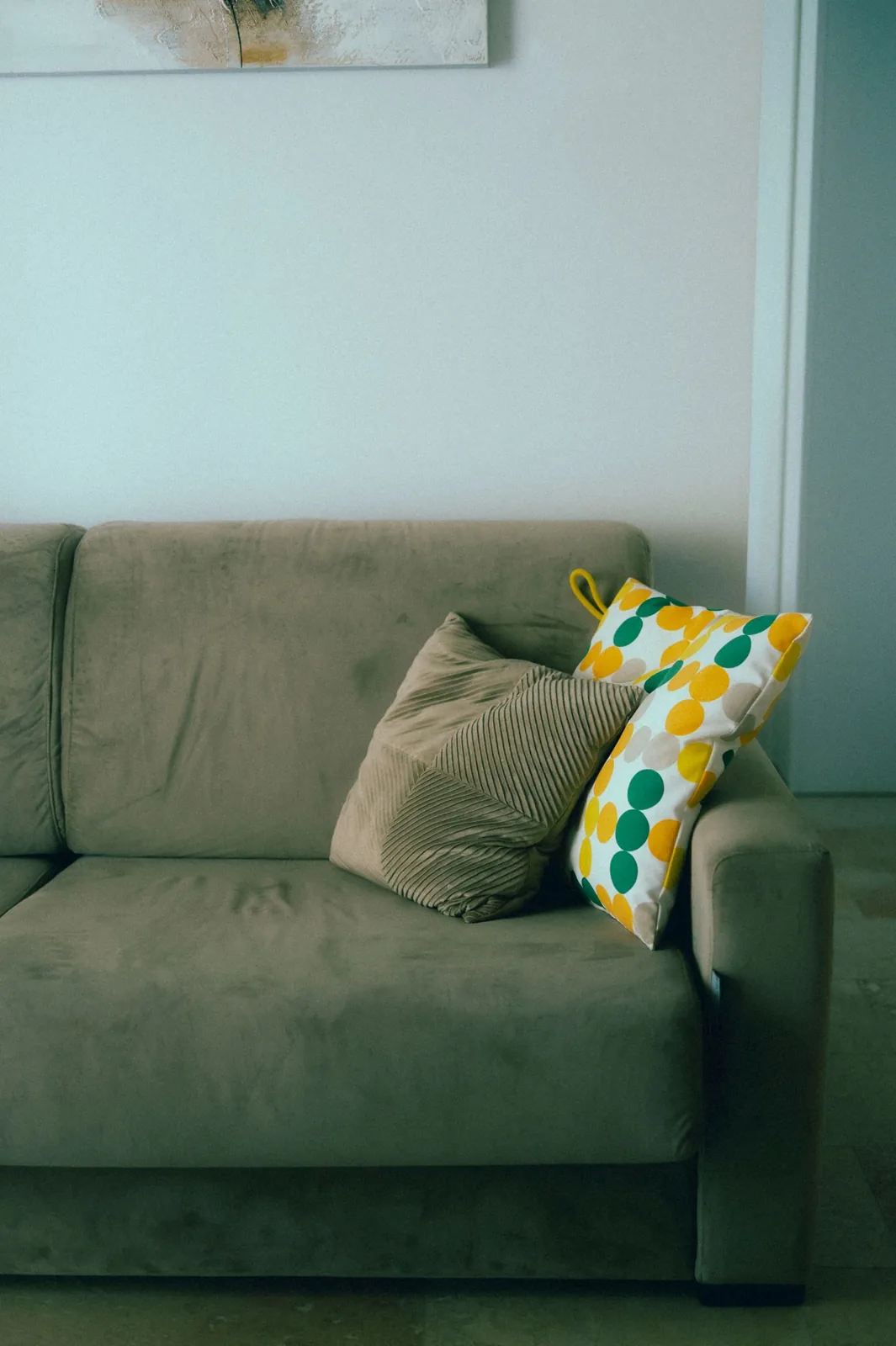
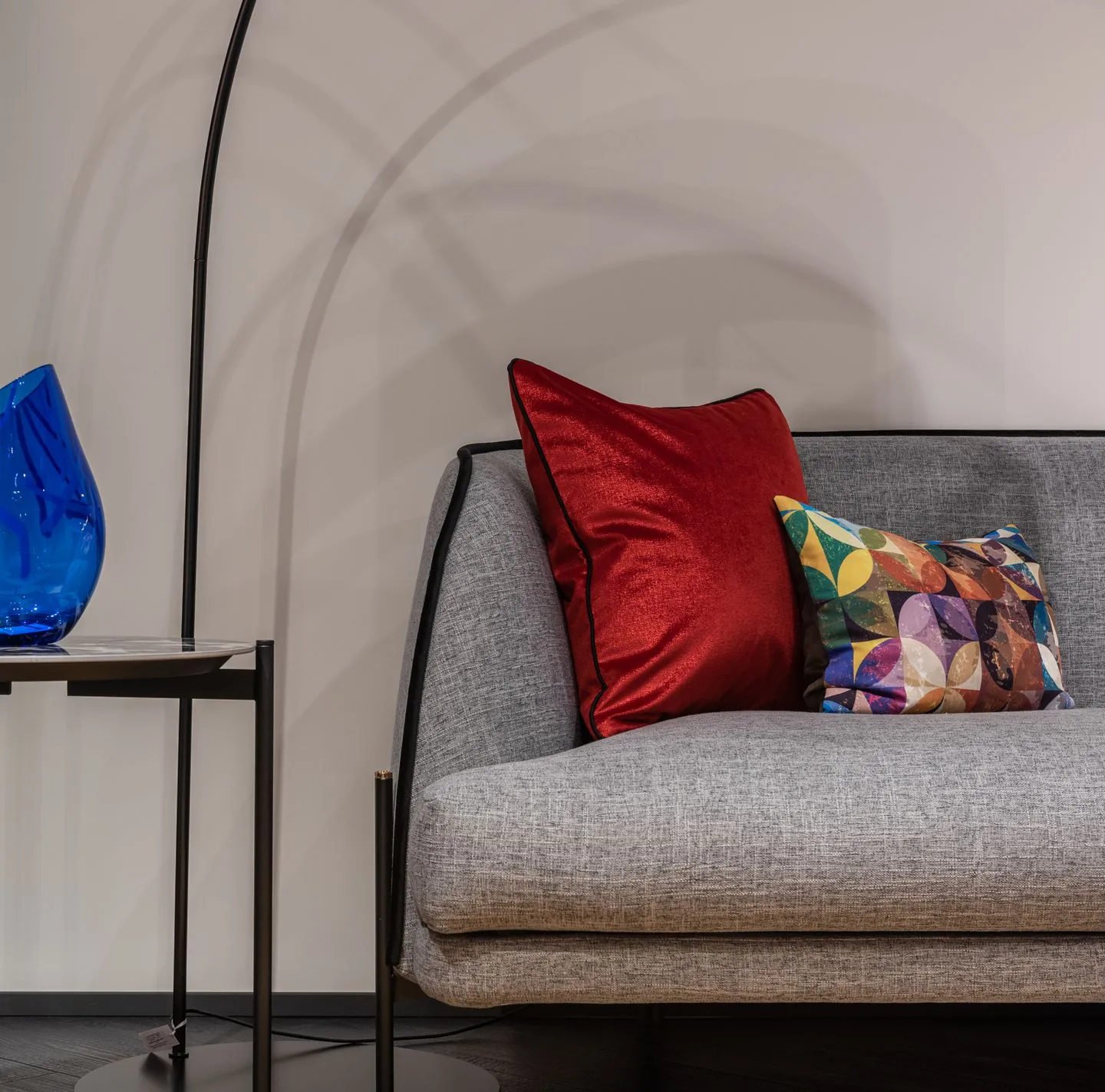
A useful small mix might combine one patterned cushion, one plain textured cushion and a smaller supporting shape. This is an option, not a formula. The number and arrangement should depend on the sofa's size and the way people sit.
Vary scale with a clear reason
Cushions of slightly different sizes can give a grouping depth, but each needs to remain useful. A larger square can sit behind a smaller rectangular cushion if there is enough seat depth. Avoid placing a tiny cushion in front of several oversized ones merely to create layers. On a narrow seat, one well-chosen shape may be more comfortable than a decorative stack.
Test both ends of the sofa from seated height. A very tall cushion can obscure a low back or block the natural place for an arm. If people always move a particular cushion to the floor, change its size, filling or role instead of insisting it remain in the arrangement.
Balance patterns and textures
When mixing patterns, vary their scale so they can be distinguished. A broad stripe and a small irregular motif may sit together more comfortably than two similarly sized busy prints. Connect them through a shared colour, then let a plain fabric provide a quieter area. Texture can create interest without adding another pattern: a soft weave, smooth cotton or subtle raised surface may be enough.
Check how the fabrics feel against skin and clothing, and follow care labels. Fragile trims or scratchy textures may suit occasional use less well than a robust washable cover. Appearance matters, but these are objects people lean against and handle every day.
Edit the mix after using it
Live with the arrangement for several evenings before adding anything else. Check whether the sofa remains comfortable for its usual number of occupants and whether the cushions are easy to return. A basket can hold a temporarily removed cushion, but it should not be necessary to unload half the display whenever somebody sits down. Reuse suitable inserts when changing covers, checking the dimensions and filling guidance. Keep unused covers clean, dry and labelled elsewhere. The refresh succeeds when the sofa feels different and still invites people to sit, rather than becoming a display that must be dismantled before it can be enjoyed.
Choose cushions around seat comfort, then connect a small mix through colour, scale and texture.
A Swishover guide · Practical ideas to adapt to your own home.
Spotted something we should improve?