Look beyond the glass
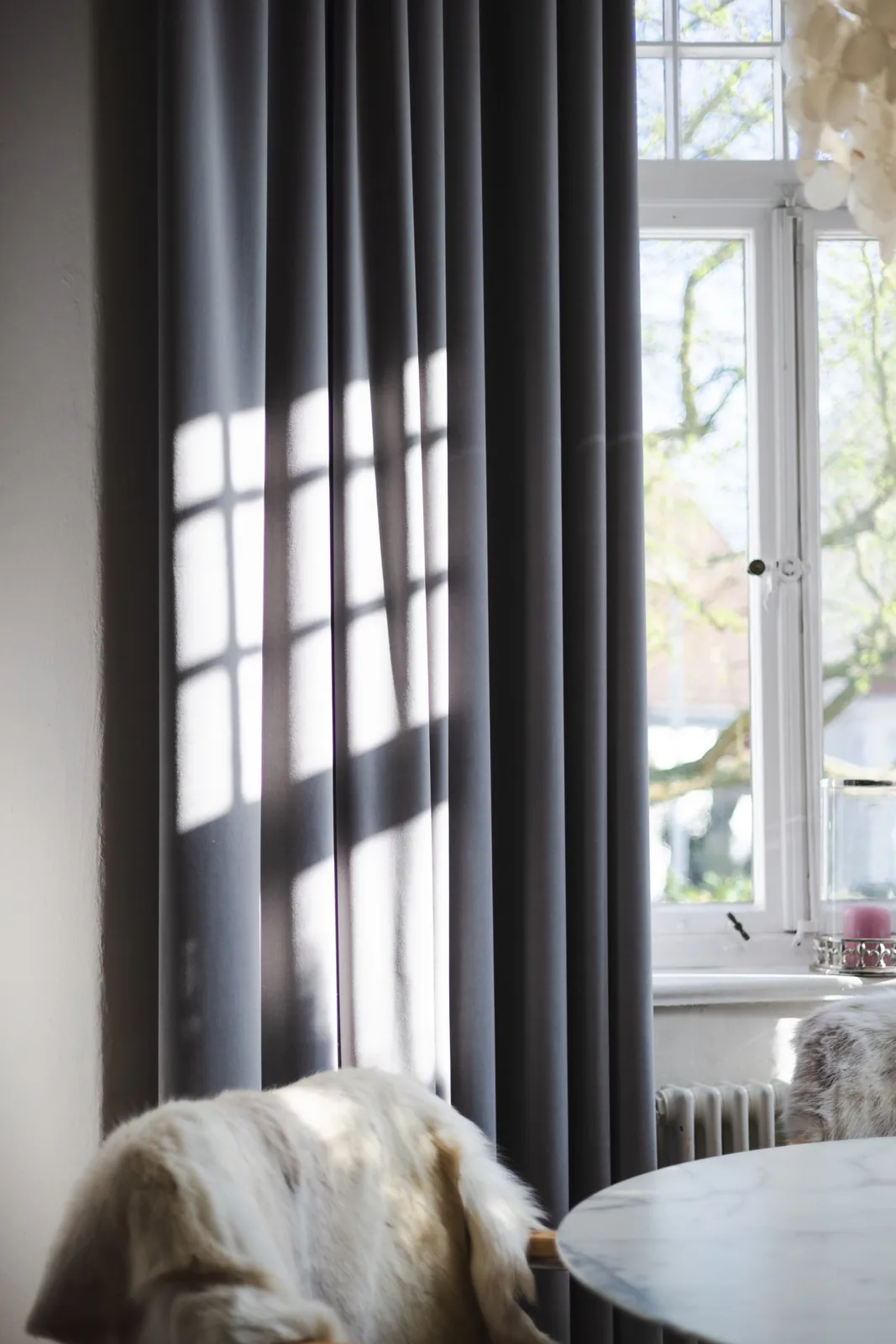
Curtains frame the whole opening, so begin with the window, surrounding wall, ceiling and nearby furniture. Note handles, radiators, vents and the way the window opens. A pole or track placed with care can make the window feel more generous, but there is no single height that suits every room. A small gap below the ceiling may work in one space, while a beam or sloping ceiling sets a different limit in another. Consider the whole wall from the room's main viewing position before deciding. The curtain should relate to the architecture rather than imitate a proportion that only works in a different house.
Allow fabric to move away from the light
Where wall space permits, extending the pole or track beyond the window can give the curtains somewhere to gather when open. This may expose more glass and make the opening feel wider. Measure the available wall on both sides, including corners, cabinets and light switches. The gathered fabric needs actual space; simply fitting a longer pole does not help if a wardrobe blocks one end.
Check how much room the chosen heading and fabric need when stacked. Thick lined curtains occupy more space than a light unlined panel. Aim for an arrangement that opens comfortably and does not force the fabric against a radiator or obstruct the window handle.
Measure from the correct point
The finished curtain length depends on the fitting and heading style. Measure from the point specified for the chosen system, not automatically from the top of the pole. Check the floor at several points because it may not be perfectly level. Decide whether the curtains should clear the floor, meet it neatly or end at a suitable sill position. A deliberate finish is more useful than an accidental one.
Long fabric pooling on the floor can be awkward in a busy room, especially with pets, children or frequent cleaning. Shorter curtains may be appropriate where furniture or heating affects the window. Follow relevant clearance guidance and do not drape fabric over heaters or other heat-producing equipment.
Choose fullness that suits the fabric
Curtain width affects both the closed appearance and the gathered stack. Use the heading and fabric supplier's measuring guidance rather than choosing a multiplier without considering the construction. Too little fabric can look strained when closed; too much may overwhelm a small window and become difficult to draw. If using ready-made curtains, compare the finished panel sizes with the actual fitting, not only with the glass width.
Consider lining and opacity according to the room's needs. A bedroom may need stronger light control than a sitting room, while privacy requirements can change between day and night. View samples in the window if possible, as a fabric can look quite different when daylight passes through it.
Fit for smooth daily use
Use a pole or track suitable for the curtain weight and install it with appropriate fixings for the wall or ceiling. Check for concealed services before drilling, and obtain any required permission in rented accommodation. Corded systems need appropriate safety arrangements, particularly where children may be present. Follow the manufacturer's instructions rather than improvising a fixing from appearance alone.
Once hung, open and close the curtains fully. Check for snagging, uneven hems and collisions with furniture. Adjust the gathers so the fabric hangs comfortably rather than forcing symmetrical folds that disappear during use. A generous-looking window is most successful when the curtains remain easy to operate every morning and evening.
Measure the whole window wall, allow room for the open fabric and fit the chosen heading and weight correctly.
A Swishover guide · Practical ideas to adapt to your own home.
Spotted something we should improve?