Begin with the useful empty space
Clear the coffee table and look at how people reach it from the surrounding seats. Notice where cups naturally land and whether anyone uses it for games, a laptop or a simple meal. Those activities need a clear area before decorative objects are added. A small table may only have room for one modest arrangement at one end. A larger surface can hold more, but it still needs usable space within reach of each seat. Do not place the entire display in the centre merely because that seems conventional. The best position is the one that makes the table easier to use while still looking considered.
Choose one main object
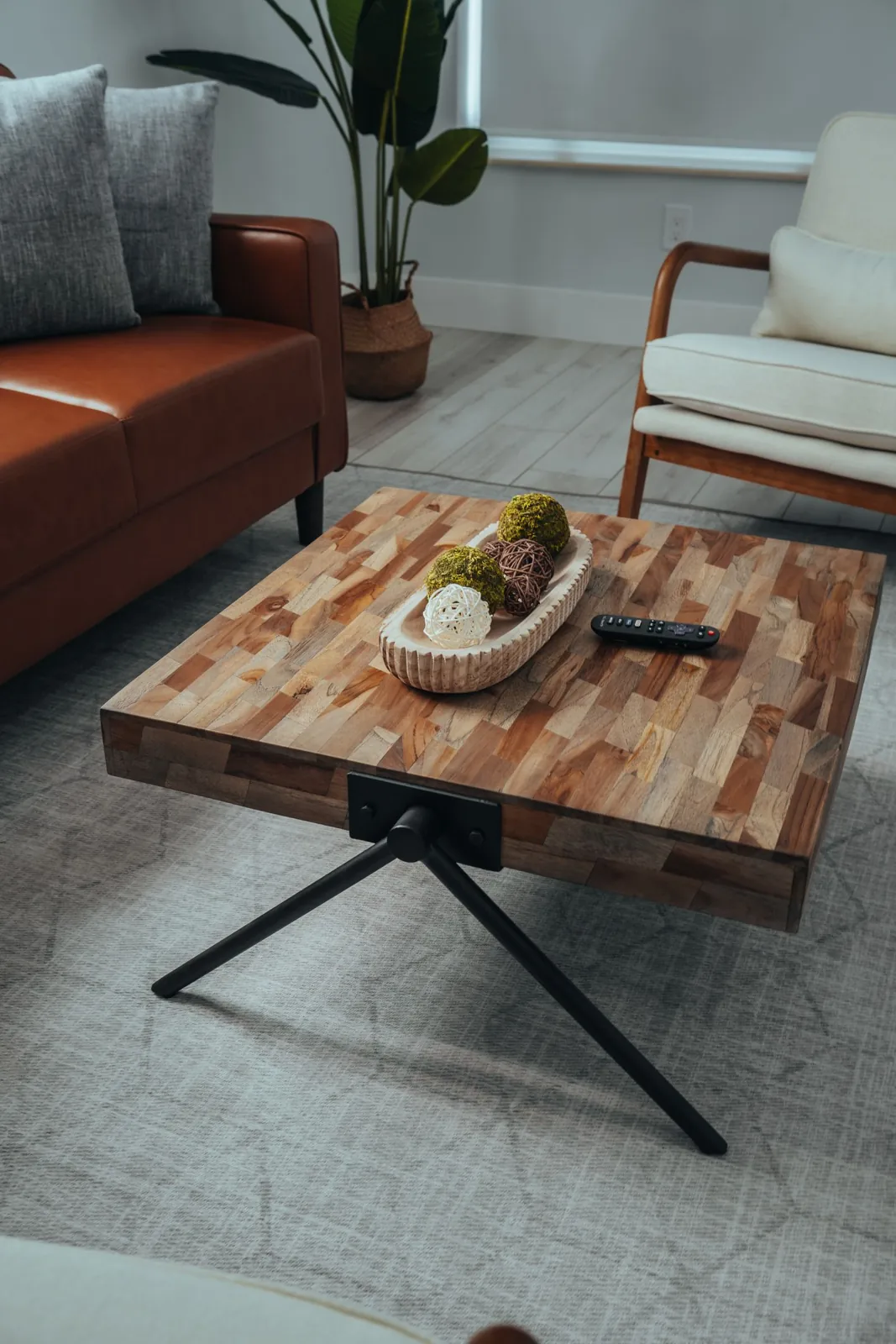
Start with a bowl, a low vase or a book that you actually enjoy. Choose its scale in relation to the table: a tiny object can look lost, while a wide tray may consume nearly all the surface. Keep height low enough that people can see and talk across the seating group. A tall arrangement may work on a side table better than on the coffee table itself.
Check stability and material. A vase should sit securely, with water kept away from books or electrical devices. Protect the furniture finish as appropriate. In homes with young children or active pets, fragile or top-heavy objects may not be the most practical choice for this low, reachable position.
Add a supporting shape
A second object can give the arrangement some variation: a small dish beside a book, or a simple stem beside a low bowl. Let the shapes differ enough to be readable without creating a crowded collection. There is no requirement to use a fixed number of objects. Two useful pieces may be more convincing than an arbitrary third item added to complete a styling rule.
Books should be ones you are happy to handle and move. Avoid a tall stack that makes the top object unstable or prevents anyone reading the lower volumes. A single book can provide a broad horizontal shape without turning the table into a display platform that must be dismantled before it can be used.
Use a tray when movement helps
A tray is useful if several small items need to be moved together for a board game or cleaning. Choose one with enough room for the group and little wasted border. Check that its feet or underside will not damage the table. An oversized tray can simply move the clutter into a defined rectangle while leaving no place for a cup.
Keep remote controls or other daily small objects in the arrangement only if their home is obvious. A shallow compartment or nearby drawer may work better than hiding them beneath decorative items. Coasters should remain accessible rather than being placed under a vase that must be lifted every time someone wants a drink.
Check the table from every seat
Sit down in the usual places and reach for the clear areas. Move any object that blocks a comfortable movement or is likely to be knocked by a sleeve. Walk around the table too, particularly if the room has a narrow route. A display extending beyond the tabletop creates unnecessary risk of catching or tipping.
Keep the arrangement easy to reset. Remove old cups, return books that are no longer being read and refresh flowers or greenery as needed. If the table serves several jobs, allow the display to stay small. The arrangement should make everyday use feel more pleasant, while leaving enough room for the ordinary objects that arrive during a normal evening.
Leave reachable working space first, then add a small stable group that can move easily when the table changes use.
A Swishover guide · Practical ideas to adapt to your own home.
Spotted something we should improve?