Sort by use before colour
A kitchen shelf must earn its place in a working room. Start by separating daily mugs, bowls or jars from objects used only occasionally. The everyday pieces should remain easy to reach and return. A pleasing colour arrangement is not successful if you have to lift a decorative jug every time you want a breakfast bowl.
Check the shelf's condition, fixings and stated load capacity before reorganising heavy crockery. Keep the total weight appropriate and avoid precarious stacks. If the shelf sits near cooking or washing areas, consider grease, steam and splashes. Some attractive display pieces are better placed elsewhere, where they will not need frequent cleaning or risk contaminating food preparation surfaces.
Notice the palette you already own
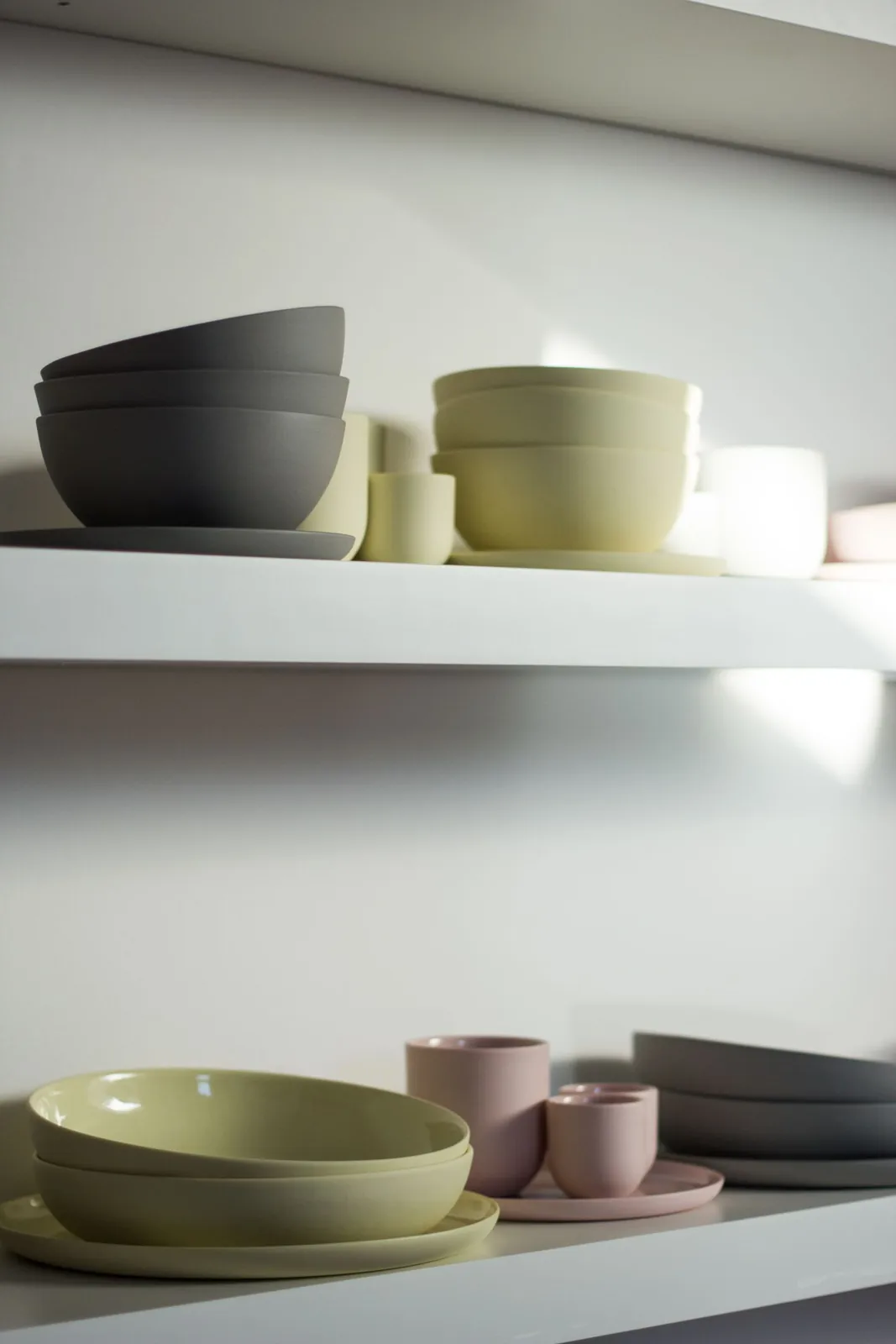
Spread the chosen items on the worktop and look at their colours together. You may already have a useful combination: white plates, blue mugs and warm timber lids, for example. Pick one dominant tone and let the others appear in smaller amounts. This gives the shelf a relationship without requiring every object to belong to a matching set.
Include the wall behind the shelf in the decision. A pale bowl may stand out against a dark background but disappear against white tiles. A patterned mug might provide all the detail needed in one area. The aim is to make the objects readable from across the room, not to achieve a rigid ratio of colours.
Group with the routine in mind
Keep like items together when that makes cooking or serving easier. A short stack of suitable plates, a cluster of mugs and one serving jug can create a clear rhythm through differences in height. Leave enough space around handles for fingers and enough headroom to lift things without knocking the shelf above. Test these movements with the actual pieces.
Avoid very high stacks even when the colours look pleasing. Follow care advice for delicate rims and finishes, and use storage suited to the crockery. Heavy objects generally need particularly secure, accessible positions. The arrangement should work for the people using the kitchen, including anyone who finds reaching or lifting difficult.
Keep food storage information
If a shelf holds food, keep it in suitable containers with useful identification and storage information. Do not discard dates or preparation instructions merely to create a uniform row of jars. Practical labelling can be neat without making every container decorative. Items with incompatible storage needs should not be grouped together just because their packaging matches.
Leave a quiet gap
A small area of visible shelf can make the whole display feel more considered. It also gives you a temporary place to set an item while reaching for another. Resist filling that gap with an ornament immediately. In a kitchen, spare capacity is useful, particularly when the shelf serves a real daily task rather than a permanent display.
Live with the arrangement through several meals and a cleaning session. Notice which colours naturally repeat as objects leave and return. If the display only works when no one uses the crockery, it is too fragile a plan. Adjust around the real routine, keeping the colour connections simple enough that the shelf still feels coherent on an ordinary busy morning.
Let everyday crockery establish the colour mix and keep the shelf easy to reach and clean.
A Swishover guide · Practical ideas to adapt to your own home.
Spotted something we should improve?