Begin with the surface
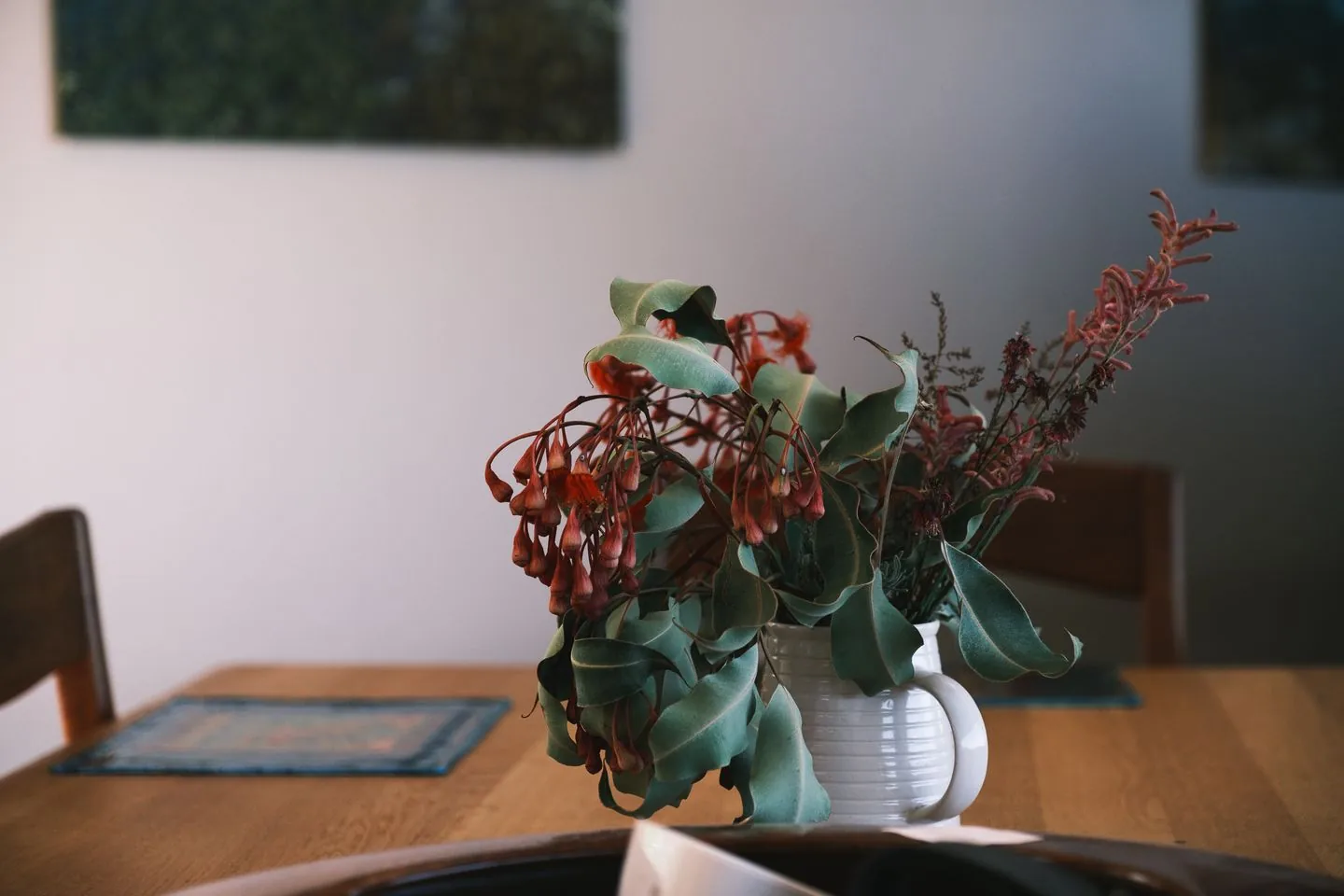
A vase on a dining table has different limits from one on a deep sideboard. At dinner, people need to see across it and reach serving dishes. On a narrow bedside table, it must leave room for a lamp and avoid water near electrical items. Measure the usable space before choosing stems, including the spread of leaves rather than just the vase's base.
Think about the route beside the arrangement. Long branches can catch a sleeve in a hallway, while a top-heavy vase may be vulnerable near an opening window. Choose a stable container intended to hold water if using fresh flowers. A decorative vessel with an uncertain seal needs an appropriate watertight insert or a different use.
Let the opening guide the stems
A narrow neck can hold a few stems in a clear shape, while a wide opening generally needs a different arrangement to avoid everything falling to the sides. You do not have to fill every vase generously. A few well-chosen stems in a suitable container can feel more deliberate than a large bunch squeezed into the wrong shape.
Follow the care guidance supplied with the flowers and use clean tools and a clean vase. Remove foliage that would sit below the waterline where appropriate. Avoid assuming every species needs the same treatment. If you do not know a plant, identify it before bringing it into reach of children or pets; some common decorative plants are unsuitable for those households.
Build the outline gradually
Place the main stems first and rotate the vase to see their spread. If the arrangement will be viewed from all sides, check each side rather than creating a perfect front and an untidy back. A wall-side arrangement can have a more directional shape, but it should still sit securely without relying on the wall for support.
Leave some variation in height and direction. Flowers do not need to form a tight, level dome unless that is the effect you want. A small gap between stems can make individual shapes easier to appreciate. Stop occasionally and look from the distance at which the arrangement will normally be seen; tiny adjustments may make little difference from across the room.
Colour can be simple. One flower type or a limited combination often suits a busy room better than several unrelated varieties. If the vase has a strong pattern, let the stems be quieter. If the flowers are bold, a plain vessel can keep the overall effect clear without competing for attention.
Plan for the days after arranging
Fresh flowers change as they open and fade, so leave room for that movement. Check the water and care for the arrangement according to the stems' needs. Remove deteriorating material promptly, and protect the furniture beneath from condensation or spills. A discreet protective layer is useful when it does not compromise stability or trap moisture against a vulnerable finish.
Move the vase if direct sun, heat or a draught makes the position unsuitable. The most decorative location is not always the best place for the flowers to last. When only a few stems remain presentable, transfer them to a smaller container rather than keeping the original arrangement at all costs. A vase can feel entirely right at several different stages if its scale continues to suit the space.
A good vase arrangement respects the surface, the sightline and the care the flowers need.
A Swishover guide · Practical ideas to adapt to your own home.
Spotted something we should improve?