Decide what a gathering really needs
Occasional tableware often grows through gifts, inherited pieces and purchases for one event. Bring related items together and identify what you use for the meals you host now. A large platter may be valuable even if it appears only a few times a year, while an awkward set of tiny dishes may never leave its box. Keep meaningful objects deliberately, but distinguish display pieces from equipment expected to serve food. Check damaged items and any care or food-use guidance rather than assuming every decorative ceramic is suitable for the table. The storage should reflect actual serving needs and the significance of the pieces you choose to keep.
Put weight within a comfortable reach
Large platters and stacked plates can be heavy. Store them where they can be lifted with both hands without reaching overhead or twisting around a door. Check the shelf's load limits and distribute contents appropriately. A high cupboard might suit lightweight seasonal napkins, while substantial serving bowls belong lower down. Measure door openings as well as shelf depth before placing a wide dish inside. It needs to come out without scraping its rim against the frame. If a platter is stored upright, use a stable purpose-suitable divider and ensure it cannot slide or fall forward when another piece is removed.
Separate surfaces that can damage each other
Use suitable protective separators where the material or finish needs them, and keep stacks modest enough to lift safely. Avoid piling very different shapes together merely because they nest loosely; pressure on a narrow rim can make removal difficult and damage fragile pieces. Follow the maker's care guidance for delicate or decorated tableware.
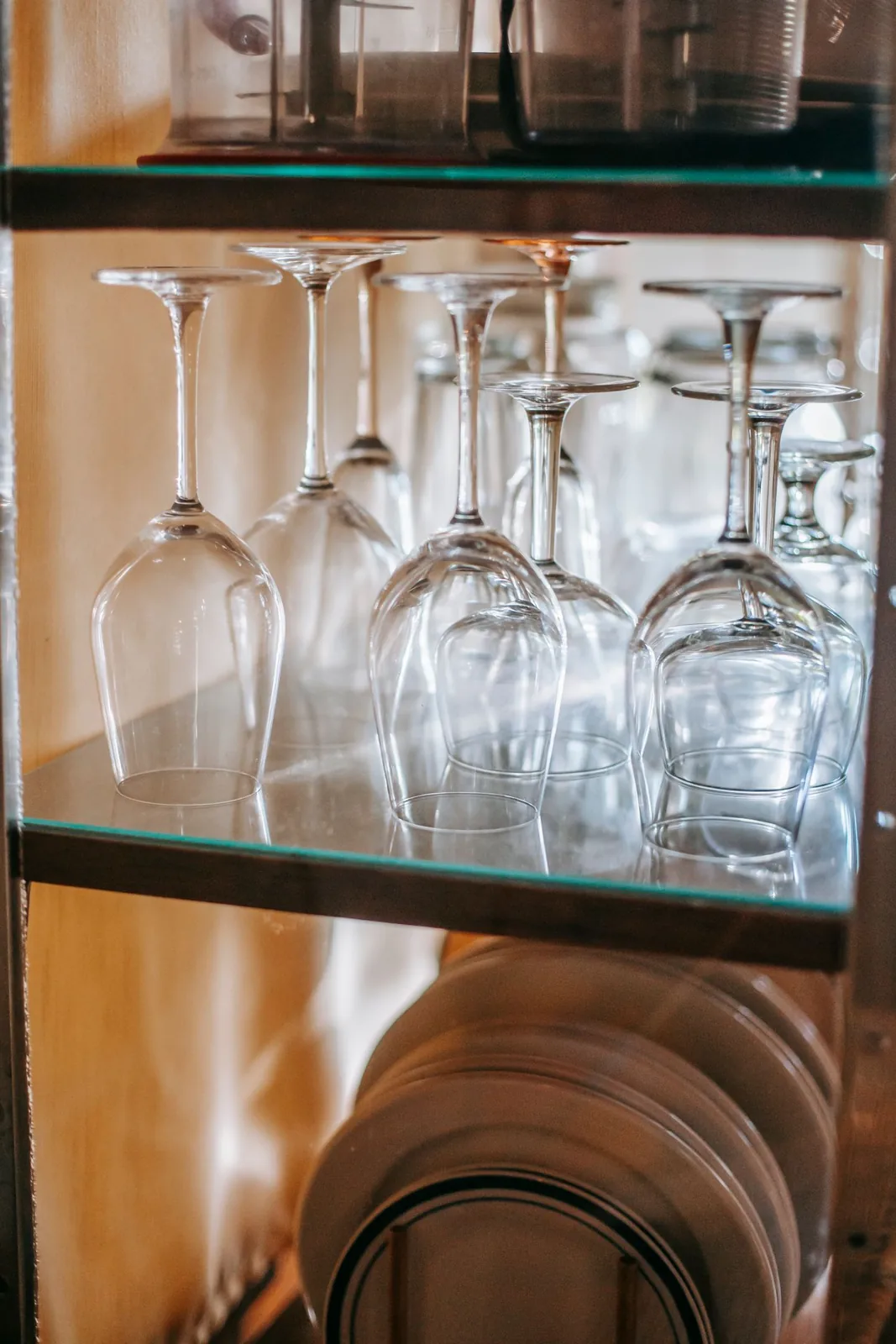
Stemmed glasses need a stable position with enough clearance that stems and rims do not knock together. Do not use their bowls as supports for unrelated objects. Original protective packaging can be useful for rare pieces, provided it remains clean, dry and clearly labelled rather than becoming a pile of anonymous boxes.
Make a complete serving group visible
Keep items used for the same occasion near one another where space permits: a serving bowl with its appropriate utensils, or a tea set with its small plates. Store textiles clean and dry in their own suitable place so they do not catch on sharp edges. Labels on closed boxes should name the contents and, if helpful, the cupboard position. A quick inventory inside the door can prevent buying a duplicate serving dish because the existing one has been forgotten. Avoid documenting every teaspoon if that creates more work than the collection warrants; focus on the objects that are hard to see or identify.
Retrieve the collection before the day
Before a planned meal, take out the required pieces early enough to check condition and clean them as needed. This reveals missing utensils or an unsuitable platter before food is ready. Return everything only when completely dry, using the same straightforward arrangement. If putting it away requires an elaborate puzzle, reduce the stack or change the shelf spacing. Keep the most versatile pieces easiest to reach so they can be used for ordinary meals too. Occasional tableware earns its space when it can participate in the household, rather than remaining protected so thoroughly that using it becomes a major task.
Store heavy serving pieces within easy reach, protect fragile surfaces and keep complete groups identifiable.
A Swishover guide · Practical ideas to adapt to your own home.
Spotted something we should improve?