Trace one load from start to finish
A small laundry area becomes easier to organise when each stage has a place. Follow a normal load from the basket to the machine, then to drying and finally to clean storage. Notice where the process stalls. Perhaps detergent is difficult to reach, clean clothes land on the floor or there is nowhere for items that need a different cycle. These practical gaps matter more than whether the bottles match. Assign the area only the jobs it can comfortably handle. Folding may work better on a clear table elsewhere, while the laundry cupboard concentrates on supplies and sorting. Trying to fit every stage into one narrow space can make all of them awkward.
Keep machine access clear
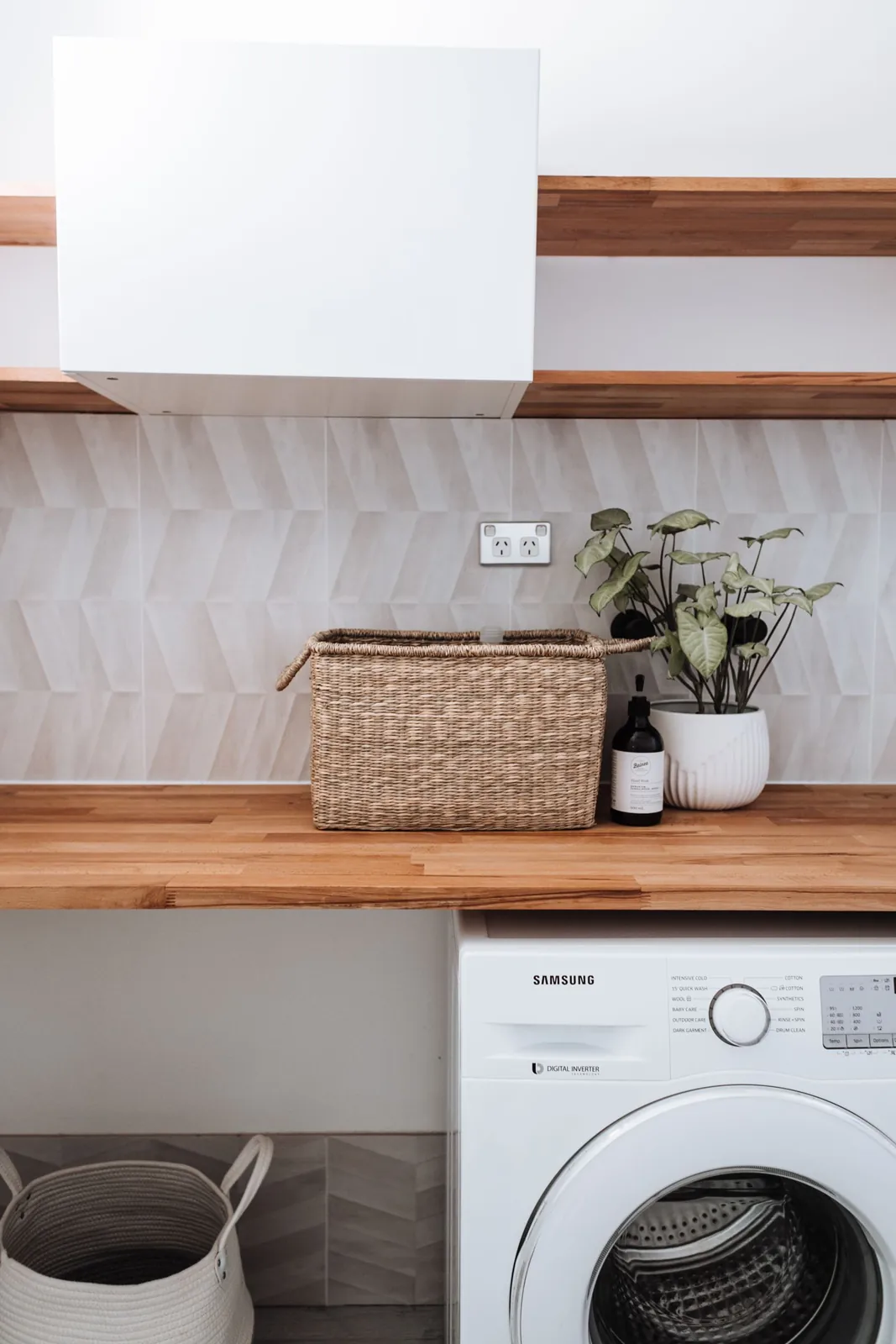
Leave the door, drawer, controls and maintenance points accessible, following the appliance instructions for clearances and ventilation. A shelf over the machine must not prevent detergent drawers opening or make servicing unnecessarily difficult. Do not stack appliances unless the models and approved fitting system are suitable. Check that hoses are not squeezed by storage and that the floor around the machine remains clear. If a basket sits in front, it should be easy to move fully out of the way rather than something you repeatedly step over. The setup needs to work when the machine is being loaded, not only when its door is closed.
Store supplies where they can be read
Keep laundry products in their original labelled packaging and follow the storage and access warnings. Where children could reach them, use an appropriately secured location rather than an open low basket. Group the current detergent and any regularly used treatment separately from reserves so there is no need to search among partly opened bottles. A wipeable tray can contain small drips, provided it is stable and easy to clean. Avoid overcrowding a high shelf with heavy liquids. Keep measuring tools with the relevant product and do not use food containers that could create confusion. Readable labels are more useful than a coordinated collection of unmarked jars.
Separate laundry without multiplying baskets
Choose sorting categories that reflect the loads you actually wash. Two or three manageable groups may be sufficient; a basket for every fabric can consume the whole room without improving the routine. A small washable bag for delicate items can sit inside the main basket if that keeps them together. Give clothing awaiting treatment or repair a separate, limited place so it does not cycle endlessly through the ordinary wash. Damp items should not be left compressed in a closed pile. Hang them appropriately to dry before they wait, and make sure the area itself can ventilate rather than concealing wet fabrics behind a cupboard door.
Give clean clothes an exit
The laundry process is unfinished until clean clothes leave the area. Use a portable basket that can travel to the rooms where items belong, then return it empty. If a small folding surface is available, keep it clear of reserve bottles and miscellaneous household supplies. Store pegs, laundry bags or hangers in a defined reachable spot so drying can begin without another search. At the end of a laundry session, return products, wipe any spills and remove the clean load. If a pile repeatedly remains for days, simplify that last step: a smaller load or a nearer folding place may help more than adding another storage unit.
Protect machine access, keep supplies secure and give every clean load a clear route out of the laundry area.
A Swishover guide · Practical ideas to adapt to your own home.
Spotted something we should improve?