Observe an arrival
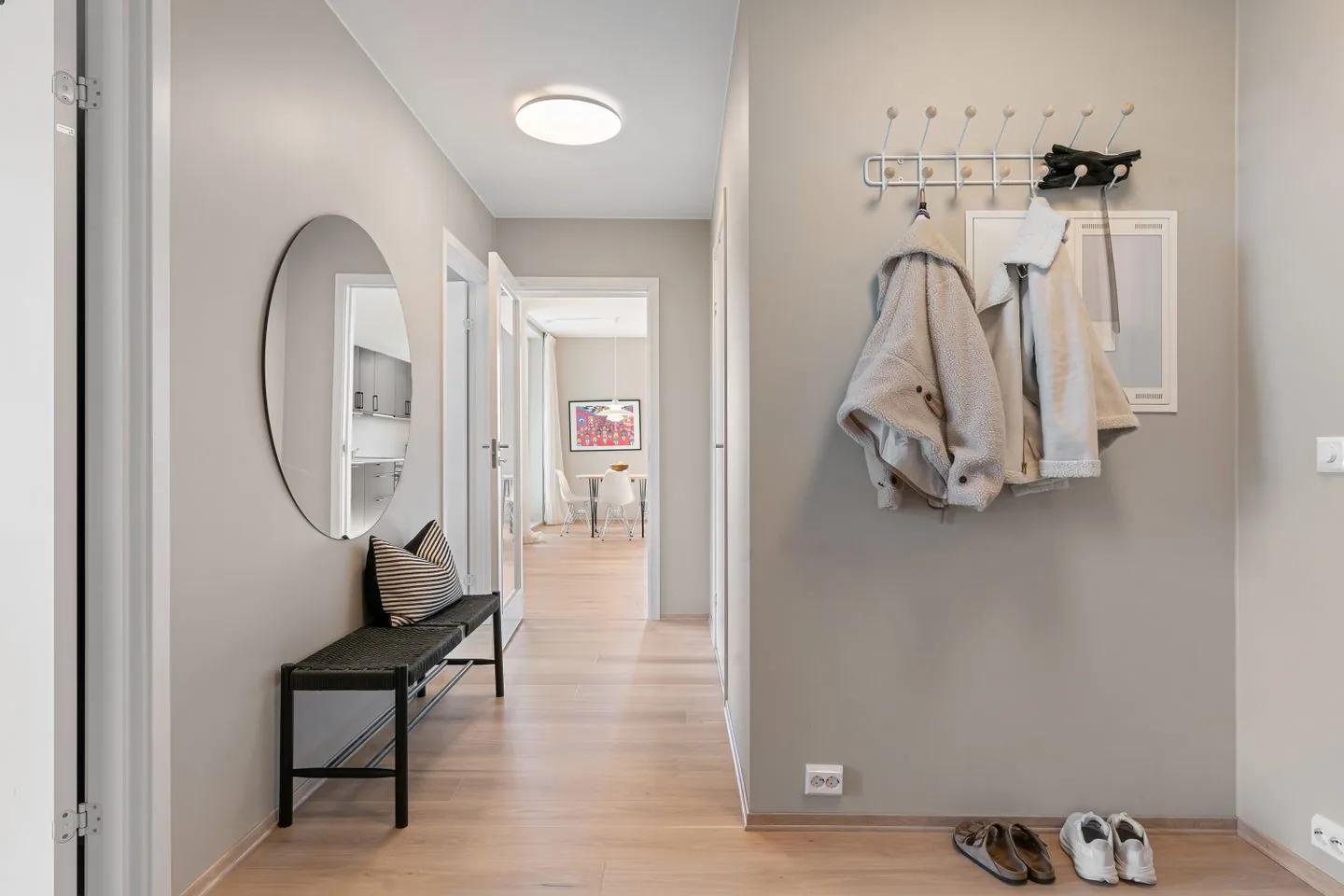
The family entrance is busiest when everyone arrives with something in their hands. Watch the sequence: shoes come off, bags are dropped and coats land on the nearest reachable surface. Design around those movements rather than placing storage where it looks most symmetrical. A hook that requires crossing the hallway may be ignored even if it is technically close by.
Keep the doorway and any escape route clear. Test the entrance with the door fully open and several people present, rather than only when the house is empty. If there is very little space, some storage may need to sit just beyond the entrance in a suitable adjacent area. Cramming every item into the narrowest point can make arrivals harder.
Give each person a recognisable place
A dedicated hook, shelf section or small basket can reduce searching and disputes. Labels or simple visual differences may help younger family members, but the storage must be reachable and easy to use. Follow furniture and fixing guidance, particularly where a child might pull on an item or climb towards a high shelf.
The personal area should hold what is currently needed, not every coat and bag that person owns. Move seasonal or occasional items elsewhere. Review the contents when routines change, such as the start of a different activity or a shift in weather. A useful entrance reflects this week's needs rather than the history of the whole year.
Deal with shoes before adding more storage
Count the pairs that genuinely need to be at the door. A rack can quickly become crowded if it holds outgrown shoes, special-occasion pairs and current trainers together. Keep regularly used footwear accessible and store other suitable pairs elsewhere. Allow wet or dirty shoes to be handled appropriately rather than pushing them into a tightly packed closed space.
If a seat is helpful for putting shoes on, check that it is intended for sitting and stable in use. A storage box is not automatically a bench. Leave room for someone seated while another person passes, and avoid sharp projecting corners in the busiest part of the route. The seat should ease the process rather than create a new bottleneck.
Contain the small items
Gloves, hats and activity accessories need a place that prevents them disappearing beneath larger coats. A small container per person or a divided drawer may work. Keep important items such as keys securely located and not accessible from outside. Loose coins and other small objects also need sensible storage where young children are present.
Do not create too many categories. A system that takes several decisions for one pair of gloves will be difficult to maintain during a rushed arrival. Choose broad, understandable groups and make the containers easy to empty and clean. If something is repeatedly placed beside its storage, check whether the opening or location is inconvenient.
Reset the entrance together
Choose a short, regular moment to remove overflow and prepare what is needed next. Everyone who can should return their own items to the agreed places. Keep the task concrete: clear the floor, hang current coats and put tomorrow's bag where it belongs. The entrance becomes calmer through an arrangement people can use with full hands, supported by a small shared reset rather than constant restyling.
Store the current daily essentials at the door and move occasional equipment to a separate home.
A Swishover guide · Practical ideas to adapt to your own home.
Spotted something we should improve?