Decide how much table to show
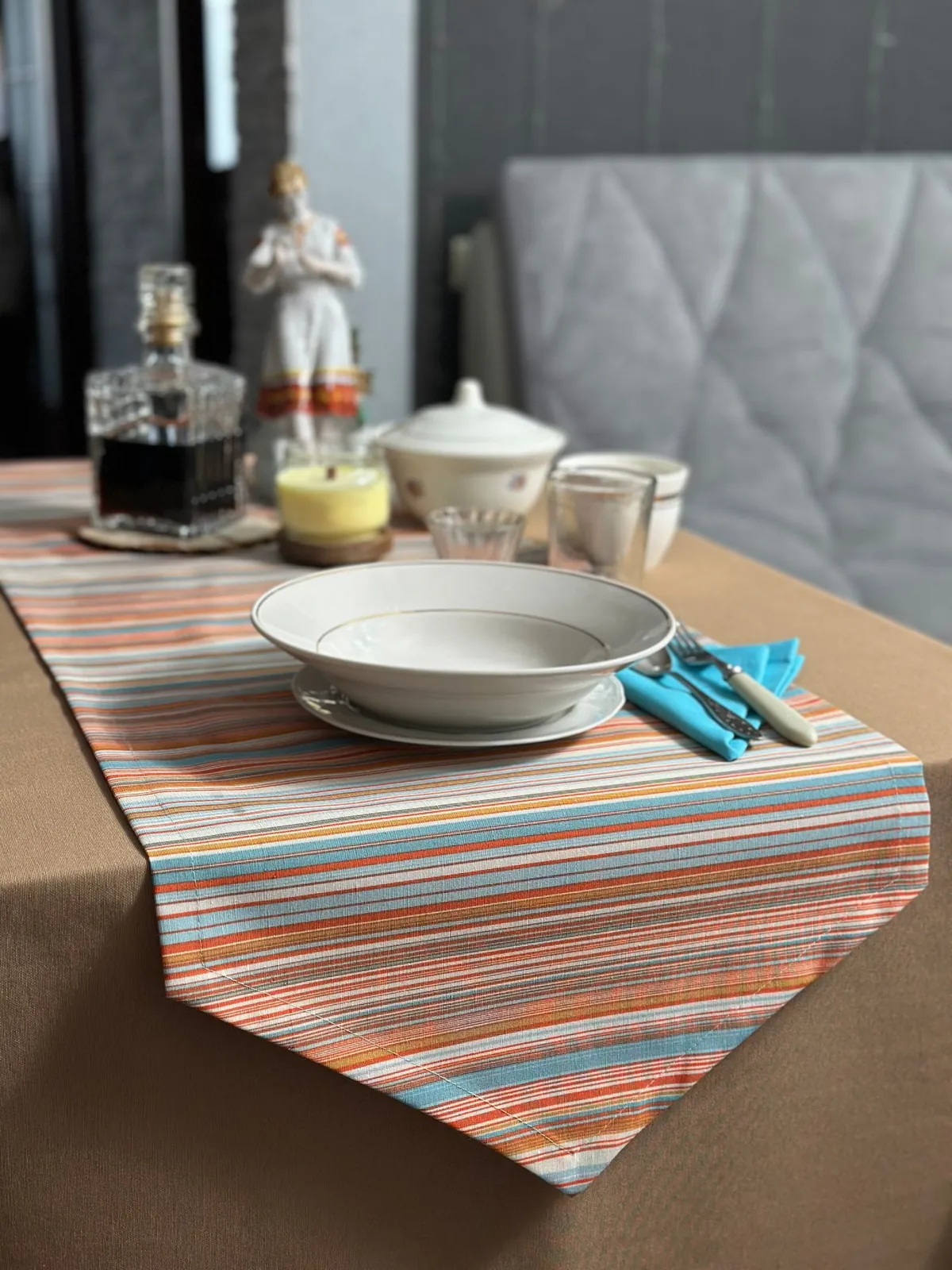
A runner creates a band of colour or texture while leaving the tabletop visible. That makes it useful when you enjoy the material beneath but want a softer setting. Lay a folded length of fabric along the table to explore the effect before buying anything. Try a narrow and a broader strip, then sit down to see how each relates to the place settings.
There is no single correct overhang for every table. A generous drop can feel relaxed on a long dining table, while a shorter runner may be easier in a compact breakfast corner. Check that the ends do not interfere with knees, chairs or someone walking past. Avoid a trailing arrangement that can be caught and pull objects from the surface.
Let the cloth change the mood
A plain linen-like texture can quiet a busy tabletop, while a checked or striped runner introduces a more casual rhythm. Think about the crockery you normally use. Strongly patterned plates may need a simpler background; plain plates can sit comfortably beside a bolder textile. You are choosing a setting for ordinary meals, not just an empty table.
Look at the runner alongside nearby curtains, upholstered chairs and the floor. It can connect with one of those colours without matching exactly. If it is the only patterned element, allow it some space rather than immediately adding patterned napkins and several colourful accessories. A small change often has more impact when it remains easy to see.
Check the practical fabric details
Read the care label and consider what commonly happens at this table. A runner used for breakfast, homework and dinner will need a different tolerance for marks from one brought out occasionally. Check whether washing may alter the size and whether the fabric needs ironing to achieve the appearance you want. Choose upkeep that fits your routine rather than an ideal version of it.
A runner is not automatically a heatproof or waterproof barrier. Use appropriate mats or trivets for hot dishes and protect vulnerable surfaces from moisture. Test whether the fabric slips easily across the table, particularly if it supports a vase or bowl. Everything placed on it should sit steadily when people move their arms or adjust a plate.
Keep the centre useful
A low arrangement can sit along the runner without dividing the table. Try a bowl of fruit or a small jug rather than several tall objects. Leave room for serving dishes and make the arrangement easy to lift away when the meal needs more space. The runner can be the decorative element itself; it does not require a collection of accessories to justify it.
If the table doubles as a desk, roll or fold the runner into a nearby drawer during work. Give it a clean, dry storage place so returning the table to dining use is quick. A textile that gets pushed into a heap beside a laptop may become another source of clutter rather than a satisfying change of mood.
Try a different direction
On some tables, placing a shorter runner across the width can define two opposite places. Test that arrangement with chairs pulled out and a complete setting in position. Round tables may suit a different proportion or simply look better with individual mats. Keep the option that feels natural during a real meal, even if it is less formal than the arrangement you first imagined.
Choose the runner for the table shape, daily use and care it will actually receive.
A Swishover guide · Practical ideas to adapt to your own home.
Spotted something we should improve?