List what the cabinet will hold
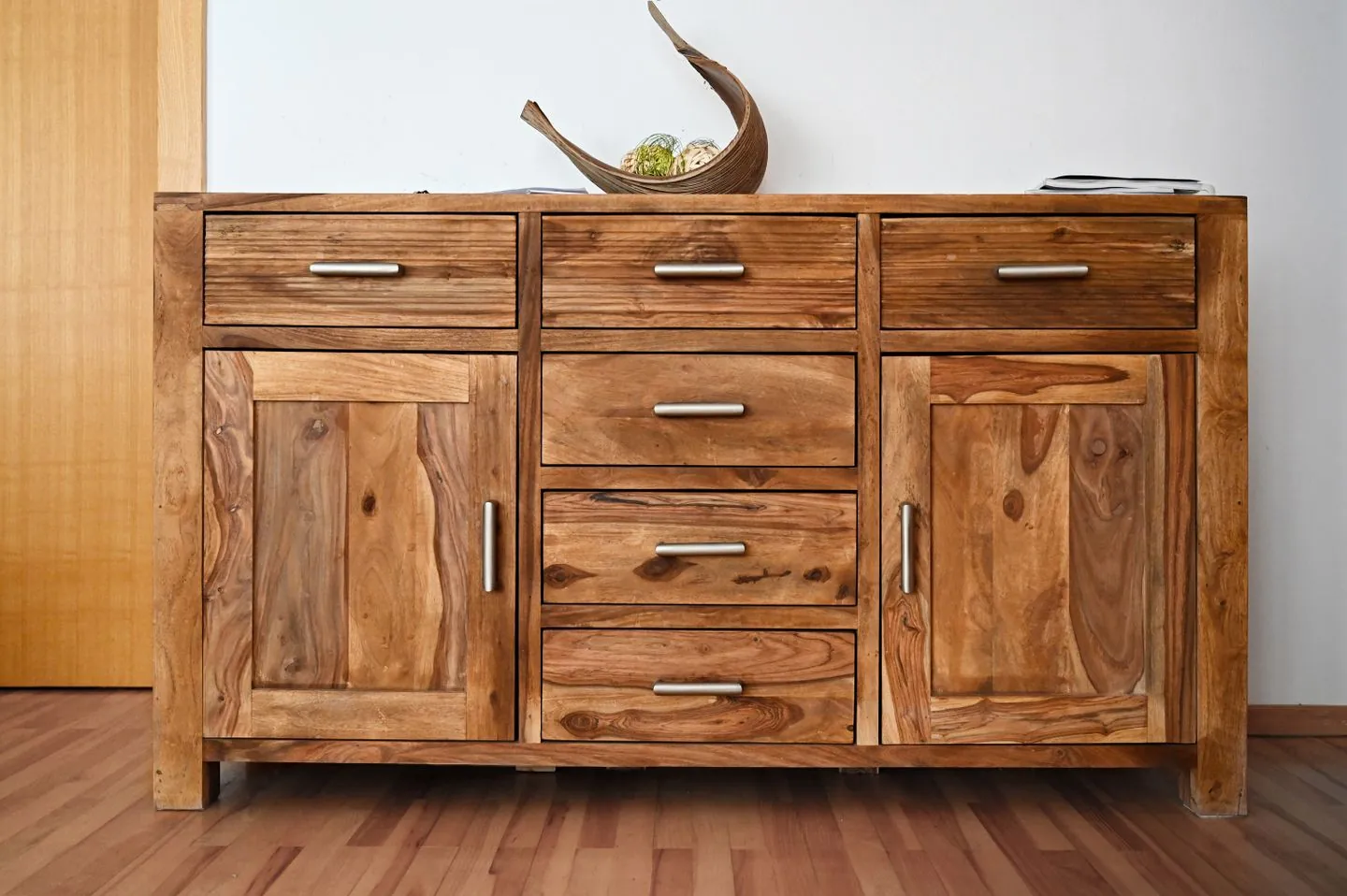
Serving dishes, paperwork, games and table linens each need different storage. Measure the largest items and note which should lie flat, stand upright or remain separate. A sideboard can look spacious from outside while its internal divisions make those objects difficult to fit. Start with the contents instead of assuming any long cabinet will provide useful capacity.
Keep the intended categories limited enough that people can find things. A sideboard used for every household overflow may become a closed version of a cluttered table. Decide which items deserve this convenient location and which belong elsewhere. The purchase should support a clear function in the room rather than simply provide somewhere to hide undecided belongings.
Compare internal dimensions and access
Ask for shelf depth, clear heights and drawer dimensions. Hinges, supports and door thickness can reduce usable space. Adjustable shelves may be helpful for taller objects, but check their load guidance and how the supports work. A large platter should be removable without tipping or scraping against the cabinet interior.
Try doors and drawers where possible. They should operate comfortably and allow access to the corners you intend to use. Handle shape, opening force and drawer extension can matter during everyday use. If a mechanism is described in unfamiliar terms, ask what it means in practice rather than assuming it will feel the way you expect.
Check awkward contents
For table linens, compare a folded stack with the drawer height. For glassware, allow enough room to lift each piece upright without catching its rim on the shelf above.
Measure the open furniture
Mark the cabinet footprint and the space needed for fully open doors or drawers. Check the route past it while someone is retrieving an item. In a dining room, include chairs pulled out from the table. A sideboard that fits along the wall may still make serving dinner awkward if the room cannot accommodate its open state.
Look at skirting boards, sockets and radiators behind the proposed position. Follow the furniture's installation and anchoring requirements, using suitable fixings for the wall. Do not ignore a required restraint because the cabinet seems low or heavy. Its design and the way it will be loaded determine what is needed for safe use.
Think about the top surface
Decide whether the top will support a lamp, display objects or occasional serving. Check the finish's care instructions and use appropriate protection from heat, water and scratches. A decorative cabinet top is not automatically suitable for hot dishes straight from the kitchen. Keep any electrical arrangement safe and avoid trapping lamp cables behind the furniture.
Choose a height that suits the room and intended use. A tall sideboard may provide generous storage but feel visually heavy beneath a low window or picture. A lower one may offer a useful surface while changing how much it can contain. Test the outline against the wall before committing to its proportions.
Review ownership beyond the first day
Check assembly, delivery access, weight and the practicalities of moving the piece into position. Ask about care, hardware and relevant warranty terms without assuming a finish or mechanism is maintenance-free. Once the practical specification works, compare colours and materials with the room. The best sideboard makes familiar objects easy to store and retrieve, while leaving the surrounding room comfortable during actual use.
A sideboard should store the actual objects comfortably and remain easy to use in its chosen position.
A Swishover guide · Practical ideas to adapt to your own home.
Spotted something we should improve?