Mark the real size on the floor
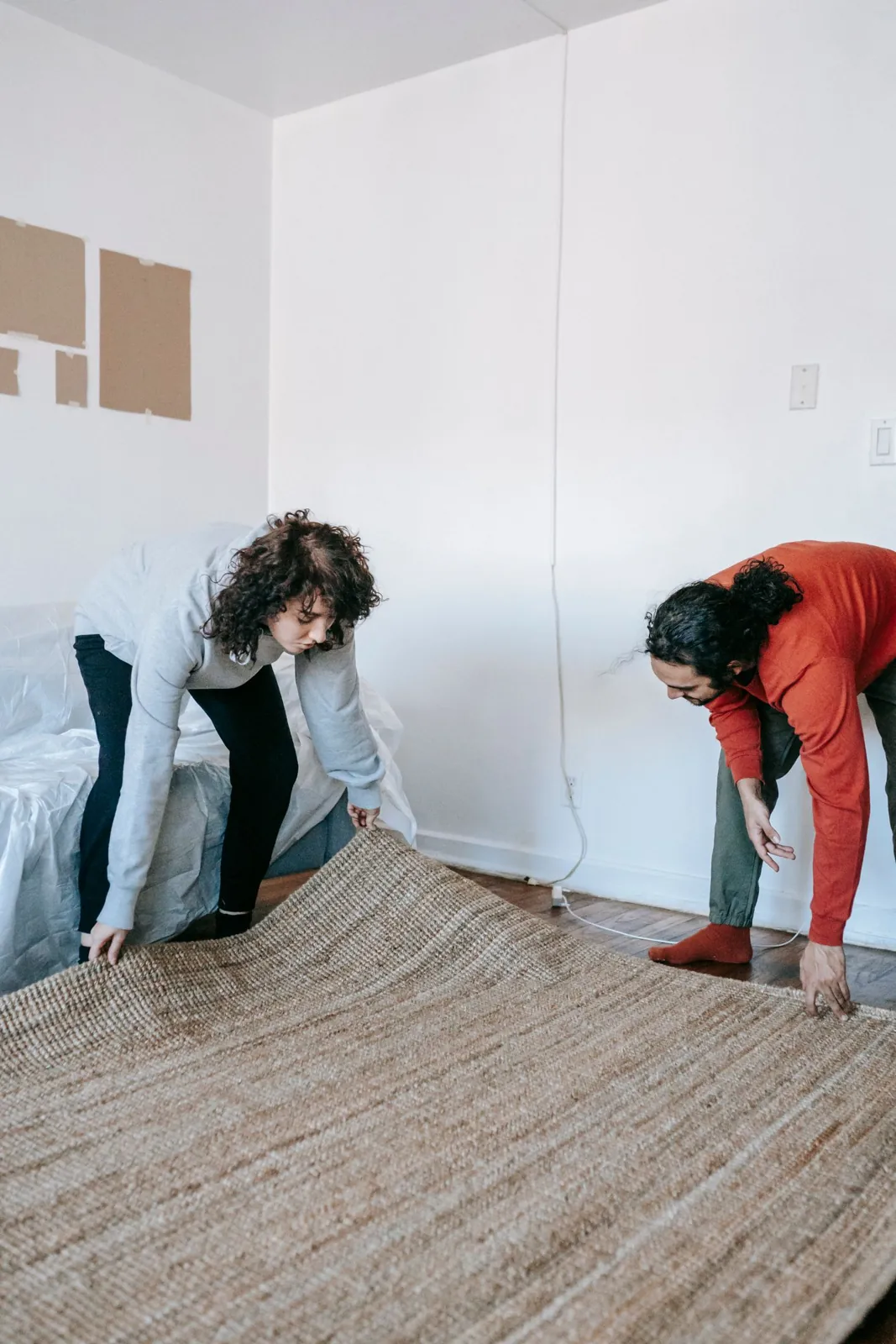
Rug photographs rarely show the exact proportions of your room. Mark out the proposed dimensions and place the furniture as it will actually stand. In a seating area, consider how the rug relates to the sofa and chairs rather than letting it float between them by accident. In a dining area, test chairs being pulled out, not just pushed neatly beneath the table.
Check doors, walking routes and transitions to other flooring. A rug that catches a door or sits awkwardly at a turning point may become a daily irritation. The useful size depends on the room and the people using it. Avoid buying a smaller rug solely to reduce cost if it cannot perform the job you need.
Match the surface to the activity
Pile height affects more than appearance. A thick, soft rug can feel pleasant underfoot but may be awkward for moving chairs, cleaning crumbs or using mobility equipment. A flatter construction may suit those activities better. Feel a sample or inspect the rug in person where possible, especially if softness is an important part of the purchase.
Look at loops, fringes and raised patterns in relation to pets, toys and everyday movement. No construction is ideal for every household. Ask how the specific rug should be vacuumed and whether a rotating brush is suitable. A beautiful surface that requires a care method you cannot realistically provide may not be the most comfortable long-term choice.
Check the backing and floor compatibility
Read the manufacturer's guidance for the floor beneath the rug and any required underlay. Different backings and pads suit different surfaces, and some materials may affect a floor finish. Do not assume a generic pad is appropriate simply because it is sold as non-slip. Check size, thickness and compatibility for the complete arrangement.
The rug should lie properly without curled corners or unstable movement. Follow instructions for settling or flattening after unpacking rather than improvising with heat or unsuitable treatments. If edges remain problematic, resolve that before regular use. A rug's visual appeal does not outweigh an avoidable trip hazard in a busy room.
Understand cleaning before a spill happens
Read care information while comparing products. Some rugs tolerate particular cleaning methods; others require specialist attention. A washable description may still involve limits on machine size, drying or frequency. Check the details against the equipment and space you have. Retain the instructions so a future spill does not lead to a hurried guess.
Consider colour in practical terms too. Very pale, very dark and strongly patterned rugs each reveal different kinds of dust or marks. There is no universally invisible option. Choose a design you like and a maintenance routine you can sustain rather than expecting pattern alone to conceal all evidence of daily use.
Judge the complete room
Bring samples into the actual light and compare them with the largest furnishings. Pattern scale matters: a small repeat may read as texture, while a bold design can become the room's main focus. Once appearance and practical checks agree, review delivery and returns, especially for large rugs that are cumbersome to send back. A good choice should feel settled under the furniture and remain straightforward to live with after the first clean.
A rug should fit the room’s movement and maintenance as well as its colour scheme.
A Swishover guide · Practical ideas to adapt to your own home.
Spotted something we should improve?