Decide where it will live
Laundry tends to gather where clothes are taken off, so begin with that location rather than the washing machine. Measure the available footprint and check door movement, cupboard access and the route through the room. A slim basket may suit a narrow bathroom, but its opening still needs to be easy to reach.
Look at the conditions around it. A dry bedroom and a regularly damp bathroom ask different things of the material. Follow product guidance and avoid leaving damp laundry in a closed heap. The basket should support suitable handling of clothes and towels, not hide moisture until washing day.
Imagine it full
An empty basket is a poor guide to how manageable it will be. Consider the likely load, the distance to the machine and any stairs. A large capacity may mean fewer trips but a heavier, more awkward carry. Choose an amount that the person doing the laundry can move comfortably rather than treating maximum volume as the main benefit.
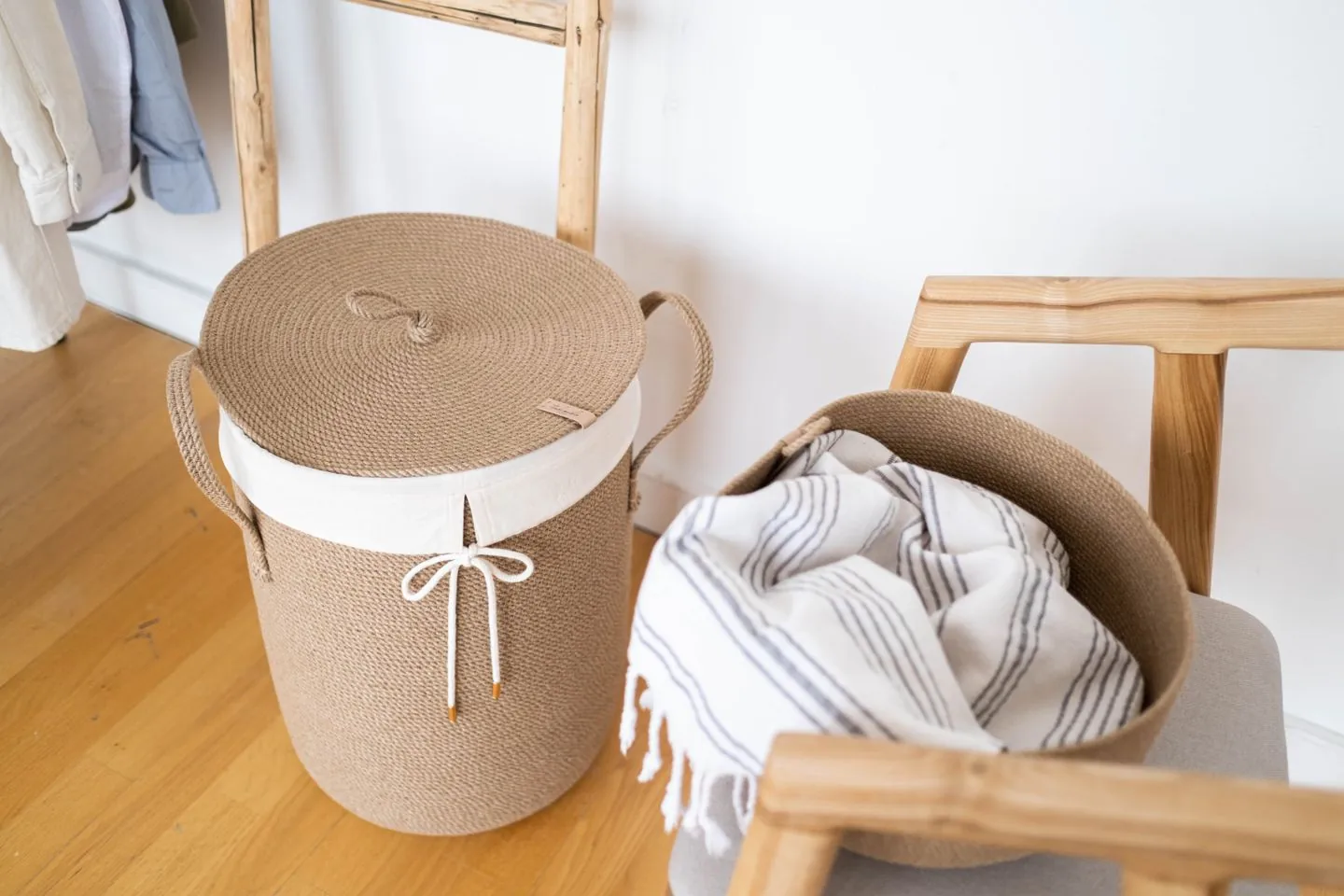
Check handle shape and attachment. They should be comfortable to grip and intended for the filled load. A decorative woven handle may not suit frequent heavy carrying. If the main basket stays in place, a removable inner bag can help, provided that bag is practical to lift and carry without spilling the contents.
Think about sorting realistically
Divided baskets can be useful when their compartments match the actual washing routine. Too many small sections may fill unevenly or confuse the household. A single basket with sorting before washing may be simpler in a small home. The useful choice is the one people understand without a long explanation.
Check care labels and pockets at the appropriate stage; a labelled compartment does not make every garment inside suitable for the same treatment. If several people use the basket, agree what belongs there and what needs separate attention. Delicate or unusually soiled items may require a different handling process according to their care needs.
Decide whether a lid is worth the extra action
A lid can keep the room looking quieter, but it must open easily in the available space. Check whether it stays attached, needs lifting off or can catch fingers. If people routinely leave clothes on top rather than inside, the opening may be inconvenient. An open basket can be more successful when quick access matters most.
Keep damp laundry visible
Do not choose a lid as a substitute for sensible laundry handling. Airflow, moisture and the time clothes remain inside still matter. Keep the basket clean according to its material and allow it to dry properly after any permitted cleaning. A removable liner is useful only if its washing instructions suit your routine.
Check emptying and storage
Look at the basket's opening and internal shape. Narrow necks can make removing a bulky load awkward, even when the external capacity sounds generous. A collapsible design may suit occasional use, but should remain stable enough when filled. Rigid baskets need a permanent home when empty as well as full.
Before buying, trace the complete journey from bedroom to washing and back again. The right basket should fit that route with minimal lifting, rummaging or rearranging. Its appearance can complement the room, but daily ease will determine whether clothes actually reach it and whether laundry moves smoothly to the next stage.
The useful basket is easy to fill, move, empty and clean in your particular home.
A Swishover guide · Practical ideas to adapt to your own home.
Spotted something we should improve?